7400 gallon natural white heavy duty cone bottom tank for bulk liquids that must drain clean
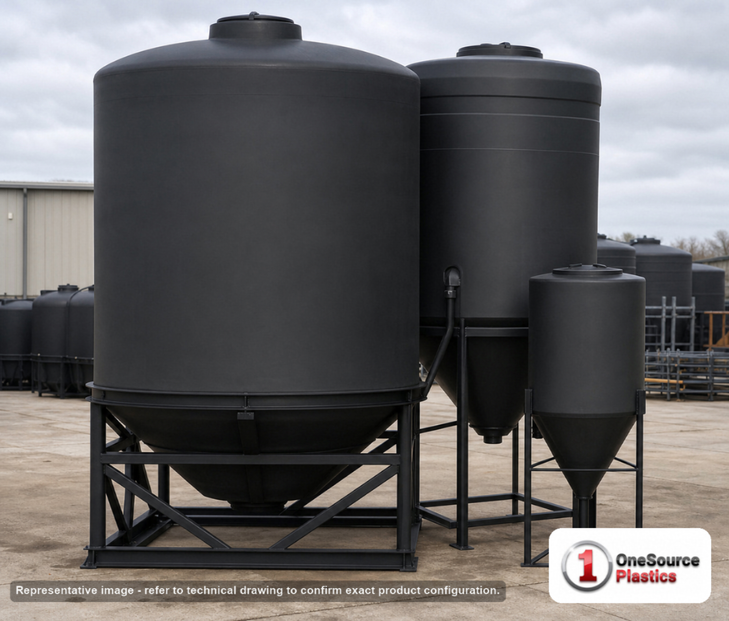
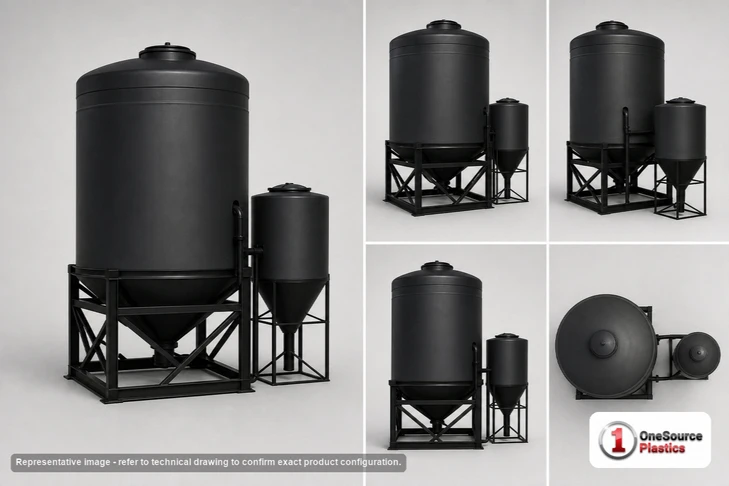
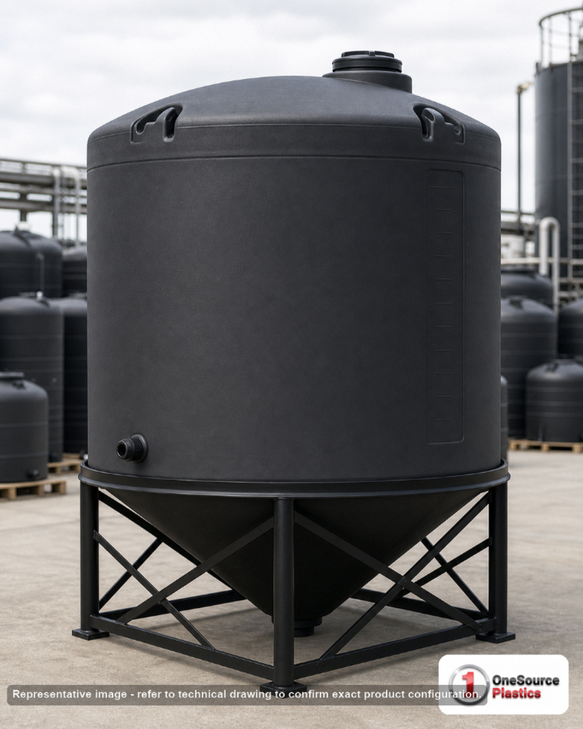
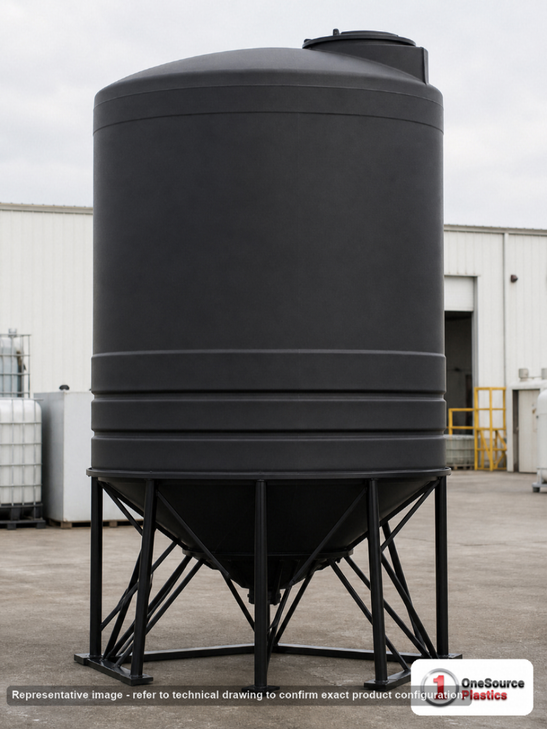
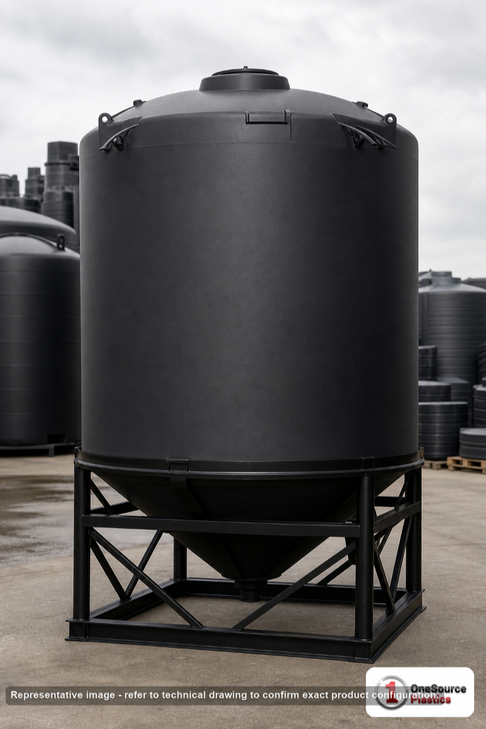
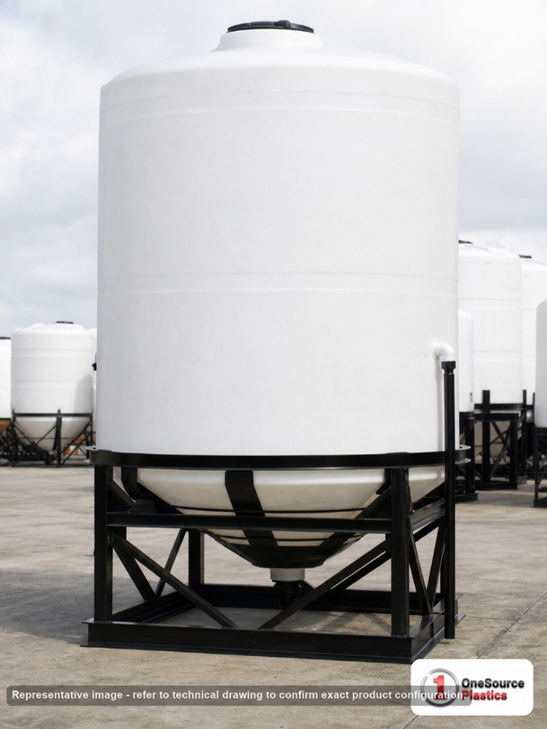
Snyder part number 5320100N45 is a 7400 gallon heavy duty cone bottom tank in natural white high density linear polyethylene, made at Snyder's Lincoln, Nebraska plant. It is 142 inches in diameter and 160 inches tall and weighs 1,850 lb. The heavy duty wall is rated for liquids up to 1.9 specific gravity: 7400 gallons of water weighs 61,716 lb (7400 x 8.34), and a liquid at the full rating about 117,260 lb, all of it carried by the stand under the cone. The top opening is an 18 inch threaded vented manway. The natural white wall lets you read the level from outside.
Sizing the stand, the outlet and the slab? Call 866-418-1777 and we will work through all three with you, or get freight to your ZIP and add it to your cart above.
Where a 7400 gallon cone tank belongs
A cone bottom at this size is for bulk liquids that settle or that must leave nothing behind: water treatment chemicals that drop solids, suspension and blended fertilizers, process liquids that change from batch to batch, and settling service where the sludge has to come out at the bottom. The cone runs everything to one outlet, so a tank this size can be emptied and rinsed instead of carrying a heel for years. The 1.9 rating lets it hold dense liquids that a standard wall cannot. Check the liquid in our chemical compatibility guide; treatment plant buyers ask most about sodium hypochlorite, ferric chloride, aluminum sulfate and polyaluminum chloride.
What to settle before you order
- Stand. No stand is listed with 5320100N45. A cone tank this size rides on a matching steel stand on an engineered slab; ask us for the stand built for this tank.
- Cone outlet. The outlet size is not listed. Size it to what you drain, solids and all; our cone outlet sizing guide explains why a cone empties or plugs. Tell us the size and we will confirm it with Snyder.
- Top fittings. Fill, vent, level and overflow all go somewhere on the dome. The tank top fitting placement guide covers the layout, and the level gauge selection guide covers what to read the level with.
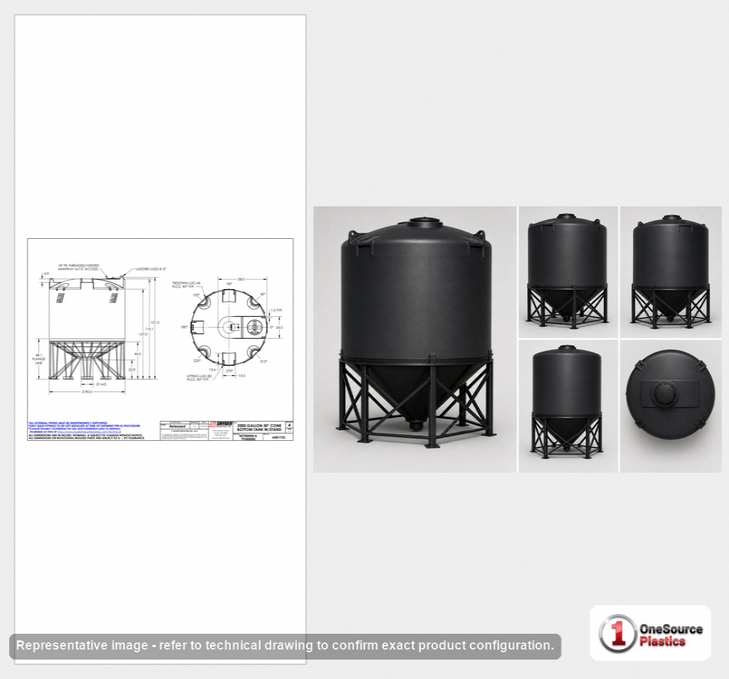
- Drawing. The drawing linked under Technical Drawing on this page is Snyder's drawing filed under 5320100N43, the same 7400 gallon cone shell. Ask us to confirm any dimension that matters to your install against 5320100N45.
- Temperature. No temperature limit is listed. Tell us if the liquid goes in warm.
Other 7400 gallon cone tanks and nearby sizes
Other 7400 gallon Snyder cone tanks: a second 7400 gallon heavy duty cone tank in another colour, the 7400 gallon cone bottom tank with a standard wall, and the 7400 gallon 30 degree cone tank 5320100N43. A size down, the 6500 gallon XLPE cone tank; a size up, the 11,500 gallon XLPE cone tank. The tank sizing calculator and tank sizing guide help with volume.
Shipping and receiving
It ships from Lincoln, Nebraska at 1,850 lb, shipping size 142 by 142 by 160 inches, an oversize load. The listed price is before freight; the freight cost estimator gives the cost to your ZIP. Plan the unloading equipment and set the stand before the truck arrives. Check 5320100N45 on the bill of lading, inspect the cone before you sign, and fill with water first.
Ready to order? Add it to your cart at the top of this page, get LTL freight to your ZIP, or call 866-418-1777. The listed price is before freight.
Freight and documents
Ships from: Lincoln, NE. LTL freight is quoted to your ZIP with the freight cost estimator or by phone at 866-418-1777. The listed price is before freight.
Technical drawing (PDF) for Snyder Industries 5320100N45.
See this tank
Interactive 3D model with live fill. This tank has an interactive 3D model built to its manufacturer dimensions. Rotate it, and set a fill level to see how much liquid it holds at any height. Open the 3D view on the product photo above. Download the 3D model (GLB).
Product video. Watch the 7400 Gallon Heavy Duty Cone Bottom Tank video (71 seconds) with dimensions, fittings and shipping notes.
Ready to order?
Add it to your cart at the top of this page, get LTL freight to your ZIP, or call 866-418-1777. The listed price is before freight.