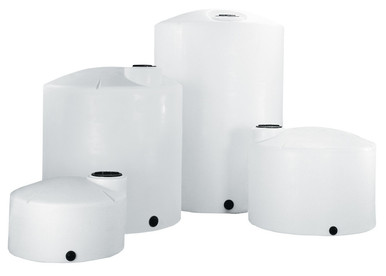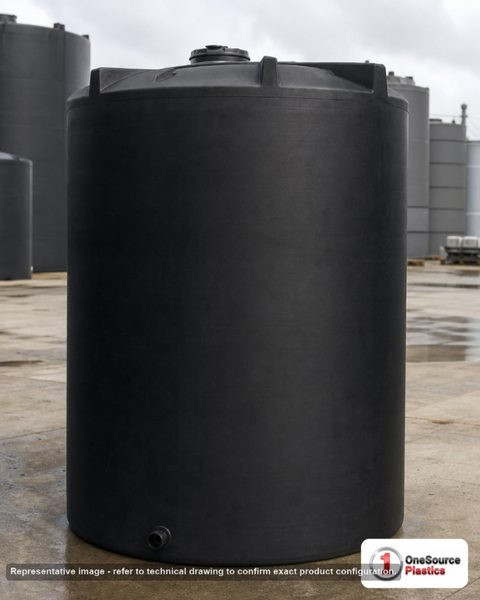
2500 Gallon Vertical Liquid Storage Tank - Natural White (96" x 96"): Complete Buyer's Guide
2500 Gallon Vertical Liquid Storage Tank - Natural White (96" x 96") from Norwesco.
Technical Drawing
Official Norwesco technical drawing — 2500 Gallon Vertical Liquid Storage Tank - Natural White (96" x 96")
Specifications at a Glance
Every figure below is pulled straight from the live product record for this exact tank — the same data on the product page, so what you read here and what you buy never disagree.
Standards & Materials
- ASTM D1998 — Standard Specification for Polyethylene Upright Storage Tanks. Governs wall-thickness and hydrostatic design for vertical rotomolded poly tanks of this class.
- FDA 21 CFR 177.1520 — Olefin polymers. The food-contact regulation the FDA-grade resin in this tank is compounded to meet.
- Specific gravity rating 1.5 — the tank is engineered for liquids up to 1.5× the density of water (water is about 8.34 lb/gal). Confirm your fluid’s SG before storage.
Installation and Setup Guide
There is a pleasing symmetry to this 2500-gallon tank — eight feet tall by eight feet wide — and that near-perfect balance is the best news you can get when installing a chemical tank of this size. A tank as wide as it is high keeps its center of gravity low, spreads a full load broadly, and stays untroubled by wind, so the install effort goes almost entirely into the one thing that still matters: a foundation that is dead flat across the full 96-inch base.
Site Preparation
A 2500-gallon chemical load is many tons concentrated under that eight-foot circle, so this calls for an engineered reinforced concrete slab or a deep, heavily compacted crushed-stone ring, sized past the 96-inch base and screeded flat to a quarter inch over its full width. Have a structural professional specify the slab for your soil; an eight-foot flat bottom records every high and low spot and concentrates the load wherever the pad is not true.
Placement and Connections
Take the discharge off the lowest fitting at the base of the eight-foot liquid column and isolate it with a chemically compatible flexible coupling so the tank's movement never loads the bulkhead. Drill and add a compatible inlet bulkhead at your chosen fill height if your plumbing needs one. Use chemical-rated piping throughout and hand-tighten the poly threads a quarter turn past snug — a wrench cracks the boss.
Venting
Cycling 2500 gallons of chemical moves a large volume of air, so vent the tank properly. Keep the lid's relief path open, and for any volatile or fuming chemistry fit a pressure/vacuum relief vent rated specifically to the stored chemical rather than a plain screen. A blocked vent on a full chemical tank can collapse a wall during a hard draw-down, so make the vent the first thing you confirm.
Maintenance and Long-Term Care
A symmetrical 2500-gallon chemical tank is serviced for chemical duty and structural load, not for potable use, and its balanced form makes inspection straightforward. The routine below protects the vessel, the engineered foundation under several tons, and safe operation around stored chemical.
Quarterly Inspection Checklist
- Wall scan: Read the full 96-inch height for bulging, stress whitening, or discoloration — the early structural warnings on a heavily loaded chemical tank.
- Outlet check: Inspect the discharge fitting and any installed inlet for chemical weeping, and confirm both remain compatible with the stored liquid.
- Foundation audit: Examine the slab and the 96-inch perimeter for cracking or settling, since pad movement is the main failure mode for a tank this heavy.
- Vent verification: Check that the pressure/vacuum relief or vent stays clear and suited to the chemistry on hand.
Cleaning
Clean by decontamination to the chemical manufacturer's procedures before switching products; never assume a rinse is enough when changing chemistries. The bottom outlet drains the bulk, and any interior work on a tank this size follows confined-space and chemical-handling protocols. This is a dedicated chemical-storage tank and must not be repurposed for potable water without full, documented decontamination.
UV and Weather Protection
The translucent white wall reflects sunlight to moderate the chemical's temperature and carries UV stabilizer in the resin; check the sun-facing arc annually for chalking. On an eight-foot cube of stored chemical, the reflective pigment meaningfully reduces the daily thermal load the wall absorbs.
Alternatives and Comparisons
This symmetrical 96-by-96 tank is the balanced way to store 2500 gallons of chemical, where the wider 102-by-79 version spreads the load even lower and broader, and a taller variant trades footprint for height. Step down to the 2000-gallon verticals for a lighter foundation, or up to the 3000-gallon-plus tanks for more capacity. Compare loaded footprints to match your pad.
Vertical vs. Horizontal: Vertical tanks use less floor space for the same capacity but require more overhead clearance. If you have height restrictions, consider a horizontal or low-profile tank. Vertical tanks also drain more completely due to gravity — the liquid column above the outlet creates positive pressure all the way to the last few gallons.
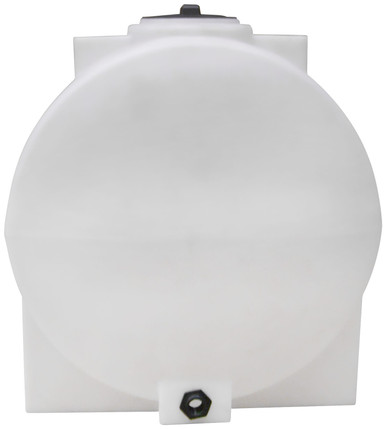
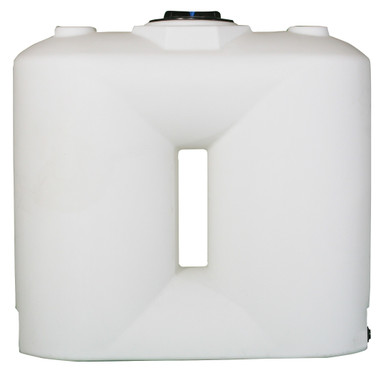
Other -Gallon Options
Frequently Asked Questions
How long will the 2500 Gallon Vertical Liquid Storage Tank - Natural White (96" x 96") last?
On an engineered pad, kept within its rated specific gravity and temperature limits, and serviced for the chemicals it holds, this 2500-gallon tank reliably reaches fifteen years and beyond. The seamless wall has no weld to fail and the balanced form makes wind and tipping non-issues; a settling foundation or an incompatible chemical is what ends a tank early, never the polyethylene.
What chemicals can I store in this tank?
It is engineered for agricultural chemicals, liquid fertilizers, and most industrial solutions within its rated density, but every specific chemical must be verified against a polyethylene compatibility chart first. Keep fuels, solvents, and flammables out, and treat this as a dedicated chemical-storage vessel rather than a drinking-water tank.
Does this tank come with a warranty?
Yes — the manufacturer warrants it against defects in materials and workmanship under normal use, covering factory faults rather than overloading, a poor foundation, chemical attack, or impact. Keep your receipt and install documentation for any claim.
Can I install this tank underground?
No. It is an above-ground vessel; the flat wall has no resistance to backfill, so burial means collapse and a voided warranty. For below-grade storage, use a ribbed, reinforced underground tank engineered for burial.
Buying Considerations
Confirm a roughly 64-square-foot pad with overhead lid clearance, have a structural professional size the slab for the full chemical load over the 96-inch base, and arrange LTL freight with offload equipment and clear access for a tank this large and heavy.
Related Products You May Need
Questions? Call (866) 418-1777 — our team knows these products inside and out and can help you select the right tank for your application.
Recommended Tanks for This Guide
Live pricing, updated automatically · estimate freight to your ZIP.