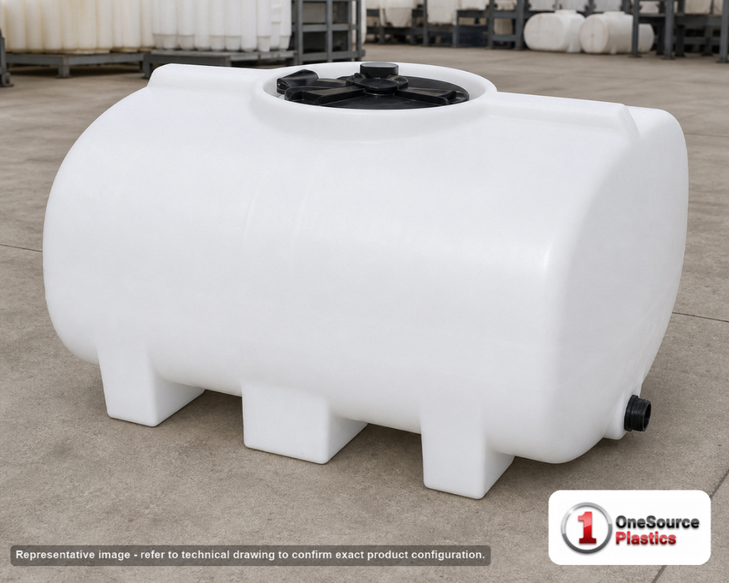
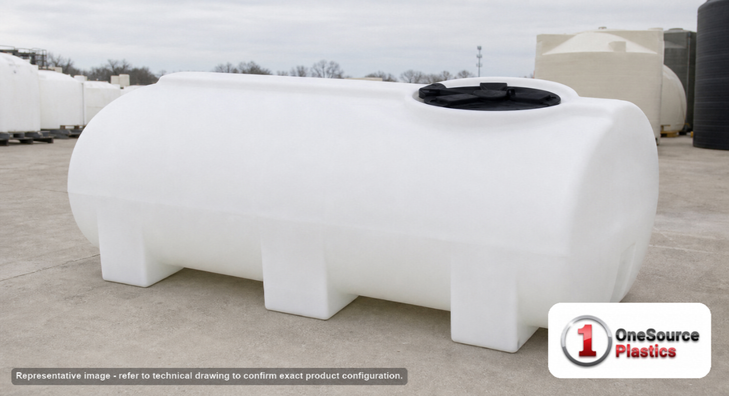
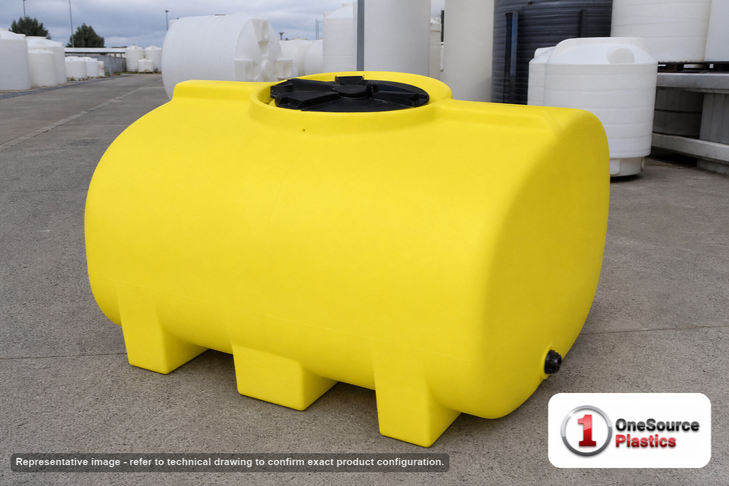
The Enduraplas 300 Gallon Black Horizontal Leg Tank is a haul-and-treat workhorse built on a 1.9 specific-gravity rating, which is what separates it from a water-only leg tank. That 1.9 rating means the polyethylene wall is engineered to carry dense agricultural and treatment fluids, not just water, so this is the tank to reach for when you are moving fertilizer blends, glycol, or a treatment chemical down the road behind a sprayer or on a service truck.
Will it work for your load?
This is a horizontal leg tank holding 300 gallons in black polyethylene. The body measures 74 inches long, 46 inches wide, and 31 inches tall, sitting on a 46.0 x 74.0 inch footprint that drops into most trailer decks and pickup beds without custom cradling. The molded legs give it a flat, stable base so it carries level under transport. Plan your mounting and tie-downs around the weights: filled with water it runs about 2,502 lb, and at the full 1.9 SG rating the maximum rated contents weight is 4,754 lb. Here is the actionable ceiling to work from - contents weight must not exceed 4,754 lb, so for any fluid of density D, your safe fill is roughly 4,754 / (8.34 x D) gallons. That means a heavy acid like sulfuric at 98%, ferric chloride, or concentrated calcium chloride should be loaded by weight, not to the 300 gallon mark; confirm your fluid's SG against the 1.9 rating and under-fill accordingly. Run the numbers with our Tank Sizing Calculator and Tank Sizing Guide before you fill.
Fittings - confirm before you spec hardware
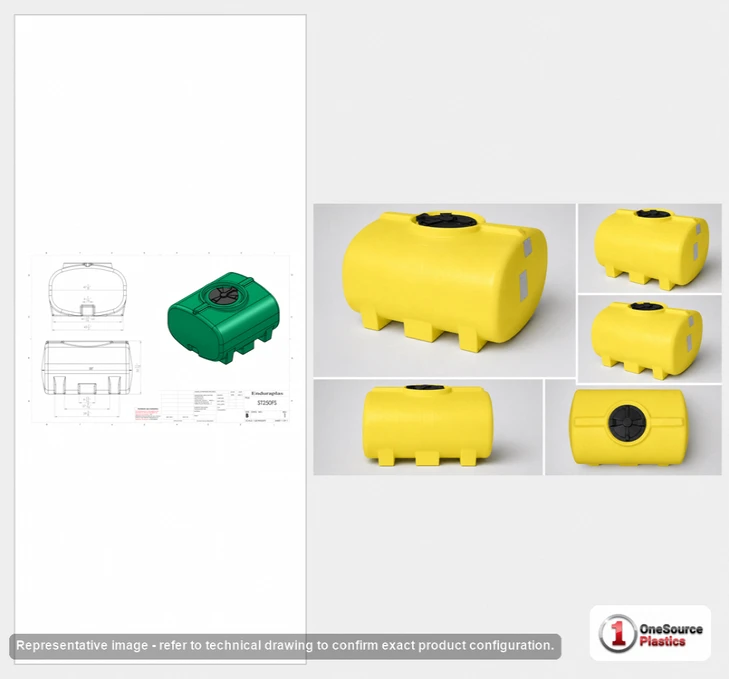
Our data does not carry a confirmed factory fitting configuration for this tank - no thread sizes, outlet, fill, or vent ports are listed. Verify the actual port layout against the technical drawing on this page, or call us, before you order any wetted hardware. This matters most for the chemical-haul buyer below: you cannot correctly match a CPVC or Viton fitting to a sulfuric-acid service until you know what port you are threading into.
Chemical compatibility
This tank carries a 1.9 specific-gravity rating, but the resin reference in our data ends with a question mark - confirm HDLPE versus XLPE for your specific service before loading any chemical, especially the oxidizers and strong acids below, because that resin distinction materially changes chemical resistance. Always match the wetted hardware and gaskets to the fluid. The following are compatible per the OEM chemical-resistance chart, which is concentration- and temperature-specific - verify your exact concentration and operating temperature against that chart:
- Acetic Acid (60%), PP/PVC fittings, EPDM gaskets
- Aluminum Sulfate (50%), PVC fittings, EPDM gaskets
- Calcium Chloride (40%), PVC fittings, EPDM gaskets
- DEF (32.5%), 316SS fittings, EPDM gaskets
- Ethylene Glycol (100%), PVC fittings, EPDM gaskets
- Ferric Chloride (50%), PVC fittings, EPDM gaskets
- Ferric Sulfate (60%), PVC fittings, EPDM gaskets
- Ferrous Sulfate (20%), PVC fittings, EPDM gaskets
- Hydrochloric Acid (37%), PVC fittings, Viton gaskets
- Hydrofluoric Acid (48%), PP/PVC fittings, Viton gaskets
- Hydrofluosilicic Acid (26%), PP/PVC fittings, Viton gaskets
- Hydrogen Peroxide (50%), PVC fittings, Viton gaskets
- Magnesium Chloride (30%), PVC fittings, EPDM gaskets
- Peracetic Acid (30%), 316SS fittings, Aflas gaskets
- Phosphoric Acid (85%), PVC fittings, Viton gaskets
- Polyaluminum Chloride, PVC fittings, EPDM gaskets
- Potassium Carbonate (50%), PVC fittings, EPDM gaskets
- Potassium Hydroxide (saturated), PVC fittings, EPDM gaskets
- Propylene Glycol, PP/316SS fittings, EPDM gaskets
- Sodium Bisulfate, PVC/PP fittings, EPDM gaskets
- Sodium Bisulfite, PVC/PP fittings, EPDM gaskets
- Sodium Carbonate (30%), PVC fittings, EPDM gaskets
- Sodium Hypochlorite (<16.5%), PVC fittings, Viton gaskets
- Sodium Thiosulfate (40%), PVC fittings, EPDM gaskets
- Sulfuric Acid (98%), CPVC fittings, Viton gaskets
- Urea Solution (50%), PP/PVC fittings, EPDM gaskets
- Zinc Orthophosphate, PP/316SS fittings, EPDM gaskets
- Ozonated Water (up to 10 PPM), PVC fittings, EPDM gaskets
The mistake to avoid here is hardware mismatch. The aggressive oxidizers and strong acids - hydrochloric, hydrofluoric, phosphoric, sulfuric, hydrogen peroxide, and sodium hypochlorite - call for Viton (or Aflas for peracetic acid) gaskets and acid-rated fittings like CPVC, not the EPDM and standard PVC that handle the salts and glycols. Watch the metals too: DEF at 32.5% specs 316SS and urea solution at 50% needs PP, so do not default to PVC on a DEF or urea haul. Buy the gasket and fitting material to match your fluid, not the other way around, and cross-check every chemical on our chemical compatibility resource.
Freight and ordering
This Enduraplas horizontal leg tank ships LTL freight from Neche, North Dakota - the nearest named plant - and freight is quoted live to your ZIP code, so use our Freight Cost Estimator for a number to your dock or farm. For sizing decisions across a fleet of haul tanks, our coverage of applicator and leg tanks for fertilizer, portable utility tank DOT classification, and fertilizer-blend stratification walks through the field decisions. Questions on this 300 gallon horizontal leg tank, fittings, or a freight quote? Call us at 866-418-1777.
Freight and documents
Ships from: Neche, ND. LTL freight is quoted to your ZIP with the freight cost estimator or by phone at 866-418-1777. The listed price is before freight.
See this tank
Product video. Watch the Enduraplas 300 Gallon Black Horizontal Leg Tank video (72 seconds) with dimensions, fittings and shipping notes.
Ready to order?
Add it to your cart at the top of this page, get LTL freight to your ZIP, request a written quote, or call 866-418-1777. The listed price is before freight.