1100 Gallon Plastic Water Storage Tank: Complete Buyer's Guide
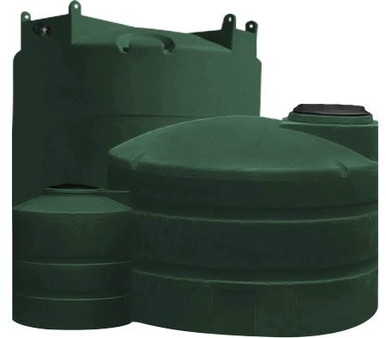
A 1,100-gallon black water reserve from Norwesco, seamlessly rotomolded in FDA-grade polyethylene to keep a serious volume of drinking or irrigation water clean and algae-free in full sun.
Specifications at a Glance
Every figure below is pulled straight from the live product record for this exact tank — the same data on the product page, so what you read here and what you buy never disagree.
Standards & Materials
- ASTM D1998 — Standard Specification for Polyethylene Upright Storage Tanks. Governs wall-thickness and hydrostatic design for vertical rotomolded poly tanks of this class.
- FDA 21 CFR 177.1520 — Olefin polymers. The food-contact regulation the FDA-grade resin in this tank is compounded to meet.
- Specific gravity rating 1.1 — the tank is engineered for liquids up to 1.1× the density of water (water is about 8.34 lb/gal). Confirm your fluid’s SG before storage.
Product Overview
A 1,100-gallon reserve sits in the sweet spot between a residence-scale cistern and a full commercial water plant: enough volume to ride out a multi-day well outage, irrigate a small orchard, or feed a livestock operation through a dry stretch, yet still light enough (170 pounds empty) for two people to position by hand before the first fill. Norwesco builds this tank as a squat vertical cylinder — 53 inches tall against an 87-inch diameter — so the center of gravity stays low and the wind load stays modest, a geometry that matters when the tank lives in an open field or on an exposed rooftop.
The shell is rotationally molded in one continuous shot from virgin linear polyethylene, which means there is no glued seam or welded lap joint to fatigue and weep over the years. Black pigment is compounded into the resin rather than sprayed on, so the UV barrier never chalks off and sunlight cannot reach the water column to feed algae. With a 1.1 specific gravity rating the tank carries any liquid up to 9.2 pounds per gallon, which comfortably covers potable water, rainwater catchment, and most light agricultural solutions.
That 87-inch footprint asks for roughly 41 square feet of dead-level ground, and a full tank bears down with about 10,261 pounds — plan the pad for five tons, not for the empty shell. Plumbing is handled by a factory 2-inch NPT outlet at the base and a 1.5-inch NPT inlet up top, both pressure-tested before the tank leaves the line, while the 16-inch lid gives a forearm-and-flashlight a clear path inside for cleaning or dropping in a float switch. Norwesco backs the build with a 3-year warranty, and the tank carries FDA clearance for potable and food-grade contact.
Technical Drawing

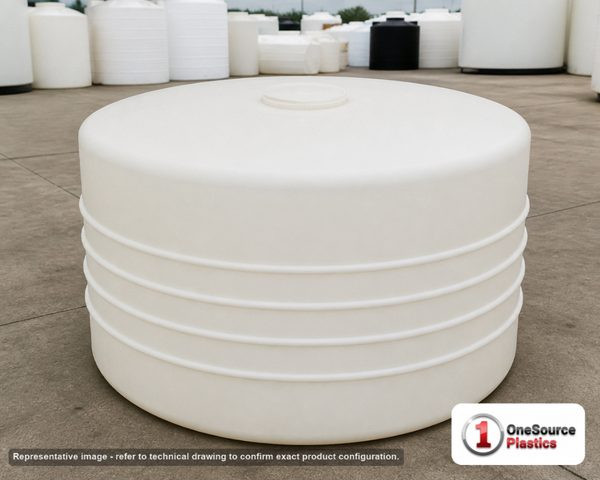
Official Norwesco technical drawing — 1100 Gallon Plastic Water Storage Tank
Key Features and Specifications
- 1,100-gallon capacity — sized for safe potable water storage
- Constructed from virgin linear polyethylene (HDPE) with 1.1 specific gravity rating — handles liquids up to 9.2 lbs/gal
- 53" tall x 87" diameter — compact vertical footprint
- 170 lbs empty, approximately 10,261 lbs when full at rated specific gravity
- 2" NPT outlet fitting — factory installed and leak-tested
- 1.5" NPT inlet fitting included
- 16" lid opening for fill, venting, and interior access
- FDA approved for potable water and food-grade liquid contact
- 3 Year Warranty from Norwesco against manufacturing defects
- UV-resistant black pigmentation provides maximum outdoor durability and inhibits algae growth in stored liquids
- Rated for continuous service up to 120 F / 48 C
- Seamless one-piece rotational molding — no seams, no welds, no leak points
- Manufactured by Norwesco — a leading name in rotomolded polyethylene tanks
- Install on a level, compacted surface. Ensure adequate clearance above for lid access and around the perimeter for plumbing connections and visual inspection
- Ships via LTL freight — allow 2-3 weeks for delivery. Lift gate and residential delivery available at additional cost
Installation and Setup Guide
With a 1,100-gallon tank, the foundation is not a detail you finish later — it is the project. Once water goes in, more than five tons press straight down through an 87-inch circle, and polyethylene has no way to bridge a soft spot. Get the pad right and the tank simply forgets it is loaded.
Site Preparation
Pick high ground that sheds rain away from the base; a tank sitting in a seasonal puddle will eventually undermine its own pad. Lay a four-inch compacted gravel bed or pour a concrete slab sized to the full 87-inch diameter with a few inches to spare on every side. The finished surface has to be flat within a quarter inch corner to corner — a straightedge and a torpedo level will tell you in two minutes what years of uneven loading would otherwise tell you the hard way. Sweep off every pebble and root before the tank ever touches down.
Placement and Connections
Give yourself two feet of working room on all four sides; you will be glad of it the first time a fitting needs a wrench. Set the tank so the 2-inch outlet faces your shortest pipe run, because every elbow and every foot of horizontal pipe quietly steals pressure and adds another joint that can drip. Tie into both the outlet and the 1.5-inch inlet with a short flexible coupling — never rigid pipe hard against the wall — so the shell can breathe through its daily thermal swing without prying the bulkhead loose.
Venting
A sealed 1,100-gallon tank will crush itself if it cannot breathe. Draw water out faster than air can creep back through the lid and the walls dimple inward under vacuum; pump water in against a blocked vent and the dome bulges. A screened atmospheric vent in the lid, sized to match your peak fill and draw rate, lets air move both directions and keeps insects out of the water at the same time.
Maintenance and Long-Term Care
A poly water tank is about as low-maintenance as a piece of storage equipment gets, but the operative word is "low," not "none." Twenty minutes a season is the difference between a tank you forget about and a tank that surprises you.
Quarterly Inspection Checklist
- Walk the shell: circle the tank and look for any new bulge, soft sag, or color change low on the wall. Polyethylene warns you before it fails — a bulge means the pad has shifted or the contents are heavier than the 1.1 rating allows.
- Snug the fittings: the 2-inch outlet and 1.5-inch inlet can loosen as the plastic relaxes under load. Finger-tight plus a quarter turn is the ceiling; a pipe wrench on a poly bulkhead is how you crack one.
- Check the pad: confirm the gravel or slab is still level and that runoff has not scoured a channel under one edge.
- Clear the vent: a wasp nest or leaf mat over the vent screen is the single most common reason these tanks deform — thirty seconds confirms it is open.
Cleaning
Because this tank holds potable water, flush it once a year before peak demand. Drain it low, then sanitize with roughly a quarter cup of unscented household bleach per 15 gallons of fresh water, let the solution stand a couple of hours so it reaches the full inside of the 16-inch opening, and rinse until no chlorine smell remains. Sediment that collects in the bottom dish is where bacteria get a foothold, so a yearly drain-and-rinse does more for water quality than any additive.
UV and Weather Protection
The black resin already carries its own sun block, which is why this tank is the right choice for full exposure. Even so, in punishing southern sun the wall facing the afternoon will age first; glance at it once a year for chalk or fade. A simple shade panel on the sun side buys you years in desert climates and costs almost nothing.
Alternatives and Comparisons
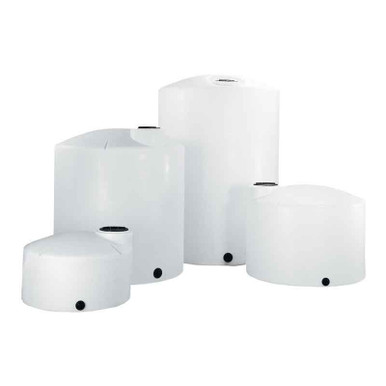
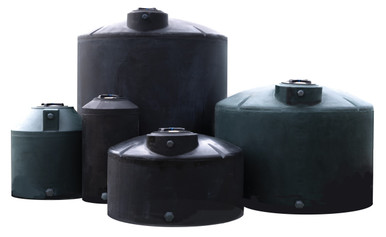
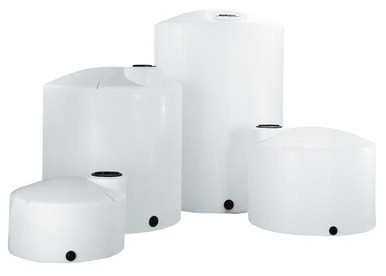
At 1,100 gallons you are choosing not just a size but a job for the tank to do. The black potable model here is purpose-built to sit outdoors in the sun and keep drinking water clean; the natural-white liquid-storage version of the same shell trades that algae defense for translucent walls you can read a level through, which is the better pick if the contents are an agricultural solution rather than water. Step up to an 11,000-gallon tank only if you are buffering a whole irrigation district — the price and the foundation both jump an order of magnitude.
Other 1100-Gallon Options


Frequently Asked Questions
How long will the 1100 Gallon Plastic Water Storage Tank last?
Plan on 15 to 20 years of service, and longer is common when the tank is installed level and stays within its 1.1 specific gravity and 120 F limits. The black resin's molded-in UV package is the long pole here — it is what lets the same tank that would chalk and fade in white pigment shrug off decades of direct sun. The seamless mold means there is simply no joint to be the weak link.
What chemicals can I store in this tank?
Its first job is potable water, and it is FDA-cleared for drinking water and food-grade liquids. Within the 1.1 specific gravity ceiling it will also hold light farm solutions and mild cleaning chemistry. It is not for gasoline, diesel, solvents, or anything flammable, and anything heavier than 9.2 pounds per gallon overloads the wall. Confirm any new chemical against a compatibility chart before you fill.
What kind of foundation does a 1100-gallon tank need?
Full, this tank weighs about 10,261 pounds, so the pad has to carry five tons across an 87-inch circle. A four-inch compacted gravel bed or a concrete slab does the job; what matters far more than thickness is that the surface is dead flat and free of stones. An out-of-level pad is the number-one cause of premature failure in tanks this size.
Does this tank come with a warranty?
Norwesco covers it for three years against manufacturing defects — molding flaws, pinholes, and factory fitting defects. It does not cover overloading past 1.1 SG, an uneven foundation, chemical attack from an incompatible liquid, or impact damage. Keep your invoice and a couple of install photos and any valid claim is straightforward.
Can I install this tank underground?
No — this is an above-ground vertical tank, and its flat walls are not built to resist the inward squeeze of backfilled soil. Bury it and you void the warranty and invite a collapse. For below-grade water you want a purpose-built ribbed cistern from our underground category instead.
Buying Considerations
Three checks before you order. First, confirm you actually have 41-plus square feet of level, drainable ground — the 87-inch base is wider than most people picture. Second, make sure whatever you are storing stays at or under 1.1 specific gravity; water is fine, heavy brines are not. Third, arrange the freight: at 1,100 gallons this ships LTL on a flatbed and needs a forklift or a few willing hands to come off the truck, since lift-gate service tops out below this tank's empty weight class on some routes. A quick call lets us set up the right delivery for your site.
Related Products You May Need
Questions? Call (866) 418-1777 — our team knows these products inside and out and can help you select the right tank for your application.
Recommended Tanks for This Guide
Live pricing, updated automatically · estimate freight to your ZIP.