Tank Permitting Lead Time by State: 2-Week to 6-Month Reality Check
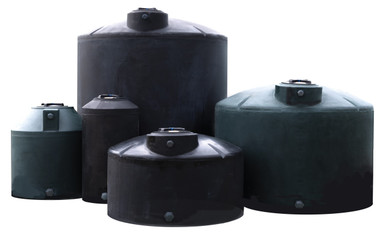
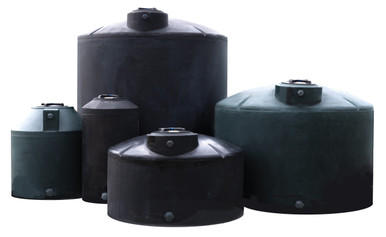
The single most overlooked tank-procurement variable is permit lead time. Buyers focus on tank lead time (Norwesco and Snyder ship in 2-4 weeks from regional warehouses) and ignore the permit clock. Then a $3,000 tank arrives on a yard, sits uninstalled for 12 weeks while the on-site wastewater permit clears the county, and the operating schedule slips a quarter. This guide walks the realistic permit-clock-from-application-to-issuance for tank installations across the U.S., grounded in actual state code citations and county-level practice we have documented in our state-regulation pillars.
OneSource Plastics ships into all 50 states. The same Norwesco MPN 41460 (1,000-gallon vertical) that takes 14 days from order to delivery in California can take 90+ days to actually get permitted into the ground in coastal Florida or rural North Carolina because the permit clock — not the tank clock — drives the schedule. This guide tells the truth about the timeline so buyers can sequence permits, deposits, and delivery correctly.
Permit Categories That Affect Tank Installation
Most tank installations require one or more of the following permits:
- On-site wastewater (septic) permit: required for any tank handling sanitary sewage. Governed at the state level (per the references in our state-regulations hub) and issued at the county or local health department level.
- Aboveground / underground storage tank (AST/UST) permit: required for petroleum, regulated chemicals, hazardous materials. Federal floor under 40 CFR Part 280 (UST) and EPA SPCC under 40 CFR 112 (AST oil); state programs typically more stringent.
- Building / mechanical permit: required for tank pads, foundations, and structural connections. Issued under the locally adopted International Building Code (IBC).
- Plumbing permit: required for tank-to-distribution piping. Issued under the locally adopted Uniform Plumbing Code (UPC) or International Plumbing Code (IPC).
- Electrical permit: required for pumps, level sensors, heat tracing. Issued under the National Electrical Code (NFPA 70).
- Floodplain development permit: required for installations in FEMA Special Flood Hazard Areas. Local floodplain administrator authority.
- Stormwater / NPDES permit: required for tanks affecting drainage on lots above 1 acre disturbed. EPA Stormwater Construction General Permit floor.
- Source-water protection permit: required for tanks in wellhead protection zones, drinking-water source protection areas. State / local.
The septic and AST/UST permits typically drive the schedule. Building, plumbing, and electrical run in parallel (1-3 weeks turnaround in most jurisdictions).
Fast-Track States (2-6 Week Septic Permit)
Texas — 2 to 4 weeks for OSSF
Texas governs on-site sewage facilities under 30 TAC Chapter 285 (Texas Administrative Code) administered by the Texas Commission on Environmental Quality (TCEQ). Counties act as authorized agents. Realistic permit timeline: 2-4 weeks from completed application to issued permit in most counties; up to 8 weeks in coastal/floodplain counties. We cover Texas in detail in our Texas septic regulations pillar.
Field reality: Texas counties have well-trained installer designators (Class III) and the rule structure is settled. Applications filed by a designator on a routine site close fast. Sites with floodplain exposure, soil-evaluation issues, or proximity to stock tanks add weeks.
Tennessee — 2 to 4 weeks under TDEC Rule 0400-48-01
Tennessee runs subsurface sewage disposal under TDEC Rule 0400-48-01. County environmental health offices issue permits with 2-4 week turnaround on residential / agricultural, longer for commercial. See our Tennessee septic regulations pillar for the full citation set.
Indiana — 2 to 4 weeks under 410 IAC 6-8.3
Indiana on-site systems run under 410 IAC 6-8.3. Local health departments issue. Routine residential permits clear in 2-4 weeks. Our Indiana pillar covers the rule structure.
Kentucky — 2 to 5 weeks under 902 KAR 10:085
Kentucky on-site systems are governed by 902 KAR 10:085. Local health departments. 2-5 week routine. Kentucky regulation pillar.
Wyoming — 3 to 6 weeks under Chapter 25
Wyoming small-wastewater systems: Chapter 25 of the Wyoming Department of Environmental Quality Water Quality Rules. Counties issue. Routine 3-6 weeks; mountain / floodplain sites longer. Wyoming pillar.
Mid-Track States (4-10 Week Septic Permit)
California — 4 to 12 weeks under OWTS Policy
California on-site wastewater treatment systems are governed by the State Water Resources Control Board OWTS Policy (adopted 2012, amended 2018), with county Local Agency Management Programs (LAMPs) implementing. Permits typically clear in 4-8 weeks in counties with active LAMPs (Sonoma, Sacramento, San Diego); coastal counties without modern LAMPs run 8-12+ weeks. See California pillar.
California adds a layer for tanks in source-water protection areas (SWPA) and Coastal Zone Conservation Act jurisdictions; coastal commission review can add 30-90 days.
Florida — 6 to 12 weeks under FS 381.0065
Florida onsite sewage treatment and disposal systems (OSTDS) are governed by Florida Statutes 381.0065 and Chapter 64E-6 Florida Administrative Code. Permits issued by county health departments under contract with Department of Health. Routine residential 4-8 weeks; commercial or coastal 8-12+ weeks. Florida regulation pillar walks the citation set.
Florida coastal counties (Monroe, Lee, Collier, Palm Beach) routinely run 12-20 weeks because of additional FEMA floodplain review, soil evaluation in high-water-table conditions, and Department of Environmental Protection coordination.
Georgia — 4 to 8 weeks under Chapter 511-3-1
Georgia onsite sewage management governed by Chapter 511-3-1 of the Georgia Department of Public Health rules, with county environmental health implementing. 4-8 week routine. Georgia pillar.
Ohio — 4 to 8 weeks under OAC 3701-29
Ohio sewage treatment system rules under OAC 3701-29, administered by Ohio Department of Health and county health districts. 4-8 week routine. Ohio pillar.
Washington — 4 to 10 weeks under WAC 246-272A
Washington on-site sewage systems under WAC 246-272A, with local health jurisdictions issuing. 4-10 week routine; longer in counties with active growth-management programs (King, Snohomish, Pierce). Washington pillar.
New York — 6 to 12 weeks under 10 NYCRR Appendix 75-A
New York onsite wastewater treatment systems governed by 10 NYCRR Appendix 75-A. County-level health permits with state oversight. Routine 6-10 weeks. NYC water-supply watershed (Catskill / Delaware) adds DEP review and runs 12+ weeks. New York pillar.
Pennsylvania — 6 to 12 weeks under 25 Pa. Code Chapter 73
Pennsylvania onsite sewage disposal under 25 Pa. Code Chapter 73, with Sewage Enforcement Officers (SEOs) issuing at the township level. 6-12 weeks because the SEO testing protocol (deep-hole and percolation testing, soil description) has fixed time gates. Pennsylvania pillar.
Arizona — 4 to 8 weeks under AAC R18-9
Arizona on-site wastewater treatment under AAC R18-9 Article 4 (4.02 General Permit), administered by ADEQ and county environmental health. 4-8 week routine. Arizona pillar.
Slow-Track States (8-26 Week Septic Permit)
North Carolina — 8 to 26 weeks under 15A NCAC 18E
North Carolina on-site wastewater systems under 15A NCAC 18E, administered by Environmental Health Specialists at county health departments. Routine 8-12 weeks; coastal counties (New Hanover, Brunswick, Carteret, Dare) routinely run 16-26 weeks because of CAMA (Coastal Area Management Act) coordination, soil-evaluation backlog, and high-water-table site complexity. See our North Carolina pillar.
Massachusetts — 12 to 26 weeks under 310 CMR 15.000
Massachusetts on-site systems under Title 5, 310 CMR 15.000. Local boards of health issue with state DEP review for systems above thresholds. Routine 8-16 weeks. Cape Cod and the Islands (Barnstable, Dukes, Nantucket counties) run 16-26 weeks because of nitrogen-sensitive watershed Title 5 amendments and the dense soil-evaluation backlog. Massachusetts pillar.
New Jersey — 8 to 16 weeks under NJAC 7:9A
New Jersey onsite wastewater systems under NJAC 7:9A Standards for Individual Subsurface Sewage Disposal Systems. NJDEP and county health departments. Routine 8-12 weeks; Pinelands Commission jurisdiction adds 16+ weeks. New Jersey pillar.
Oregon — 8 to 16 weeks under OAR 340 Divisions 71 and 73
Oregon onsite wastewater under OAR 340 Divisions 71 and 73, administered by Oregon DEQ. 8-16 weeks routine; longer in coastal and high-aquifer-vulnerability zones. Oregon pillar.
Vermont — 12 to 26 weeks under WW & Potable Water Supply Rules
Vermont onsite wastewater systems under the Wastewater System and Potable Water Supply Rules, administered by the Department of Environmental Conservation Drinking Water and Groundwater Protection Division. State-level review (no county delegation) adds queue time. Routine 12-20 weeks; difficult sites 20-26+ weeks. Vermont pillar.
Maine — 8 to 16 weeks under 10-144 CMR Ch. 241
Maine subsurface wastewater disposal under 10-144 CMR Chapter 241, administered by Department of Health and Human Services. Local Plumbing Inspectors issue. 8-16 weeks routine. Maine pillar.
Hawaii — 12 to 26 weeks under HAR Title 11 Chapter 62
Hawaii onsite wastewater under Hawaii Administrative Rules Title 11 Chapter 62, with Act 125 (cesspool conversion mandate by 2050) and Department of Health Wastewater Branch oversight. Routine 12-20 weeks; cesspool-replacement projects with the state's IUP (Initial Upgrade Plan) approval can run 20-26+ weeks. Hawaii pillar.
Alaska — 8 to 20 weeks under 18 AAC 72
Alaska onsite wastewater under 18 AAC 72, administered by ADEC. 8-20 weeks; remote borough sites with limited inspector availability run longer. Alaska pillar.
AST and UST Permits — Federal + State Floor
For petroleum, hazardous materials, and regulated-chemical tanks, the permit clock is driven by AST/UST regulations:
- 40 CFR Part 280 (UST): federal underground storage tank rules. State programs implement; most states have approved programs. Permit timeline 8-26 weeks depending on state.
- 40 CFR Part 112 (SPCC for oil AST): federal Spill Prevention Control and Countermeasure rules. Self-implementing for most tanks; PE-stamped plan required above thresholds. No "permit" but compliance review on inspection.
- NFPA 30 (Flammable and Combustible Liquids Code): adopted by reference in most state fire codes. Local fire-marshal review 2-8 weeks.
- NFPA 30A (Code for Motor Fuel Dispensing Facilities): for tanks with fuel-dispensing operations.
- UL 142 (steel AST listing): required for most aboveground petroleum tanks above small-quantity thresholds.
Realistic AST permit timeline: 4-12 weeks in most jurisdictions for tanks below 12,000 gallons; longer for larger or fire-code-sensitive locations. UST permits routinely run 12-26 weeks because of the regulatory complexity around release prevention, secondary containment, monitoring well siting, and financial-responsibility documentation under 40 CFR 280 Subpart H.
Permits That Run in Parallel
Building, plumbing, and electrical permits typically clear in 1-3 weeks of the septic / AST permit and run in parallel:
- Building permit (IBC adoption): 1-3 weeks routine. Required for pad pours, structural foundations, anchor installations. Tied to local building department. ACI 318 governs concrete; IBC Chapter 16 governs structural design. Wind-load tie-down per ASCE 7-22 is reviewed.
- Plumbing permit (UPC or IPC adoption): 1-2 weeks. Tank-to-fixture distribution plumbing. Cross-connection and backflow prevention reviewed.
- Electrical permit (NFPA 70 adoption): 1-2 weeks. Pumps, level sensors, heat tracing.
These permits are usually not the schedule driver. The schedule driver is septic / AST.
Specialty Permits That Can Add Months
Floodplain development permit
FEMA Special Flood Hazard Areas (SFHA) require local floodplain administrator review. Per 44 CFR Part 60, communities participating in the National Flood Insurance Program must regulate development in SFHAs. Tank installations in Zone A or AE require:
- Elevation certificate by licensed surveyor
- Engineering analysis demonstrating no rise in base flood elevation
- Tie-down design per ASCE 24 (Flood Resistant Design and Construction)
Realistic timeline: 4-12 weeks added to baseline.
Stormwater NPDES permit
Tank installations on construction sites disturbing 1 acre or more (or smaller sites in some states) require NPDES Construction General Permit coverage per 40 CFR 122.26. Notice of Intent filed 14-30 days before construction. Stormwater Pollution Prevention Plan (SWPPP) preparation: 1-3 weeks. Routine baseline addition: 30-60 days.
Wellhead Protection Area review
Tank installations in delineated Wellhead Protection Areas (WHPAs) under the federal Safe Drinking Water Act Section 1428 require state-specific review. Many states (California, Florida, Massachusetts, New Jersey, Wisconsin) have aggressive WHPA programs. Adds 4-16 weeks depending on jurisdiction.
Realistic Schedule by Project Type
| Project | Tank lead | Permit lead | Total schedule |
|---|---|---|---|
| Rural ag water tank, no permit (private well, no septic tie-in) | 2-4 wk | 0 wk | 2-4 wk |
| Residential septic replacement, fast-track state (TX/IN/KY) | 2-4 wk | 2-5 wk | 4-9 wk |
| Residential septic, mid-track state (CA/FL/GA/OH) | 2-4 wk | 4-12 wk | 6-16 wk |
| Residential septic, slow-track state (NC coast/MA Cape/VT/HI) | 2-4 wk | 12-26 wk | 14-30 wk |
| Commercial AST (UL-142 diesel, 5,000 gal) | 8-16 wk | 4-12 wk | 12-28 wk |
| UST replacement (regulated petroleum) | 8-20 wk | 12-26 wk | 20-46 wk |
| FEMA SFHA + septic (Florida coastal, NC coastal) | 2-4 wk | 12-26 wk | 14-30 wk |
| Wellhead protection area + AST (most states) | 8-16 wk | 8-20 wk | 16-36 wk |
How To Compress the Permit Clock
1. Submit complete applications
Incomplete applications restart the clock when health-department staff request additional information. The largest single source of delay is iteration on application detail (soil reports, site plans, equipment specifications). A complete first submittal typically saves 2-6 weeks.
2. Use a designated installer / SEO / engineer of record
States with credentialed installer / inspector roles (Texas Class III OSSF Designator, Pennsylvania SEO, Massachusetts Title 5 system inspector) have established trust relationships with local health departments. Permits filed by credentialed professionals close faster than direct-to-county applications.
3. File in winter / off-season where applicable
Many counties have seasonal permit-volume cycles. Florida and coastal NC peak May-October (homeowner activity, hurricane recovery). Filing November-March often clears faster.
4. Pre-plat the lot for known permit needs
Soil evaluation, perc testing, and high-water-table determination can be done before tank order. Having the test data on hand at permit application removes 4-8 weeks of typical delay.
5. Sequence delivery to permit issuance, not site readiness
OneSource holds inventory at regional warehouses and ships when permit is issued. We do not ship to a yard to "wait for permit" because tanks sitting in direct sun before installation accumulate UV exposure that does not credit toward operating life. We cover this in our UV degradation pillar.
SKU Selection That Affects Permit Timeline
Some catalog SKUs avoid permit complexity entirely:
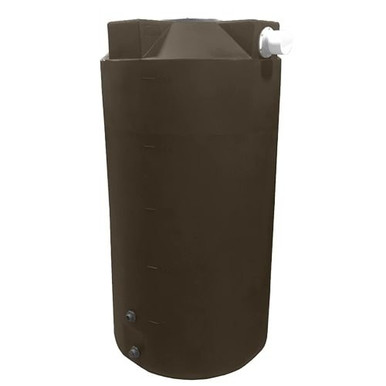
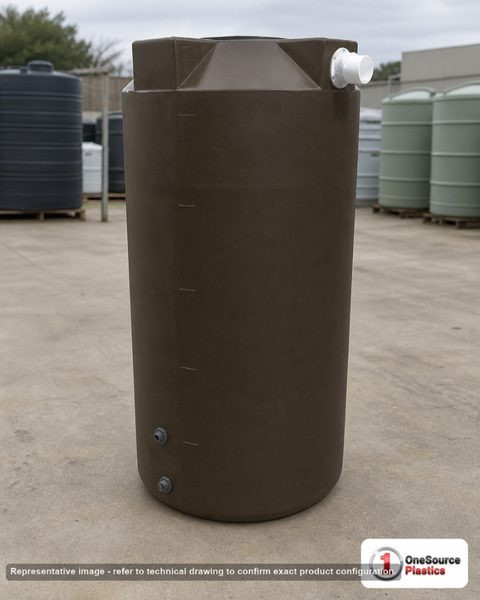
- Norwesco MPN 41460 (1,000 gallon vertical, $1,400 list approx): standalone water storage with no septic/AST trigger. Building permit only.
- Norwesco MPN 41464 (100 gallon black, $393.86): below most jurisdictional thresholds for permit at all on private property.
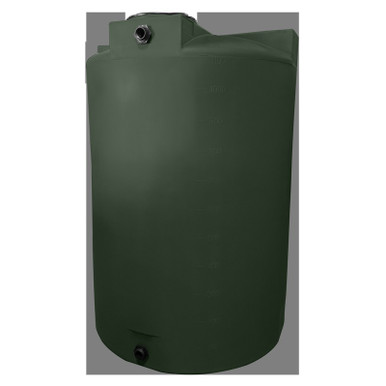
- Norwesco MPN 42040 (2,500 gallon black, $1,990): standalone water-storage SKU; permit structure depends on use case (water reserve = building only; firefighting reserve = NFPA 22 + AHJ review).
SKUs that trigger heavy permitting:
- Septic tanks (any size; permit always required)
- UL-142 steel ASTs (always require fire-marshal review and IBC)
- UST tanks (always require state UST program approval)
- Tanks installed in FEMA SFHA (always require floodplain permit)
For projects where permit timing is the binding constraint, choose the simplest SKU that meets the use-case requirement. We cover application-driven SKU selection in our Tank Sizing Calculator.
How OneSource Specifies When Permit Is the Constraint
For inbound buyer questions where permit timing is in question, our process:
- Confirm jurisdiction (state + county).
- Identify permit category (septic, AST, UST, building-only).
- Quote tank lead time.
- Estimate permit lead time from the state pillar references.
- Recommend sequencing (permit first, then deposit, then ship).
- Hold inventory at regional warehouse until permit issuance.
We do not advise paying for a tank that will sit on a yard for 12 weeks waiting on a permit. Every list price quoted is BigCommerce list — LTL freight is quoted separately per ZIP via the Freight Estimator or by phone at 866-418-1777.
Internal Resources
- State Septic Tank Regulations Hub (50-state coverage)
- California OWTS Policy Pillar
- Texas 30 TAC Chapter 285 Pillar
- Florida FS 381.0065 Pillar
- North Carolina 15A NCAC 18E Pillar
- UV Degradation Service Curve
- Tank Sizing Calculator
- Freight Cost Estimator
Source Citations
- 30 TAC Chapter 285 — Texas On-Site Sewage Facilities
- 10 NYCRR Appendix 75-A — New York Onsite Wastewater Treatment
- FS 381.0065 + Chapter 64E-6 FAC — Florida OSTDS
- 15A NCAC 18E — North Carolina On-Site Wastewater Systems
- OAC 3701-29 — Ohio Sewage Treatment System Rules
- WAC 246-272A — Washington On-Site Sewage Systems
- Chapter 511-3-1 — Georgia Onsite Sewage Management Rules
- AAC R18-9 — Arizona On-Site Wastewater Treatment
- 410 IAC 6-8.3 — Indiana On-Site Sewage Systems
- 902 KAR 10:085 — Kentucky On-Site Sewage Systems
- TDEC Rule 0400-48-01 — Tennessee Subsurface Sewage Disposal
- 310 CMR 15.000 — Massachusetts Title 5 Onsite Sewage
- NJAC 7:9A — New Jersey Standards for Individual Subsurface Sewage Disposal Systems
- OAR 340 Divisions 71 and 73 — Oregon Onsite Wastewater
- HAR Title 11 Chapter 62 — Hawaii Onsite Wastewater
- 18 AAC 72 — Alaska Onsite Wastewater
- 40 CFR Part 280 — Federal UST Regulations
- 40 CFR Part 112 — Federal Oil SPCC
- 40 CFR 122.26 — NPDES Stormwater Construction Permits
- 44 CFR Part 60 — National Flood Insurance Program Floodplain Management
- NFPA 30 — Flammable and Combustible Liquids Code
- NFPA 22 — Standard for Water Tanks for Private Fire Protection
- UL 142 — Steel Aboveground Tanks for Flammable and Combustible Liquids
- ASCE 24 — Flood Resistant Design and Construction
- IBC (International Building Code) Chapter 16 — Structural Design
- SDWA Section 1428 — Wellhead Protection Programs
Recommended Tanks for This Guide
Live pricing, updated automatically · estimate freight to your ZIP.