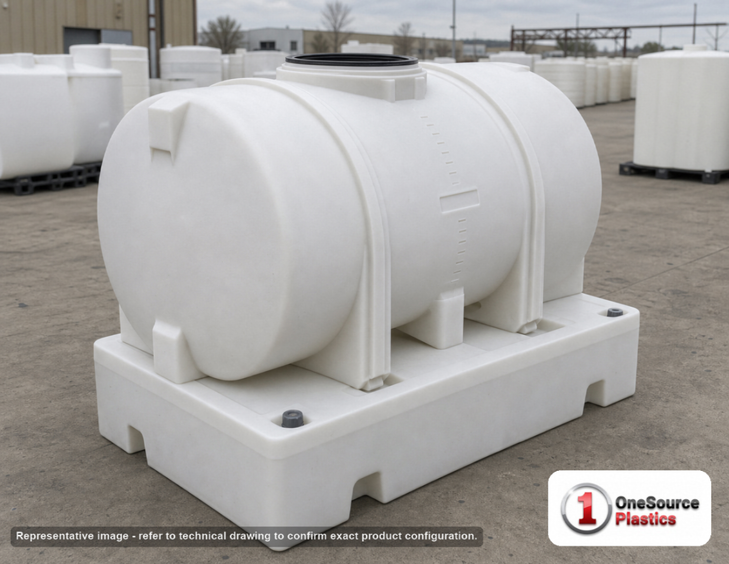
Three hundred and thirty-five gallons, 85 inches to the lid
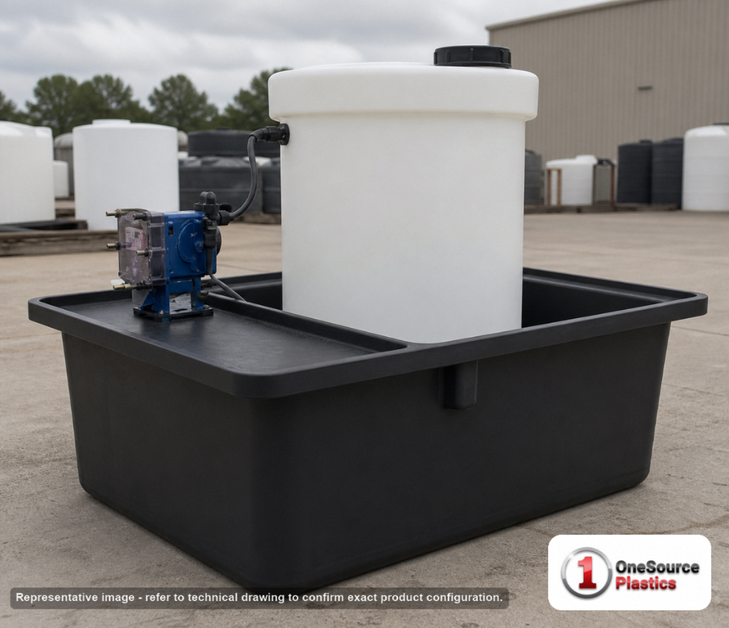
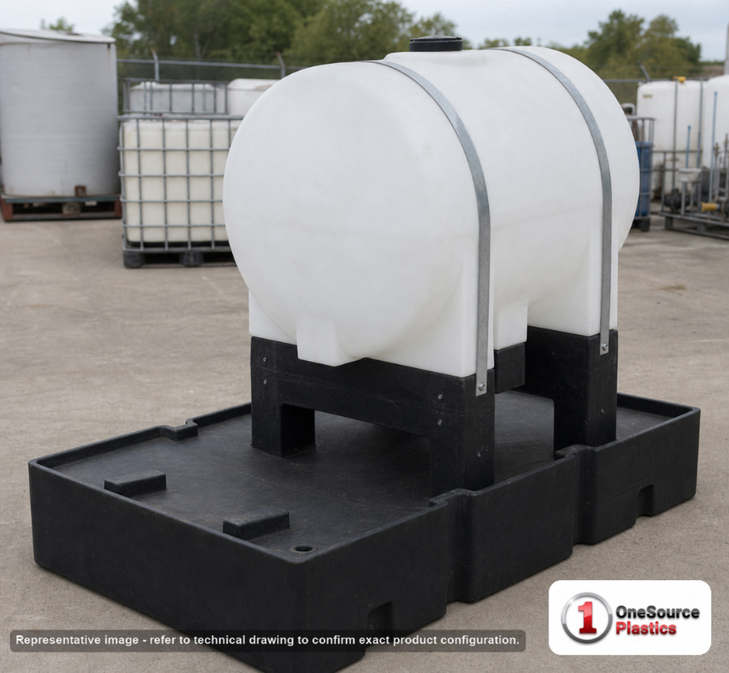
The Snyder SII-1004100CITS45 is a 335 gallon chemical injection tank in white high density linear polyethylene, listed 89 inches long, 54 inches wide and 85 inches tall at 339 pounds empty. The sheet rates the wall at a specific gravity of 1.9 and gives 2,794 pounds for 335 gallons of water at 8.34 pounds per gallon, with 5,308 pounds of max contents. The only opening published is a 6 inch threaded vented lid. The service limit is 120 F / 48 C. No outlet, no inlet and no warranty term appear on this sheet, and the sheet names no chemical, so this page names none. It is moulded at Marked Tree, Arkansas, and ships under NMFC 156600-02 at a shipped 339 pounds.
Engineer on the job? Request a written quote with the spec attached, or get freight to your ZIP and add to cart above; 866-418-1777 answers the technical questions.
Thirteen more inches of height on an unchanged footprint
This tank occupies exactly the floor its smaller listing does and holds a hundred and ten more gallons. That is the reason to buy it and it is worth being precise about, because it decides a room rather than a purchase. The plan is 89 inches by 54 inches, which is the same rectangle as the 225 gallon listing; the height is 85 inches against 72. So the slab, the bund line, the aisle, the pump position and the pipe run are all unchanged, and the only thing that moves is the ceiling and the reach to the lid. Site it where a fill hose comes in from above cleanly and where the vertical clearance is real rather than assumed: at 85 inches the opening is above head height for everybody, so the fill is a hose connection and any inspection is from a step or a small platform designed alongside the tank, not fetched later. The height pays you back at the other end. A taller column of liquid gives a pump on the same floor more static head to work with all the way down the batch, and the pump that never has to lift is the pump that does not lose prime at the end of a delivery cycle. Underneath, the requirement is the plain one: flat, continuous, level bearing across the whole 89 by 54 inch base, on a slab, a curbed pad or a structural deck. Not rails, not a pallet, not one corner packed. Empty it is 339 pounds, which is machine work rather than a lift; the sheet gives 2,794 pounds full of water and 5,308 pounds at the rating, arriving on the same footprint the 225 uses, so the floor sees a meaningfully higher pressure for the same plan. Check the slab before you check the tank. Then check the volume: run your dosing rate and delivery interval through the tank sizing calculator and take the headspace a warming product needs from the tank sizing guide, because on a tank this tall the last few inches of freeboard are the ones you notice on a hot afternoon.
The two twenty-five and the three thirty-five on one plan
| Part | Gallons | Length x width x height | Empty weight |
|---|---|---|---|
| SII-1004100CITS45 (this tank) | 335 | 89 x 54 x 85 in | 339 lb |
| SII-1003900CITS45 (same plan, shorter) | 225 | 89 x 54 x 72 in | 266 lb |
This sheet lists one sibling and the comparison is unusually clean, because only two numbers move. Both tanks stand on an 89 by 54 inch rectangle. This one is 85 inches tall at 339 pounds; the other is 72 inches tall at 266 pounds. Everything else the sheets publish is shared: the same wall rating of 1.9, the same 6 inch threaded vented lid as the only opening, the same 120 F / 48 C service limit, the same absence of an outlet, an inlet and a warranty term, and the same plant. So the question is not which tank is better built, it is how much height your room has and how often you want a delivery. Take the 335 when the floor plan is fixed and the delivery schedule is the thing costing you money, when the ceiling and the fill point can take another thirteen inches, and when a longer interval between deliveries genuinely means fewer deliveries rather than older product sitting in a tank. Take the 225 when the ceiling is low, when somebody needs to see into the tank without a platform, or when the dosing rate is modest enough that the extra volume would only be storage. One thing worth saying plainly on both: a dosing tank that turns over slowly is a tank whose contents change while nobody is watching, and no amount of capacity is worth that. Match the tank to the consumption, and where the plan is fixed and the height is available, this is the listing that costs you nothing extra on the floor.
Height or floor the limit? The table has both shapes; freight to your ZIP is quoted on each row, or call 866-418-1777 with the site.
The six inch vented lid is the only opening published
- The discharge: no outlet and no inlet is published on this sheet, so no size, no thread and no position is stated here. Tell us how the suction leaves and how the fill arrives, and we will confirm what this part number carries before anything is ordered.
- Suction in practice: with the top opening as the only published route, a metering pump is typically fed by a weighted suction assembly and a foot valve dropped through the lid. Carry that line on its own bracket rather than on the lid rim, keep the foot clear of the tank floor so the last inch of settled material is not the first thing it picks up, and finish with a flexible connection at the pump.
- The lid: 6 inches, threaded and vented, at 85 inches off the floor. Plan the platform or the step for it at the same time as you plan the slab; a tank whose opening can only be reached from a ladder somebody has to fetch is a tank that gets inspected less than it should.
- The vent: the lid is listed as vented, and on a taller column that vent is what protects the wall while a pump draws the level down. Keep it clear, inspect it on a schedule, and never restrict it to manage an odour.
- Level: no sight gauge, no float and no graduation is on this sheet. At 85 inches, reading the level by opening the lid is a job that stops happening, so decide the measurement method before the tank arrives; the level gauge selection guide is an honest comparison of the options.
- Limits: 120 F / 48 C and a specific gravity rating of 1.9. No warranty term is published on this sheet.
Tell us what is going in it when you order, because on a tank whose only published opening is a lid, the chemistry decides the seal, the suction assembly and any fitting we add. An injection tank also stands in a room with other injection tanks, and the label is the only thing that stops the wrong delivery going into the right tank; the label and signage guide sets out what belongs on the shell and in what order. Where the tank stands over a floor, a drain or ground that would have to be recovered after a release, the containment question is a separate purchase from the tank, and the Captor containment comparison argues it properly rather than assuming it away.
Longer intervals between deliveries on a dosing loop
The buyers here are the same operations that buy the shorter tank, at the point where the delivery schedule has become the problem: municipal water and wastewater plants dosing continuously into a main, industrial cooling and boiler rooms holding a treatment chemical at the pump, irrigation and agricultural injection into a line, oilfield and gas gathering sites feeding an inhibitor, food and beverage sanitiser loops, and process lines that meter around the clock rather than batch. What changes at this size is the logistics rather than the chemistry. A larger tank means fewer deliveries, fewer connections made, fewer opportunities for the wrong product to go into the right tank, and a smaller share of the operator's week spent waiting for a truck. What it also means is a longer residence time, so the question to answer before you order is how long your product stays good in a vented tank at your ambient temperature. Where the answer is comfortable, this is the better buy on the same floor. Where it is not, buy the smaller listing and order more often.
Rated liquids and the fittings to order with them
The resin carries a rating for each liquid below at the concentration shown, and each line names the wetted fitting and gasket to specify. Confirm the service you actually run on the chemical page or in the chemical compatibility database before ordering.
- Acetic Acid (60%) - PP/PVC fittings, EPDM gasket
- Aluminum Sulfate (50%) - PVC fittings, EPDM gasket
- Calcium Chloride (40%) - PVC fittings, EPDM gasket
- DEF (32.5%) - 316SS fittings, EPDM gasket
- Ethylene Glycol (100%) - PVC fittings, EPDM gasket
- Ferric Chloride (50%) - PVC fittings, EPDM gasket
- Ferric Sulfate (60%) - PVC fittings, EPDM gasket
- Ferrous Sulfate (20%) - PVC fittings, EPDM gasket
- Hydrochloric Acid (37%) - PVC fittings, Viton gasket
- Hydrofluoric Acid (48%) - PP/PVC fittings, Viton gasket
- Hydrofluosilicic Acid (26%) - PP/PVC fittings, Viton gasket
- Hydrogen Peroxide (50%) - PVC fittings, Viton gasket
- Magnesium Chloride (30%) - PVC fittings, EPDM gasket
- Peracetic Acid (30%) - 316SS fittings, Aflas gasket
- Phosphoric Acid (85%) - PVC fittings, Viton gasket
- Polyaluminum Chloride - PVC fittings, EPDM gasket
- Potassium Carbonate (50%) - PVC fittings, EPDM gasket
- Potassium Hydroxide (saturated) - PVC fittings, EPDM gasket
- Propylene Glycol - PP/316SS fittings, EPDM gasket
- Sodium Bisulfate - PVC/PP fittings, EPDM gasket
- Sodium Bisulfite - PVC/PP fittings, EPDM gasket
- Sodium Carbonate (30%) - PVC fittings, EPDM gasket
- Sodium Hypochlorite (
- Sodium Thiosulfate (40%) - PVC fittings, EPDM gasket
- Sulfuric Acid (98%) - CPVC fittings, Viton gasket
- Urea Solution (50%) - PP/PVC fittings, EPDM gasket
- Zinc Orthophosphate - PP/316SS fittings, EPDM gasket
Arkansas to your dock at 339 pounds
Marked Tree, Arkansas, is the moulding plant, and Arkansas is the state the sheet lists it as shipping from. That puts the mid-South, the Gulf and the lower Midwest on a genuinely short lane and the far West on a long one, which is worth pricing before the tank is specified rather than after. The freight class reads LTL, a mode and not a numeric class, under NMFC 156600-02, and the shipping size matches the tank at 89 by 54 by 85 inches at 339 pounds. Get the real number for your ZIP from the freight cost estimator; the listed price is before freight. At 339 pounds and 85 inches tall, this is a forklift or a pallet jack at the dock and a tank that wants to stay upright the whole way in, so check the door height and the overhead before delivery day. Put it in its final position before anything is plumbed, fill it with clean water, and hold the full 2,794 pound load through a complete pump cycle while somebody reads the lid seal and watches the vent path. Drain it, let it dry, then commission it properly. Keep the delivery paperwork with the site file rather than in a drawer, because the plant and the part number on it are what we need the day you order the second one. The vent screen is the cheapest part on the tank and the one that saves it; look at it every time the manway opens.
Freight and documents
Ships from: Marked Tree, AR. LTL freight is quoted to your ZIP with the freight cost estimator or by phone at 866-418-1777. The listed price is before freight.
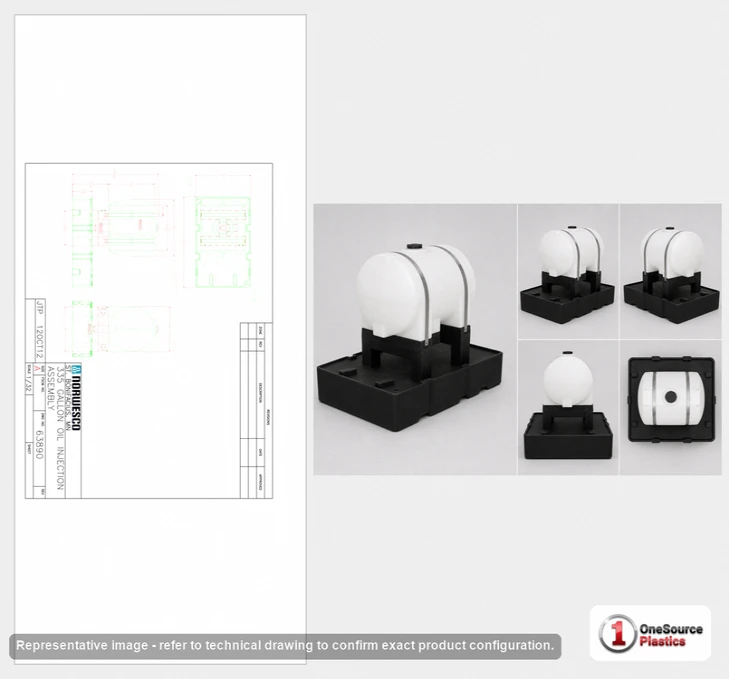
Technical drawing (PDF) for Snyder Industries 1004100CITS45.
See this tank
Product video. Watch the Snyder Industries 335 Gallon HDLPE Chemical Injection Tank in White video (70 seconds) with dimensions, fittings and shipping notes.
Ready to order?
Add it to your cart at the top of this page, get LTL freight to your ZIP, request a written quote, or call 866-418-1777. The listed price is before freight.