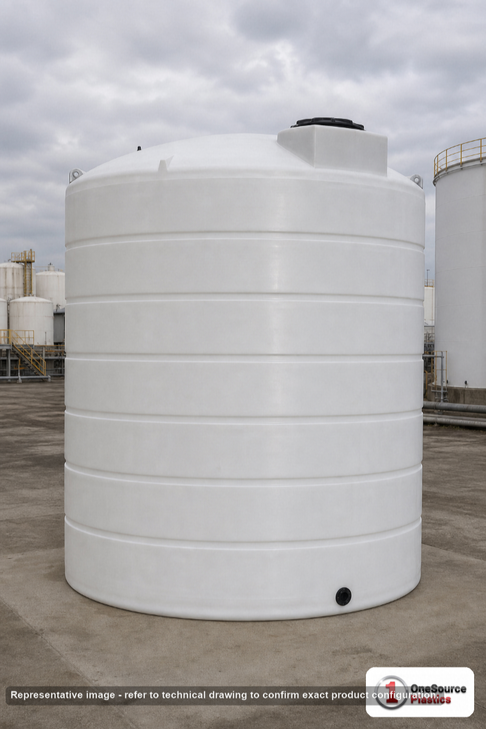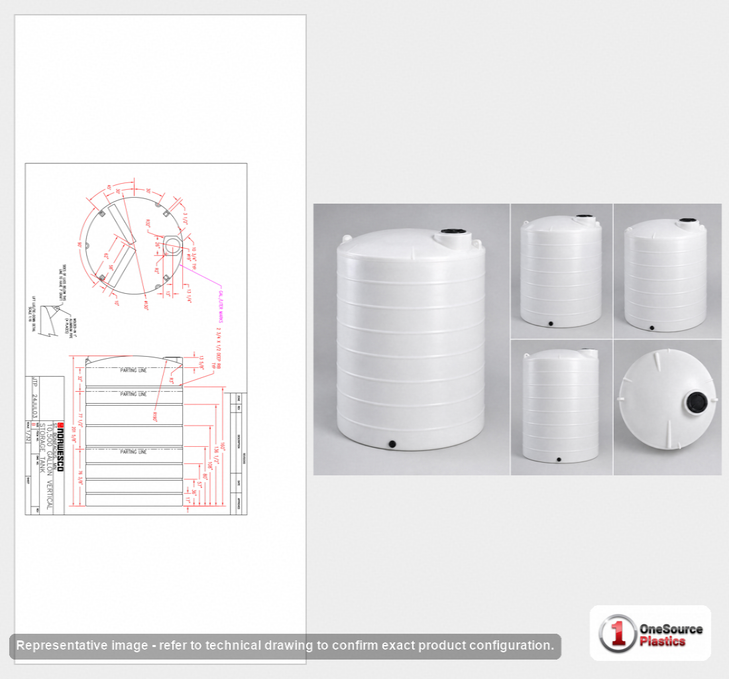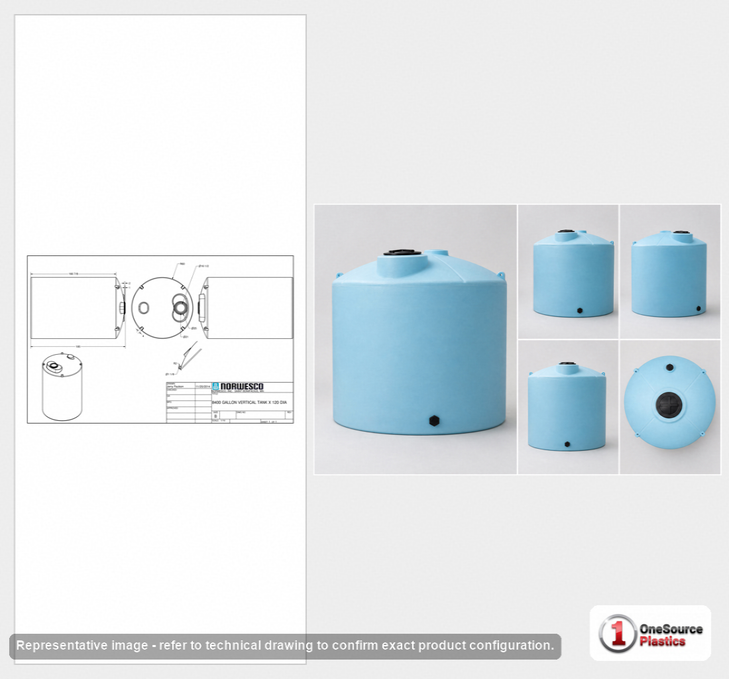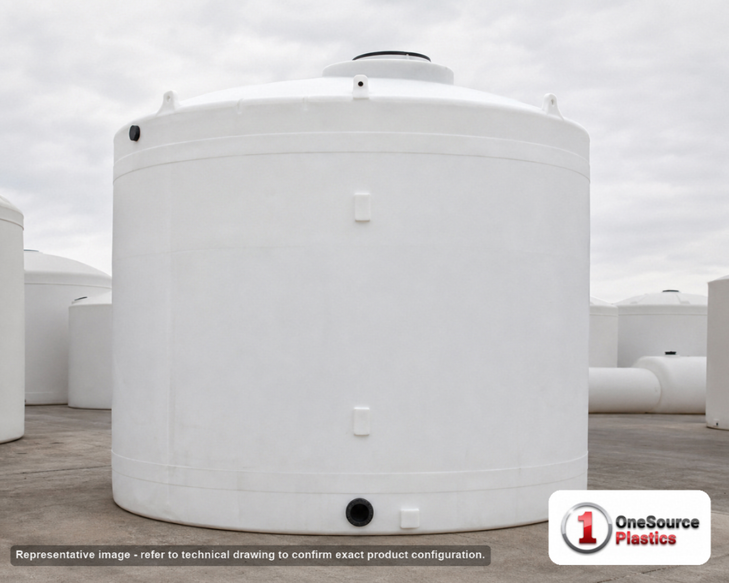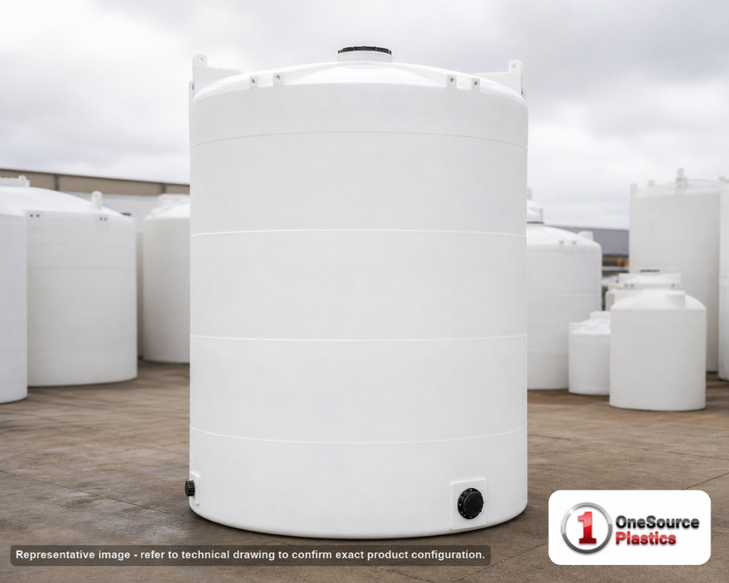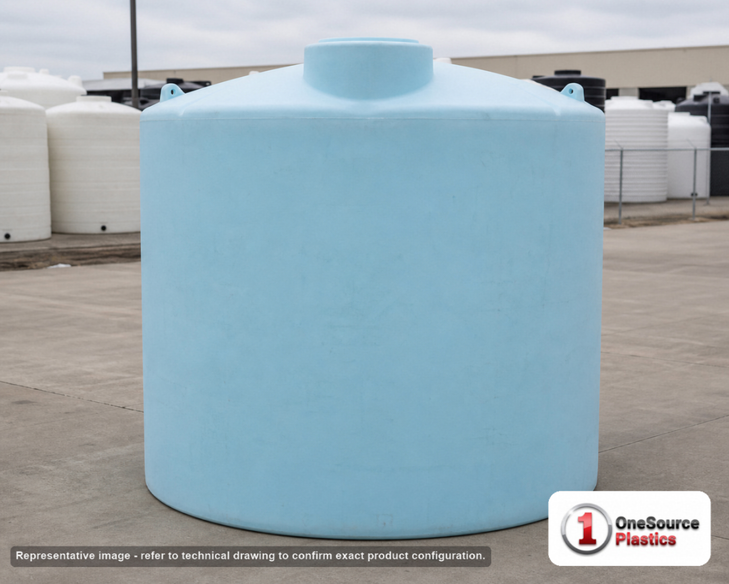
The Norwesco 10,000-gallon vertical storage tank is built from high-density polyethylene (HDPE) and sized for bulk water storage, agricultural supply, rural fire-water reserves, and industrial process water at sites that need serious volume in a single vessel. This is the without-fittings configuration in blue: a clean tank shell with no pre-installed outlet, fill, vent, or overflow, so you bulkhead to your own site plan rather than working around factory bulkheads. At full water it holds roughly 83,400 pounds of liquid, which makes the pad and plumbing decisions you settle before delivery matter more here than on any smaller Norwesco vertical tank.
Does it work for your site?
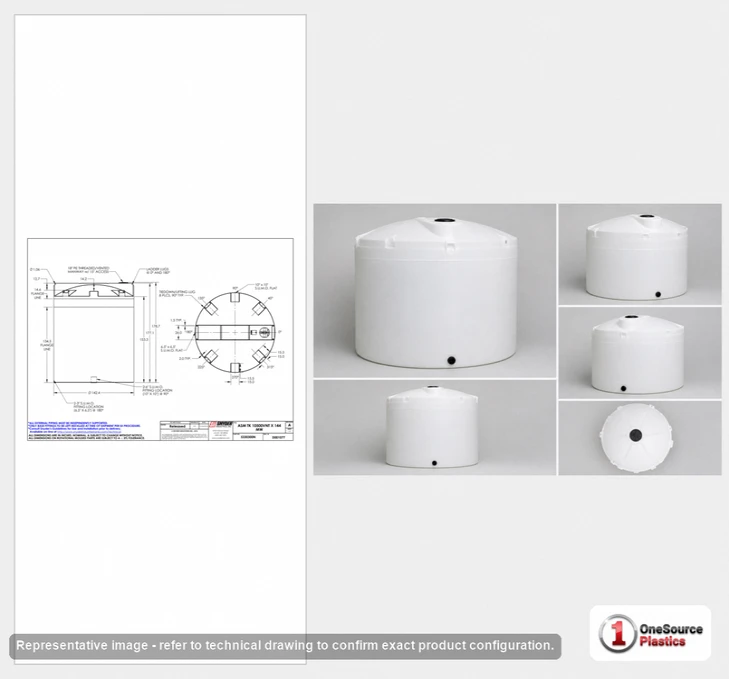
This is a vertical liquid storage tank with a 10,000-gallon nominal capacity in HDPE storage tank construction. The full-water weight of about 83,400 pounds tells you most of what you need to plan: this tank requires a fully engineered, level foundation - a reinforced concrete pad sized for the loaded footprint, not gravel or compacted soil alone. Confirm your pad design and bearing capacity against that loaded weight before the tank arrives. That weight is the water case (specific gravity 1.0, roughly 10,000 gal x 8.34 lb/gal); heavier liquids increase the loaded weight and the pad and foundation demand proportionally, so size the foundation to the actual liquid you intend to store. Because it ships without fittings, plan outlet placement, fill points, vent, and overflow against the technical drawing on this page so your bulkhead cuts land where your manifold needs them.
What you supply on a bare-shell tank
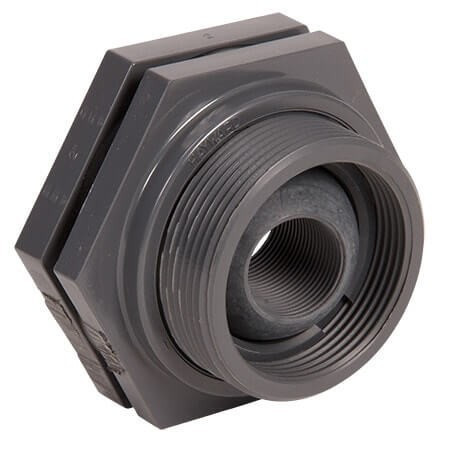
Since this is the without-fittings configuration, the plumbing is yours to build: bulkhead fittings and gaskets sized to your manifold, plus your vent and overflow - none of these ship installed. Treat that as a planning checklist before order, not an afterthought, and lay each penetration out against the drawing on this page. The upside of a bare shell is full control over where every connection lands; the discipline is that you have to spec all of it yourself.
Sizing and venting at this volume
At 10,000 gallons, engineering details that get skipped on small tanks become real failure points. Atmospheric venting has to keep pace with how fast you fill and draw down - an undersized vent pulls a vacuum on outbreathing or pressurizes the tank on fill, and on a vessel this large that load is significant. Our API 2000 vent-sizing worked examples cover thermal in-breathing, liquid-movement out-breathing, and combined sizing specifically through the 10,000-gallon vertical range. Our HDPE wall-thickness guide covers why the vapor-saturated headspace is where premature failures tend to originate, so factor that into how you inspect and where you place upper fittings. To confirm this is the right capacity for your demand and drawdown, run the numbers through our Tank Sizing Calculator and the Tank Sizing Guide, and read the full 10,000-gallon vertical buyer's guide before you commit.
If this is a fire-water reserve
A 10,000-gallon vertical is a common building block for rural and remote private fire protection where there is no hydrant infrastructure. If that is your application, our fire-water reservoir design guide walks through NFPA 22 sizing discipline, where a polyethylene tank fits in the private fire-protection stack, and freeze-protection engineering for cold-climate service - decisions that have to be made before you set a Norwesco vertical tank this size.
Freight on a 10,000-gallon tank
A tank this large ships LTL on its own and freight is quoted live to your ZIP - there is no flat rate at this size. We ship from the nearest of four Norwesco plants - Fairfield, TX; Hanford, CA; St. Bonifacius, MN; or Washington Court House, OH - so the freight leg is as short as possible to your delivery point. Before you order, confirm your delivery access and that you have offload equipment - a crane or forklift rated for the empty tank - staged to set it in place, since a missed offload requirement at this size is the most expensive delivery failure there is. Get a real number through our Freight Cost Estimator by entering your ZIP, or call 866-418-1777 and we will quote it and confirm offload requirements with you. The listed price is the tank before freight; freight is quoted separately.
Freight and documents
Ships from: Hanford, CA; St. Bonifacius, MN; Washington Court House, OH; Fairfield, TX. LTL freight is quoted to your ZIP with the freight cost estimator or by phone at 866-418-1777. The listed price is before freight.
Technical drawing (PDF) for Norwesco 43131.
See this tank
Interactive 3D model with live fill. This tank has an interactive 3D model built to its manufacturer dimensions. Rotate it, and set a fill level to see how much liquid it holds at any height. Open the 3D view on the product photo above. Download the 3D model (GLB).
Ready to order?
Add it to your cart at the top of this page, get LTL freight to your ZIP, request a written quote, or call 866-418-1777. The listed price is before freight.