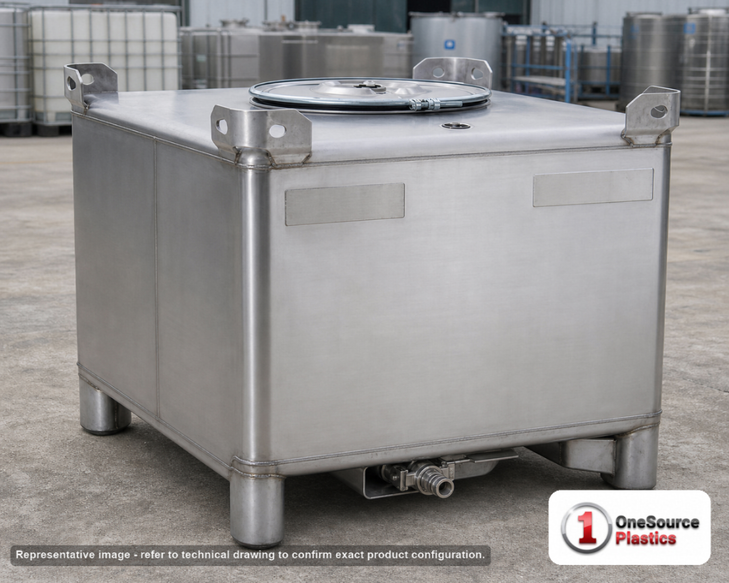
A hundred and eighty gallons of three-oh-four stainless in a tote footprint
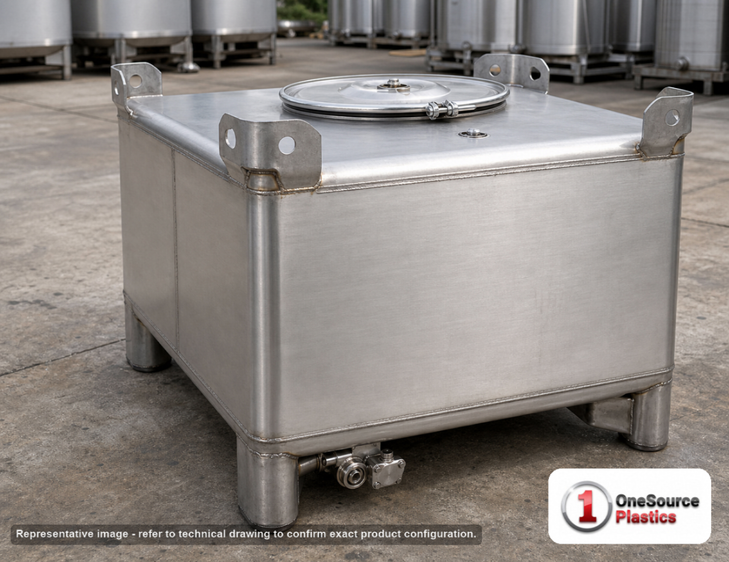
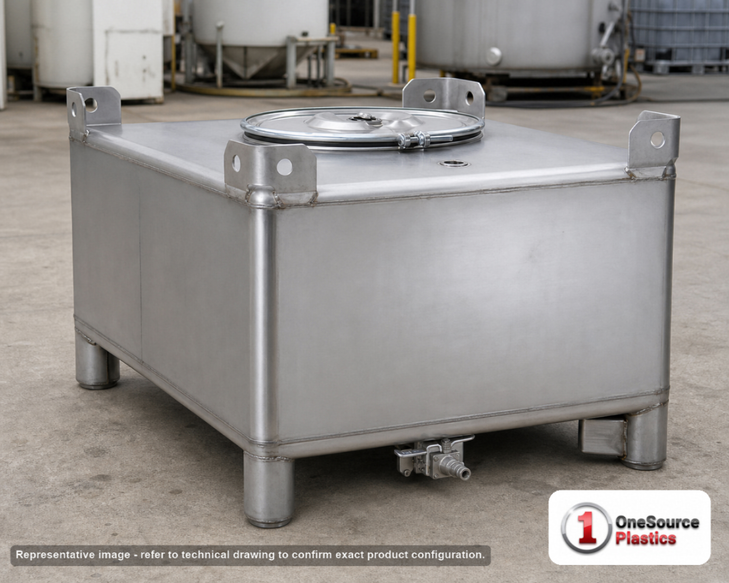
The Snyder 6984100B51301 is a 180 gallon 304 stainless steel Supertainer IBC tote tank, silver, listed at 42 inches long, 48 inches wide and 29.25 inches tall, at 351 pounds empty. Read the material first, because it changes every question: this is steel, not plastic. There is no specific gravity rating on the sheet because that is a rating plastic tanks carry, and there is no maximum operating temperature and no warranty term published either, so none is stated here. The sheet gives 1,501 pounds for 180 gallons of water at 8.34 pounds per gallon and publishes no max contents figure. The fittings it does publish are specific and useful: a 22 inch vented manway, a 2 inch access port and a 2 inch 316 stainless ball valve on the outlet. The freight class is 125, the sheet carries no NMFC code, and it ships from Michigan. No pressure rating, no transport rating, no fork pocket dimension and no stacking load is published on this sheet, so this page claims none of them; ask us to confirm any of those against the part before you plan around them.
Engineer on the job? Request a written quote with the spec attached, or get freight to your ZIP and add to cart above; 866-418-1777 answers the technical questions.
Michigan, class one twenty-five, and what a steel tote costs to move
Start with the lane, because on a returnable container the freight is not a one-time cost, it is the business model. This tote ships from Michigan, which is a short lane through the Great Lakes and the industrial Midwest and a planned one to the South and the coasts. The freight class is 125, with no NMFC code on the sheet, and the container is 351 pounds empty. Compare that with a plastic tote of similar volume and the difference is immediate: a steel tote is heavier to send anywhere, which is precisely why it is bought to be sent back. A container that makes a dozen round trips is priced per trip; a container that makes one is priced per purchase. If your liquid goes out and the empty comes home, the arithmetic favours steel and keeps favouring it. Its geometry is the second reason it earns the lane. Forty-two by 48 inches on a plan only 29.25 inches tall is a low, wide package that sits on a standard pallet footprint and leaves plenty of trailer height above it, which is what lets a load be planned around it rather than in spite of it. The low height also makes it a comfortable working container on the ground: the 22 inch manway sits a little over two feet up, so filling, sampling and looking in are done standing rather than from a step, and the ball valve at the bottom is at a height where a drum, a pail or a pump inlet fits underneath. Set it on a flat, continuous, level surface bearing the whole base. Above that base sits 1,501 pounds of water, and stainless is unforgiving of a container set down on one corner of a broken pallet or a rutted yard. Where the tote feeds a dosing or metering arrangement, the frame and the drip containment around it deserve as much thought as the container, and the pump skid design guide for tank-fed dosing operations works through the frame engineering, the drip pan and the leak detection architecture. Where the contents make secondary containment a requirement rather than a preference, the secondary containment guide for hazardous waste tank systems covers the leak detection options and the inspection cadence, and the Captor containment comparison sets the containment approaches against each other. Before the format itself is settled, the guide to choosing between a tote, a drum, a cube and a tank, backed by the chemical compatibility database for the contents themselves is the honest place to start, with your own volumes in the tank sizing calculator and the tank sizing guide.
Two one-eighties, a one-sixty-five and a two-twenty
| Part | Gallons | Length x width x height | Empty weight |
|---|---|---|---|
| 6984100B51301 (this tote, 304 stainless steel) | 180 | 42 x 48 x 29.25 in | 351 lb |
| 6984100B51302 (304 stainless steel, same listing) | 180 | 42 x 48 x 29.25 in | 351 lb |
| 6984000B51306 (304 stainless steel, shorter) | 165 | 42 x 48 x 26.25 in | 326 lb |
| SII-6630023B97202 (HDPE stackable tote, a different material) | 220 | 45 x 45 x 48 in | 243.1 lb |
The first three rows are stainless steel and the fourth is not, and that is the division that matters before any dimension is compared. SII-6630023B97202 is named an HDPE stackable tote: a different material, a different price, a different service life and a different set of questions, and we will not blur the two because they sit in one table. On volume alone it is the biggest at 220 gallons, and on a 45 inch square plan 48 inches tall it is also much the tallest, at 243.1 pounds. Among the steel containers, the second row is the same 180 gallons in the same 42 by 48 by 29.25 inch envelope at the same 351 pounds under a second part number; the sheet explains nothing about what separates them, so match whichever number your drawing, your fleet or your existing installation already uses. The genuinely different steel option is 6984000B51306: 165 gallons in the same 42 by 48 inch plan, three inches shorter at 26.25 inches, and 326 pounds. That is the same floor space and the same handling for slightly less volume in a lower package, which is worth having where totes are stored under a shelf, loaded into a van with a low roof, or moved through a doorway that is tighter than anyone admits. Fifteen gallons is not usually the deciding factor; three inches of height often is. Measure the shelf, the van and the door before you choose between them.
Height or floor the limit? The table has both shapes; freight to your ZIP is quoted on each row, or call 866-418-1777 with the site.
The vented manway, the access port and the ball valve
- The manway: 22 inches and vented, on a container only 29.25 inches tall. That is a wide opening on a low package, and it is the difference between a container you can genuinely clean and inspect and one you only ever hope is clean. At a little over two feet off the ground it is worked at standing height, which is the practical advantage of this shape over a taller tote.
- The vent: the manway is listed as vented, and that vent path is what lets the container take a delivery and give it back without the walls arguing. Keep it clear, check it whenever the manway is opened, and never blank it off.
- The access port: 2 inches, as the sheet lists it. That is the route for a fill line, a dip tube, a level device or a return, and it is the fitting that keeps the manway closed during normal operation.
- The outlet: a 2 inch 316 stainless ball valve. A quarter-turn valve on a two inch line empties a container this size quickly and, just as usefully, shuts positively and predictably at any point in the pour.
- What the sheet does not publish: no pressure rating, no transport rating, no fork pocket dimension and no stacking load appears on it, so none is claimed here. If your operation depends on any of those, ask us to confirm it against the part before the container is specified into a process.
- Limits: no maximum operating temperature and no warranty term is published on this sheet. The published figures are the capacity, the dimensions, the weight, the fittings and the freight class.
Name the liquid when you order. On a steel container the gasket at the manway, the seat in the valve and the thread sealant are all chemistry decisions, and they are the parts that fail first when they are chosen generically.
Where a returnable steel tote replaces a disposable one
A stainless tote at this volume is bought where the container has to come back, stay clean, or both: chemical and ingredient distribution on a returnable cycle, food, beverage, dairy and brewing transfers where cleaning between products has to be verifiable, pharmaceutical and fine chemical batching, cleaning and sanitising solution supply, sampling and pilot quantities that will be shipped and returned, and dosing supply beside a pump skid where one container feeds a metering line for weeks. Two arguments carry the decision. The first is cleaning: a steel vessel with a 22 inch manway can be washed, inspected and signed off in a way a narrow-necked container never can, and where a product changeover has to be provable, that is not a preference. The second is the round trip: a container that returns is an asset with a service life, and its cost is spread across every trip it makes rather than landing on the first one. If your containers go out and never come back, steel is the wrong economics. If they come back, this is the shape that keeps coming back for years.
Out of Michigan at three hundred and fifty-one pounds
The sheet lists Michigan as the state it ships from, gives the freight class as 125 and carries no NMFC code and no plant. The container is 42 by 48 by 29.25 inches and 351 pounds empty, which is a machine-handled item at both ends: a forklift or a pallet truck, taken under the base, never a sling round the body and never a lift by the manway. Price the lane to your ZIP with the freight cost estimator; the listed price is before freight. Because the sheet publishes no fork pocket dimension and no stacking load, do not plan a racking or stacking arrangement around assumptions; confirm it with us against the part first. Inspect it on arrival while the driver is still there. On a stainless container the things to look at are the manway seal face, the vent, the access port thread and the valve, in that order, because those are the parts that take a knock in transit and the shell almost never does. Fill it with clean water, hold the 1,501 pound load, then open and close the ball valve several times under head and watch the seat, since a valve that passes when new is a valve that tells you so on the first day rather than in the middle of a transfer. Number the container and start a log the day it enters service; on a returnable asset the log is what makes the round trip auditable, and it is the first thing anyone asks for when a load is questioned. The vent screen is the cheapest part on the tank and the one that saves it; look at it every time the manway opens.
Freight and documents
Ships from: Marked Tree, AR; Merced, CA; Lincoln, NE. LTL freight is quoted to your ZIP with the freight cost estimator or by phone at 866-418-1777. The listed price is before freight.
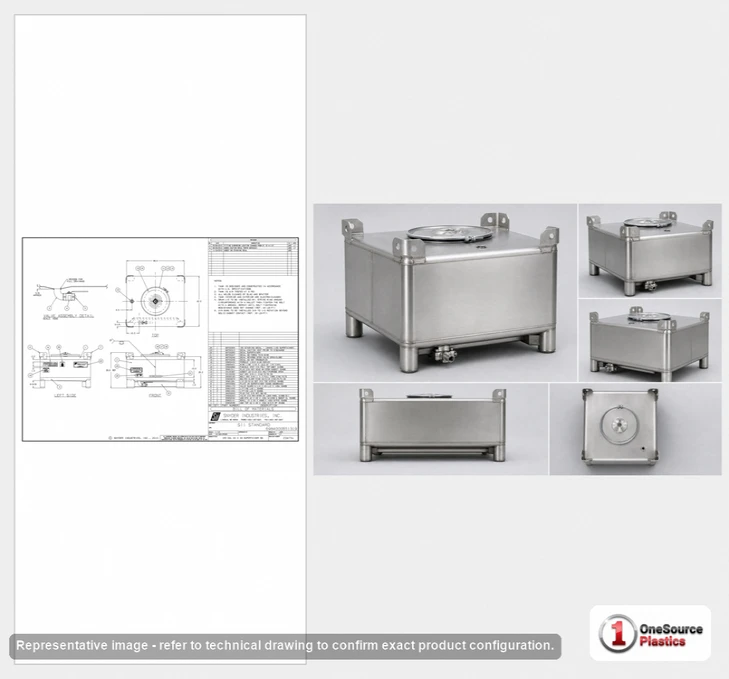
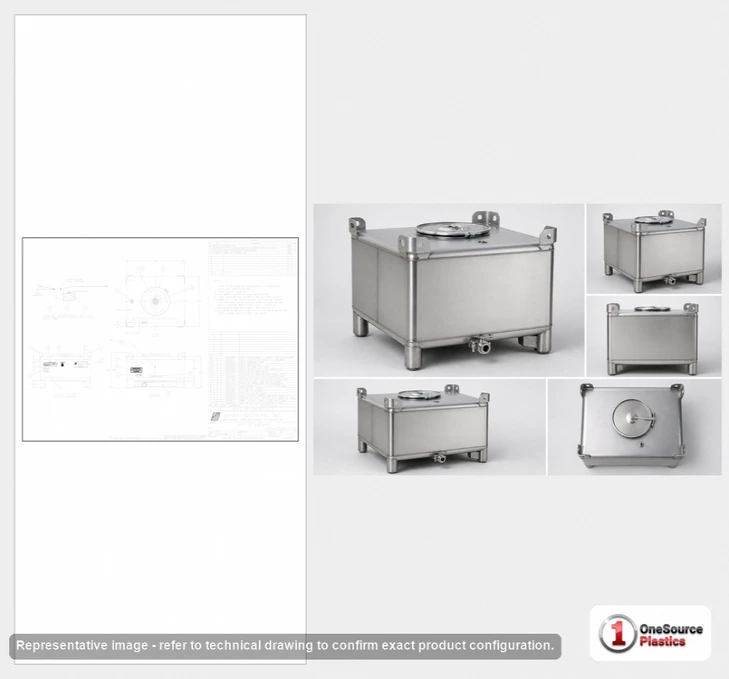
Technical drawing (PDF) for Snyder Industries 6984100B51301.
Ready to order?
Add it to your cart at the top of this page, get LTL freight to your ZIP, request a written quote, or call 866-418-1777. The listed price is before freight.