180 gallons in the tall cubetainer, 44 inches over a 36 inch square
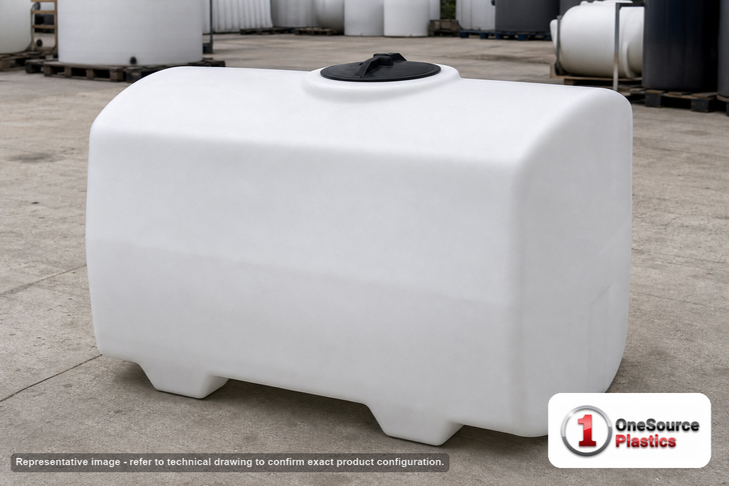
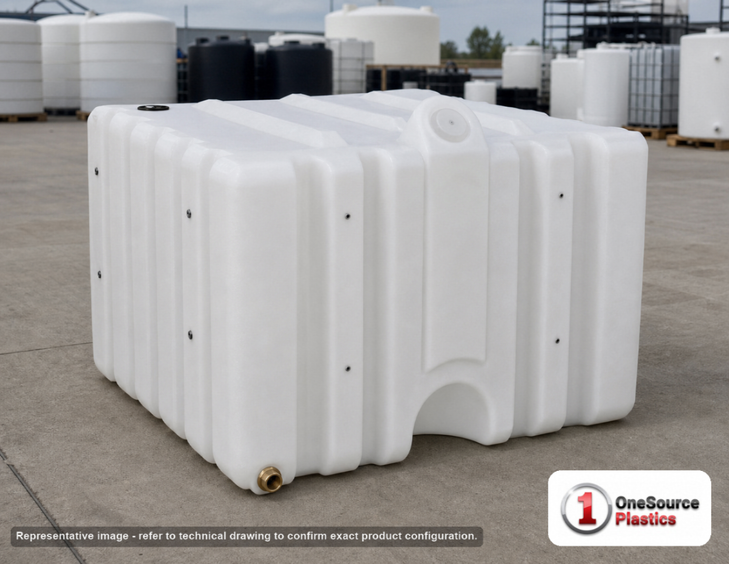
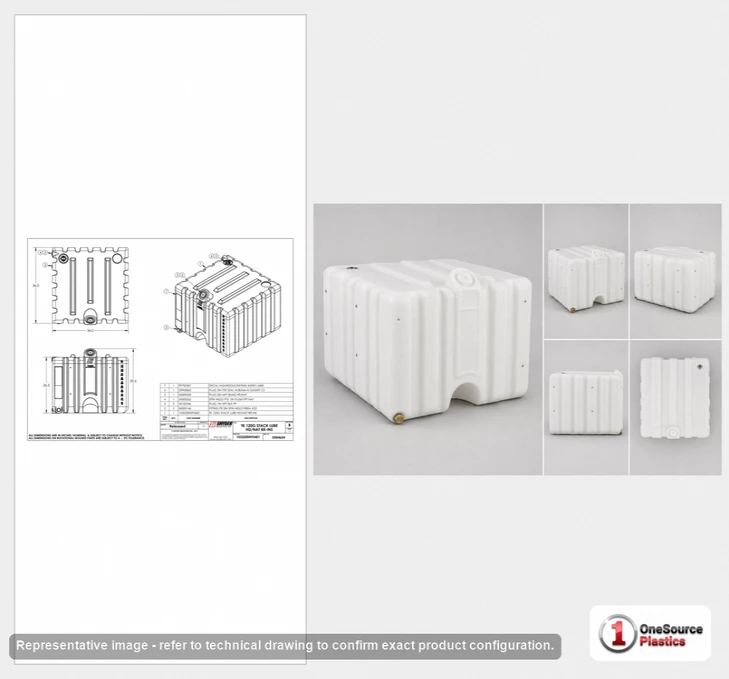
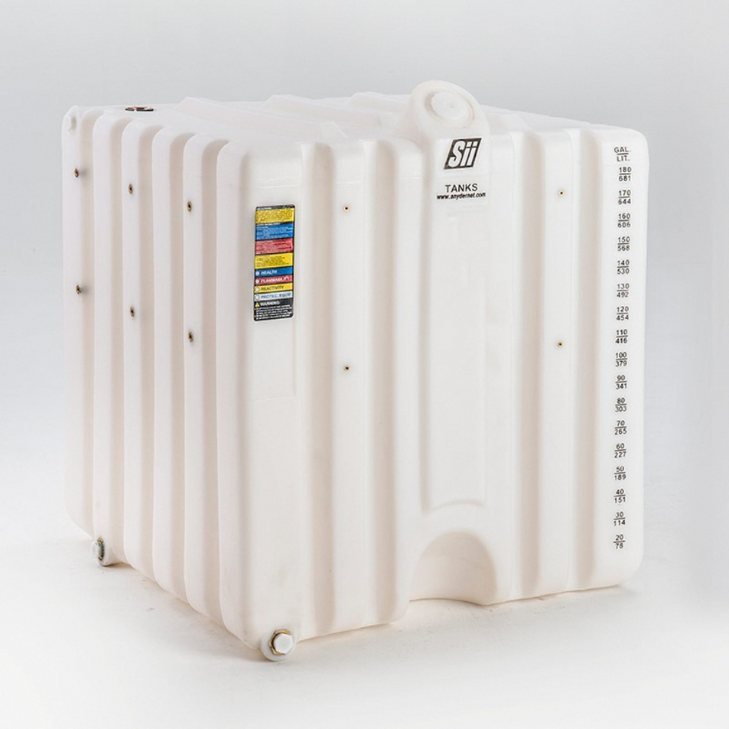
The Snyder SII-1032300N95401 is a 180 gallon cubetainer with a brass dispense fitting: a white high density linear polyethylene container on a 36 inch by 36 inch footprint standing 44 inches tall, listed at 105 pounds empty and 105 pounds to ship, molded at St. Bonifacius, Minnesota. It is built to be filled, set down and drawn from by hand, which is a different thing from a tank on a pad. The sheet rates the wall at a specific gravity of 1.9, which is where the 2,852 pound figure for maximum contents comes from against 1,501 pounds for 180 gallons of water at 8.34 pounds per gallon. Access is an 8 inch lid, and freight is listed as class LTL under NMFC 156600-03. The sheet publishes no maximum operating temperature and no warranty term for this item, so this page asserts neither; ask us and we will get Snyder's current terms in writing.
Have the liquid and the ZIP? That is all 866-418-1777 needs to confirm the fit; or price freight to your ZIP and add it to your cart above.
The duty is turnover: who outgrows a smaller cube and stops short of a tote
The buyer for this container has run out of a smaller one. It happens on a fixed pattern: a maintenance or fleet shop that was refilling a bench container twice a week and is now doing it twice a day; a truck or car wash that added a bay; a food, beverage or plating plant that moved a hand-dosed ingredient from a drum to a station and then found the station was the bottleneck; a grounds, turf or greenhouse operation that went from a hand crew to a spray rig; a municipal or janitorial store that started issuing concentrate to more crews than it used to. What all of them want is more gallons in the same floor space, and that is exactly what this part number is: the same 36 inch square as the smaller cubetainers, carrying 180 gallons by standing three feet eight inches tall instead of squatting. Nine square feet of floor, half again more liquid. What the extra height costs is reach and stability. At 44 inches the 8 inch lid is chest height on most people, which is comfortable to pour into and awkward to look into, so a fill hose is better than a jug and a light is better than a guess. The same height raises the centre of gravity, which matters the moment somebody tries to move it part-full: a taller square body on a pallet jack over a rough floor leans further than a low one, so it travels empty or it travels on a forklift. Underneath, flat and continuous carries the whole load, because the body bears on every part of the surface it is resting on and nothing else. A cracked deck board, a bench with a bowed top or a lip under one edge takes 1,501 pounds of water, or up to 2,852 pounds of contents at the sheet's rating, on that point rather than across the base. Where the container stands on concrete rather than on a pallet, the concrete pad sizing framework is the right reference and it scales down to a footprint this size. Then check the volume against the duty rather than against the last container you had: run 180 gallons against your real daily draw and refill interval in the tank sizing calculator, and take the reserve you never dip into and the headspace a warming liquid needs from the tank sizing guide.
The 180 between the 150 and the 260
| Part | Gallons | Length x width x height | Empty weight |
|---|---|---|---|
| SII-1032300N95401 (this cubetainer) | 180 | 36 x 36 x 44 in | 105 lb |
| SII-1032400N95401 (larger cubetainer, same square) | 260 | 36 x 36 x 57.25 in | 185 lb |
| SII-5710102N95704 (used oil containment tank, with level gauge) | 150 | 34 x 34 x 62 in | 110 lb |
This sheet lists only two neighbours, and they point in different directions. The SII-1032400N95401 is the same 36 inch square carrying 260 gallons by standing 57.25 inches, at 185 pounds empty, and it is the obvious next step: no more floor, eighty more gallons, and another foot of height to reach over. Take it if the refill interval is still too short after this one, and be honest about the lid height before you do, because at nearly five feet a hand fill becomes a two-person job or a hose job. The SII-5710102N95704 is not a bigger version of this container at all; the sheet names it a used oil containment tank with a level gauge, 34 inches square and standing 62 inches at 110 pounds for 150 gallons. It is named for a duty this container is not named for, and the sheet publishes no containment volume or percentage for it, so this page makes no containment claim on its behalf. The useful way to read the three of them is by what changes and what does not. The square base does not change between the two cubetainers, so the floor plan is settled once. The height does, and with it the reach, the stability part-full and the shipment. The liquid rating does not: this container and the larger one are both rated at a specific gravity of 1.9. If the requirement is containment rather than dispensing, tell us and we will work from Snyder's own documentation rather than from a name on a list.
Found the 180 gallon tank in the table? Freight to your ZIP is one click; add it to your cart above, or call 866-418-1777 to check the grade.
Gravity draw off a brass fitting, and the figures with no units on them
- The drain path: nothing is pumped here. The container is filled where it will stand and the liquid leaves under its own weight through the brass dispense fitting the part number is named for, into a jug, a pail or a sprayer tank. Three feet eight inches of body means there is useful head behind that fitting when the container is full and very little when it is nearly empty, so the last gallons run slowly and are worth planning for rather than waiting on.
- What goes under the fitting: measure the tallest vessel you fill before you decide where this container sits, because the one thing a taller cube does not automatically give you is clearance under the tap. Keep the fitting on the side away from traffic, clear of the edge of the pallet or bench, and never lift or drag the container by it.
- The outlet as the sheet lists it: the sheet gives the outlet as 1 and gives no unit for it, so this page prints the figure and stops. It is not a pipe size and we will not present it as one. Tell us what you intend to connect and we will confirm the thread and the fitting against Snyder's current documentation first.
- The inlet as the sheet lists it: the sheet gives the inlet as 2, again with no unit, and the same rule applies. In practice a container this shape is filled through the lid with the hose down inside the body, in the place it will be drawn from.
- Access: an 8 inch lid at 44 inches, high enough that a step makes the job easier and a light makes it honest. Keep it closed between fills; an open lid at chest height in a working shop catches everything that gets thrown around a shop.
- No maximum operating temperature on this sheet, so none is stated here. Tell us the temperature the liquid arrives at and the temperature the room reaches, and we will check both against Snyder's documentation instead of guessing on your behalf.
The rest is handling, and it is the part that damages containers of this shape. Fill it in place. At 105 pounds empty it is a two-person lift at best, and full it is a machine job: 1,501 pounds of water, or up to 2,852 pounds of contents at the rating, belongs on a pallet jack or a forklift and never on a hand truck. A tall square body carried part-full on a deck leans and sloshes at the same time, so strap it low, at the pallet, in two directions. Keep it to one product and label it with that product, because a container that has held two things is a container nobody trusts. Read the level through the lid rather than by weight, and write the date of the last fill on the lid, because in a busy shop that single line saves more arguments than any gauge.
Plant dispensing, reuse duty and water held on a rural property
The work this container does is a repeated hand draw at a station: cleaner, coolant and lubricant at a maintenance bench; detergent and pre-soak at a wash bay; one ingredient at one station in a food, beverage, plating or printing plant; concentrate issued to grounds and turf crews; an additive kept at a farm mixing bench; a sanitiser or wash chemical in a packing house. It also gets bought as a small holding vessel rather than a dispenser, and there are two cases worth being careful about. Where the container is one stage in a system that collects, holds and re-uses water instead of a standalone vessel on a floor, the industrial water reuse tank topology article places a vessel this size in the sequence and says what has to be true upstream and downstream of it. Where somebody is buying stored water with firefighting in mind, the honest answer is that a reserve is defined by draw rate, connection and freeze protection rather than by gallons standing in a container, and the fire-water reservoir design guide is where that argument gets made properly instead of assumed. One limit to state plainly: there is no containment here and the sheet publishes no containment figure, so where site rules require a contained vessel, this is not the product.
Minnesota to your dock, 105 pounds shipped
This cubetainer is molded at St. Bonifacius, Minnesota, and the sheet gives the class as LTL under NMFC 156600-03, shipping at 36 inches by 36 inches by 44 inches and 105 pounds. The freight cost estimator prices the lane to your ZIP, and the listed price is before freight. At 105 pounds on a 36 inch square this is a pallet shipment rather than a parcel, and it is tall enough to be top-heavy on a tail lift, so tell us at order whether the address has a dock, a forklift or neither; a shipment at a door with no dock is a curbside drop and a two-person carry. Look at the base, the lid seal and the dispense fitting before the driver leaves, and keep the pallet, because it is the handling equipment for the rest of this container's life and it keeps the base off a wet floor. Put clean water in it once where it will stand, leave it a day, and read the base and the fitting before the first working fill. Then set the fitting height against the vessels you actually fill, because a tall cube bought for its gallons and installed without that check is a tall cube somebody tips a pail under. Check the strap tension a week after the first fill; a tank settles a little, and the strap that was tight is loose.
Freight and documents
Ships from: St. Bonifacius, MN. LTL freight is quoted to your ZIP with the freight cost estimator or by phone at 866-418-1777. The listed price is before freight.
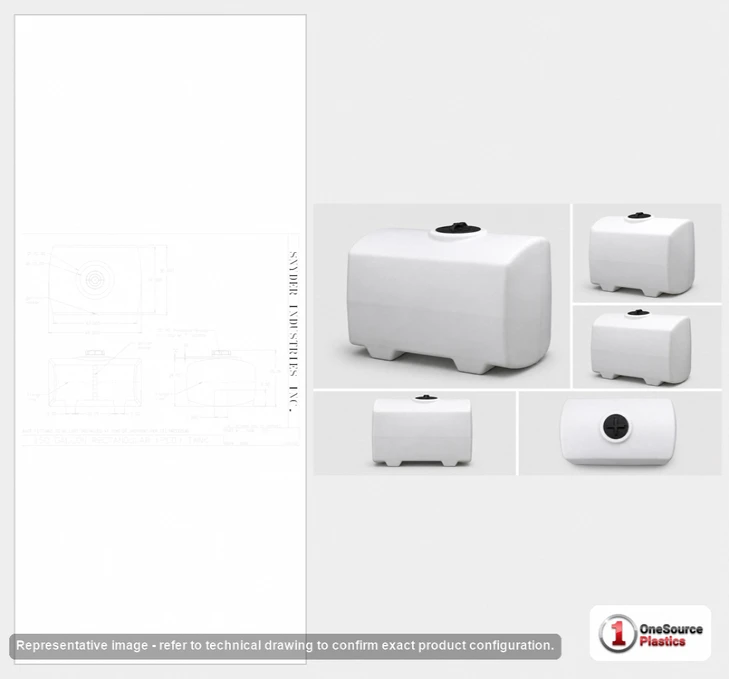
Technical drawing (PDF) for Snyder Industries 1032300N95401.
See this tank
Product video. Watch the Snyder Industries 180 Gallon Cubetainer Tank with Brass Dipense Fitting video (62 seconds) with dimensions, fittings and shipping notes.
Ready to order?
Add it to your cart at the top of this page, get LTL freight to your ZIP, request a written quote, or call 866-418-1777. The listed price is before freight.