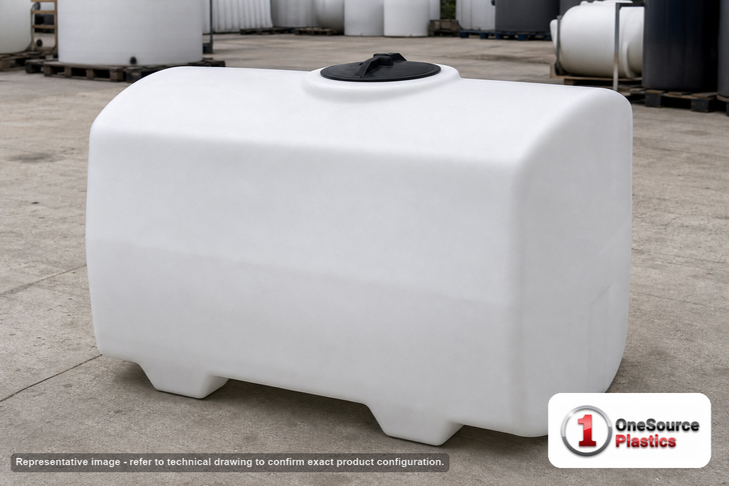
A 150 gallon rectangular applicator tank at 65 pounds
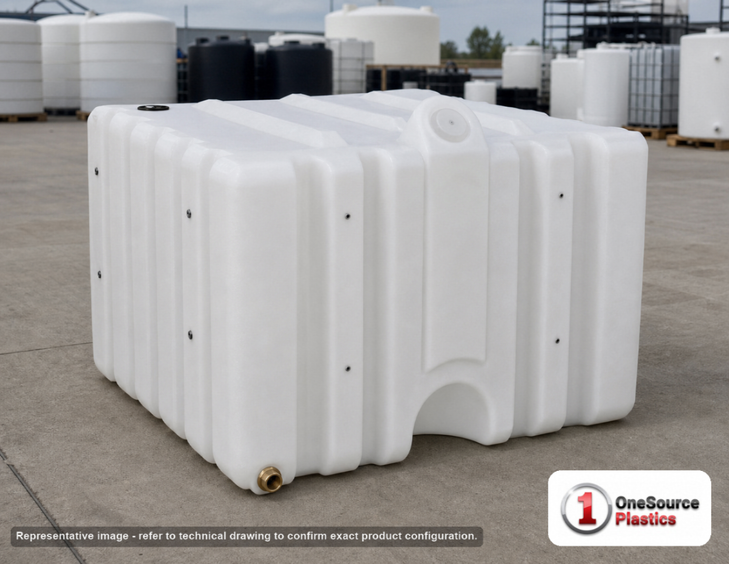
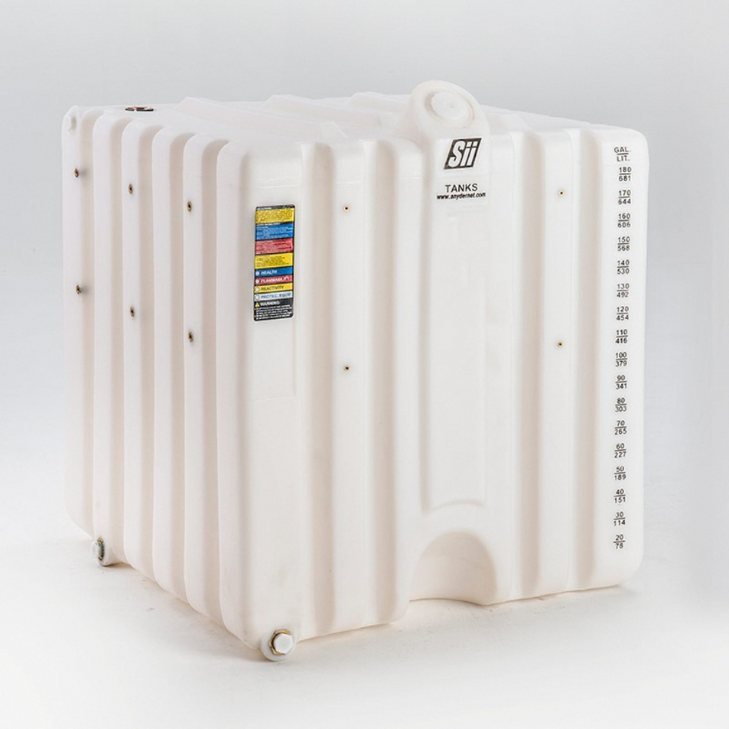
The Snyder SII-1570000N43 is a 150 gallon industrial rectangular PCO tank in white polyethylene, listed 48 inches long, 36 inches wide and 29 inches tall at 65 pounds empty. PCO stands for pest control operator, and this is a sprayer and applicator tank: a low, rectangular vessel built to be mounted on a truck bed, a trailer, a skid or a frame rather than to stand in a plant. The sheet rates the wall at a specific gravity of 1.5 and prints that rating as 1.5 with a maximum of 12.52 pounds per gallon, giving 1,251 pounds for 150 gallons of water at 8.34 pounds per gallon and 1,876 pounds of max contents. The only opening published is a 10 inch lid and manway. This sheet gives no outlet, no inlet, no maximum operating temperature and no warranty term, so this page asserts none of them. No product, chemical or application rate is named here either; the tank is described as its own sheet describes it.
Talk to a person first? 866-418-1777 reaches a tank specialist, not a call center; or see freight to your ZIP and add the 150 gallon tank to your cart above.
Three plants, one short lane, 65 pounds on the truck
This is the only tank in its group listed against three plants: Chowchilla, California, Lincoln, Nebraska and Philippi, West Virginia. On a 65 pound tank that is worth more than it sounds, because the freight on a light, bulky item is decided almost entirely by distance and dimension rather than weight. West, plains and east all have a short lane to one of those three, so ask which plant serves your ZIP before you order, and price the lane with the freight cost estimator; the listed price is before freight. The sheet gives the freight class as LTL, a mode rather than a numeric class, under NMFC 156600-03, and the shipping size matches the tank at 48 inches long by 36 inches wide by 29 inches high. Everything about those dimensions says mounted rather than standing. Twenty-nine inches tall keeps the centre of gravity low on a bed or a trailer and keeps the lid reachable from the ground when the tank is on a truck. Forty-eight by thirty-six inches sits inside a standard pickup bed width, which is the whole reason rectangular applicator tanks exist in the first place: a cylindrical tank of the same volume wastes the corners and rides higher. What the sheet does not publish is any mounting detail at all. No strap, no band, no tie-down point, no cradle, no leg and no frame appears on it, so this page invents none, and that is the single most important thing to plan before delivery. A full tank is heavy and liquid moves, so the frame, the cradle and the restraint are a designed item sized to the loaded weight and the vehicle, not a ratchet strap thrown over the top on the first morning. Tell us the vehicle and the duty and we will take the mounting question properly. Where the tank is used stationary instead, it wants a flat, continuous, level surface under the full 48 by 36 inch base. Check your real volume and refill interval against the tank sizing calculator, and take the headspace a liquid needs on a moving vehicle from the tank sizing guide, because a tank filled to the lid on a trailer is a tank that surges.
The 100, the 150 and the 200 gallon applicator tanks
| Part | Gallons | Length x width x height | Empty weight |
|---|---|---|---|
| SII-1570000N43 (this tank, rectangular) | 150 | 48 x 36 x 29 in | 65 lb |
| SII-1200000N43 (rectangular, smaller) | 100 | 38 x 30 x 31 in | 65 lb |
| SII-1660000C137 (portable pest control operator tank) | 200 | 49 x 39 x 39 in | 76 lb |
Read the height column before the gallon column, because on a vehicle-mounted tank height is the specification that bites. This tank is the lowest of the three at 29 inches and holds 150 gallons. The 100 gallon SII-1200000N43 holds a third less and is listed two inches taller at 31 inches on a 38 by 30 inch plan, at exactly the same 65 pounds as this tank; the sheet gives both weights as 65 pounds and explains nothing about that, so we print it and leave it. The point of the smaller tank is not weight saving, it is the plan: 38 by 30 inches fits a bed, a trailer or a utility body that 48 by 36 will not. The 200 gallon SII-1660000C137 goes the other way, holding a third more than this tank at 49 by 39 by 39 inches and 76 pounds. Ten inches of extra height is a great deal on a moving vehicle: it raises the centre of gravity, it puts the lid further above the ground, and it can put the top of the tank above the cab line on a small truck. If the vehicle takes it and the work justifies fewer refills, the 200 is the better economics. If the vehicle is a pickup, a compact trailer or a skid that has to go under something, the 29 inch height on this line is why it is the one being quoted. Measure the bed, the wheel arches and the clearance under whatever the vehicle drives beneath, and send us those numbers rather than a gallon figure alone.
Neighboring size a better fit? Every row links to its own page; freight to your ZIP is quoted on each, or call 866-418-1777.
A 10 inch lid and nothing else on the sheet
- The fill opening: a 10 inch lid and manway, and it is the only opening this sheet publishes. Ten inches is a genuine working access for a tank of this size: a fill hose, a strainer basket, a wand and an arm all go through it, which matters on an applicator tank that gets rinsed far more often than a storage vessel does.
- Filling on a vehicle: fill through the lid with the tank mounted and level, not on a slope, and leave headspace. Liquid in a part-full rectangular tank moves when the vehicle does, and that movement is a load on the mounting rather than on the tank.
- The outlet: this sheet publishes no outlet and no inlet, so no size, no position and no valve is stated here. Tell us how the tank is to be drawn down, what pump is on the system and where the suction has to leave, and we will confirm what the part carries before it ships.
- Mounting: no strap, band, tie-down, cradle or frame is published on this sheet. The restraint is designed for the loaded weight and the vehicle, and nothing on this page implies a mounting method or a rating.
- Limits: this sheet gives no maximum operating temperature and no warranty term. The only rating on it is the specific gravity of 1.5, printed on the sheet as 1.5 with a maximum of 12.52 pounds per gallon.
- Level: no sight tube, gauge or level device is published, so the level is what you fit or what you see through the lid. Decide which before the tank goes on the vehicle, because that is a hard job to retrofit once it is strapped down.
Tell us the liquid when you order, and tell us the concentration it is mixed at, because that is what decides the gasket and any fitting we add. Labelling on a tank that travels on a public road is a discipline of its own, and the tank label and signage guide reconciles the several standards that apply. If you are adding a level device, the level gauge selection guide compares the technologies honestly, and where fittings are being added to the top of a tank the top fitting placement guide sets out how to lay them out so the vent, the fill and the drain do not fight each other.
Skid sprayers, service trucks and the tank that rides low
A rectangular applicator tank at this size is bought by operators who carry their liquid to the work rather than the other way about: pest control and lawn care operators running a route, landscape and turf contractors, tree and vegetation management crews, municipal parks and roadside maintenance, golf course and grounds departments, agricultural service outfits building skid units, and a long tail of contractors who need a low, stable, purpose-shaped tank on a pickup or a trailer instead of a drum lashed to a bed. The shape is the product. Twenty-nine inches keeps the load low and the handling predictable; the rectangular plan uses a bed width instead of wasting it; the flat top gives somewhere to mount the pump and reel plate on a frame beside it. The 10 inch lid is what makes the daily reality workable, because an applicator tank is rinsed, refilled and inspected constantly and a small opening turns every one of those into a chore. What this page will not do is name a product for it or suggest a rate. Tell us what you are putting in and at what strength and we will match the fittings and the seals against the sheet. Where the same operation also keeps bulk liquid at the yard rather than only on the truck, the containment question changes shape entirely, and the contained polyethylene versus steel comparison is the honest read on the two routes before anyone pours a bund.
What this tank is listed to hold
Each line is a liquid the resin is rated for, at the concentration shown, with the fitting and gasket to order. Follow the link for the full rating, or search the chemical compatibility database before ordering.
- Acetic Acid (60%) - PP/PVC fittings, EPDM gaskets
- Aluminum Sulfate (50%) - PVC fittings, EPDM gaskets
- Calcium Chloride (40%) - PVC fittings, EPDM gaskets
- DEF (32.5%) - 316SS fittings, EPDM gaskets
- Ferrous Sulfate (20%) - PVC fittings, EPDM gaskets
- Magnesium Chloride (30%) - PVC fittings, EPDM gaskets
- Sodium Carbonate (30%) - PVC fittings, EPDM gaskets
- Urea Solution (50%) - PP/PVC fittings, EPDM gaskets
- ethylene glycol
- ferric chloride
- hydrochloric acid
- hydrogen peroxide
- phosphoric acid
- sodium hypochlorite
- sulfuric acid and
- peracetic acid among others. Several of those also call for Viton instead of EPDM gaskets, and peracetic acid specifically requires Aflas - not Viton - s
Twenty-nine inches tall, shipped flat out of three plants
Chowchilla, California, Lincoln, Nebraska and Philippi, West Virginia are the three plants on this sheet, and the sheet gives no single shipping state, so none is stated. Ask us which plant serves your ZIP before you order; on a 65 pound tank the lane, not the weight, is what you are paying for. The freight class is given as LTL, a mode rather than a numeric class, under NMFC 156600-03, and the shipping dimensions match the tank at 48 inches long by 36 inches wide by 29 inches high, which is low, flat freight that loads easily and rides under other pallets. Price the lane with the freight cost estimator; the listed price is before freight. Sixty-five pounds empty means two people lift it off, and that is exactly why these tanks get handled carelessly: take it under the base, not by the lid, and do not drag it across a truck bed or a gravel yard, because the underside is the surface that has to sit flat in the cradle for the rest of its life. Set it on its frame, fill it once with clean water on level ground, and drive the vehicle slowly around the yard with the tank part full before it ever carries a working load. That short lap tells you what the restraint is really doing, and it is the cheapest test in this whole purchase. Once it is full and holding, leave it alone for a day before the plumbing goes on; a settled tank is a quiet one.
Freight and documents
Ships from: Chowchilla, CA; Lincoln, NE; Philippi, WV. LTL freight is quoted to your ZIP with the freight cost estimator or by phone at 866-418-1777. The listed price is before freight.
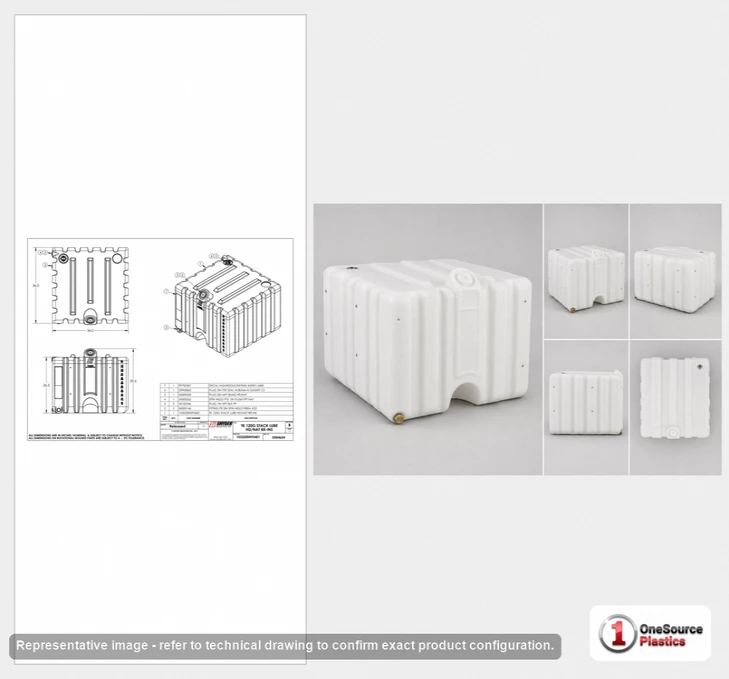
Technical drawing (PDF) for Snyder Industries 1570000N43.
See this tank
Product video. Watch the Snyder Industries 150 Gallon Industrial HDLPE Rectangular PCO Tank 1.5 SG video (74 seconds) with dimensions, fittings and shipping notes.
Ready to order?
Add it to your cart at the top of this page, get LTL freight to your ZIP, request a written quote, or call 866-418-1777. The listed price is before freight.