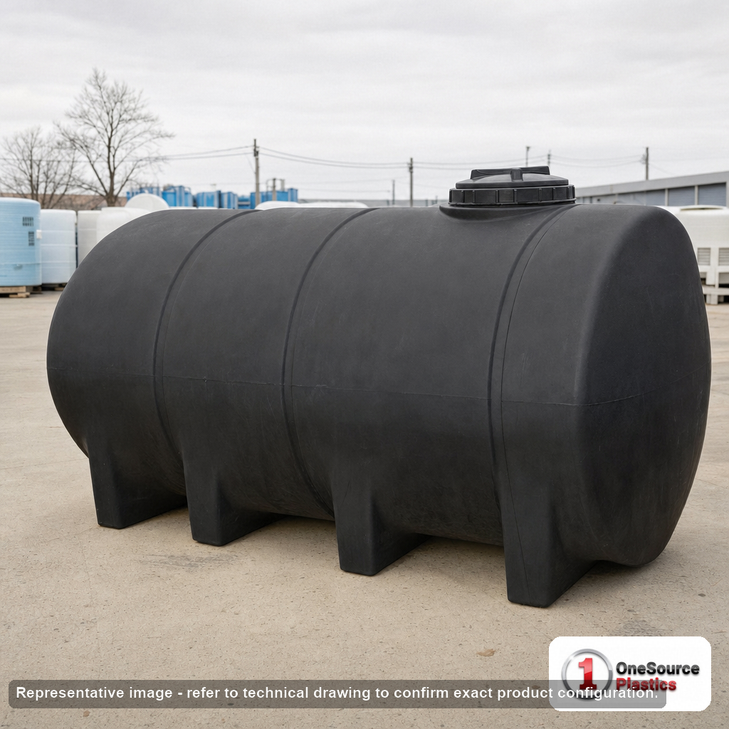
A 1335 gallon heavy duty elliptical leg tank for dense liquids on a trailer
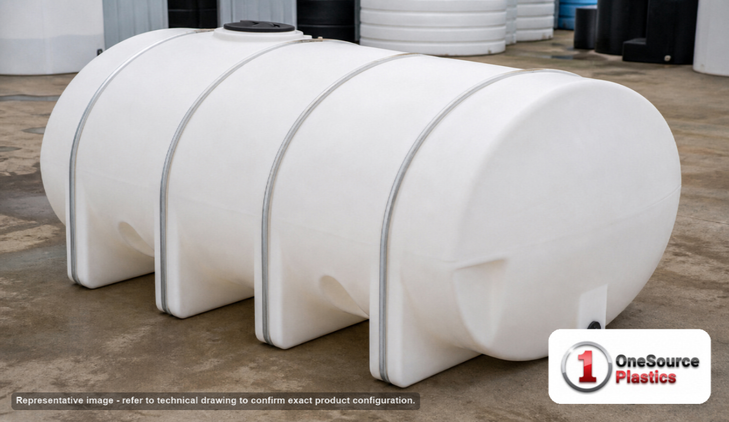
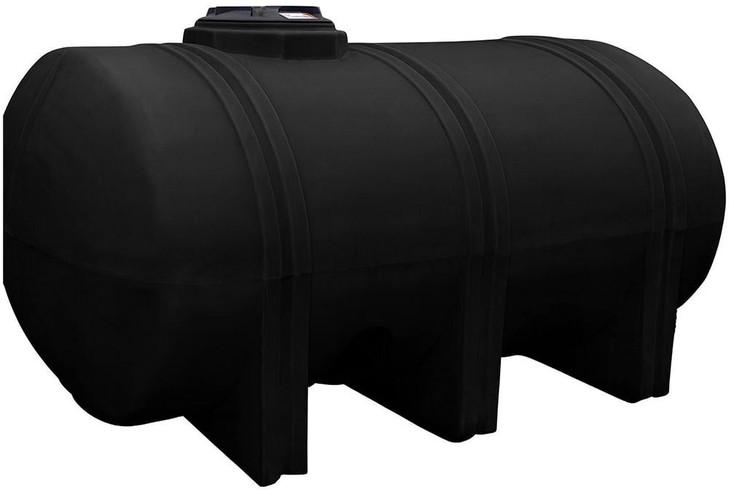
The Norwesco 1335 gallon black heavy duty elliptical leg tank, part number 42929B, is a low profile polyethylene transport tank 126 inches long, 66 inches wide and 55 inches tall, weighing 414 lb empty. It is the heavy duty version of Norwesco's 1335 gallon elliptical tank, rated for liquids up to 1.9 specific gravity, so it carries dense fertilizer blends and chemical solutions that a standard 1.5 tank is not built for. It comes with a 2 inch polypropylene female NPT bulkhead fitting at the outlet and a 16 inch threaded vented manway on top. The resin is FDA compliant, Norwesco lists the tank as NSF 61, the service limit is 120 F, and the warranty is 5 years. 1335 gallons of water weighs 11134 lb; a liquid at the full 1.9 rating weighs close to twice that in the same tank, which is the number the trailer has to carry.
Hauling something heavier than water? Call 866-418-1777 with the liquid and the trailer, or get freight to your ZIP and add it to your cart above.
On a trailer or a nurse rig
At 126 inches long and 66 inches wide the tank sits along a gooseneck or a tandem axle trailer with room beside it for a pump and a hose reel, and at 55 inches tall the centre of gravity stays low. The weight of a dense liquid is the design problem: a full load at 1.9 is well past what many farm trailers are rated for, so match the trailer to the liquid, not to the gallons. Strap it through the moulded leg recesses, never over the manway, and use the support bands Norwesco makes for this tank; the add-ons box on this page lists them. Our guide to Norwesco applicator and leg tanks for fertilizer and the DOT non-roadable trailer rules covers how these tanks are classified on the road, and the farm fleet DOT classification guide covers the agricultural exemption.
What goes in it
Liquid fertilizer blends, brines and treatment chemicals heavier than water are what the 1.9 rating is for. If you blend in the tank, read our note on fertilizer blend stratification and how to catch it before the spreader runs off spec; a dense blend that sat overnight is not the same liquid top to bottom. Check chemicals in our chemical compatibility guide before the first fill; calcium chloride, magnesium chloride, phosphoric acid, potassium hydroxide and sulfuric acid are the entries heavy duty buyers open most. Keep the contents at or below 120 F. For the volume itself, use the tank sizing calculator and tank sizing guide.
Openings and fittings
- Outlet. A 2 inch polypropylene female NPT bulkhead fitting, factory installed low in the end wall. A 2 inch ball valve and camlock thread straight in. Support the valve and the first length of hose so the fitting carries liquid, not hardware bouncing down a road.
- Manway. A 16 inch threaded vented manway on top, 55 inches up and reachable from the deck: wide enough to fill from a hose or a pump, drop a suction line in, and clean through. Keep the vent clear; a transport tank breathes every time the load sloshes.
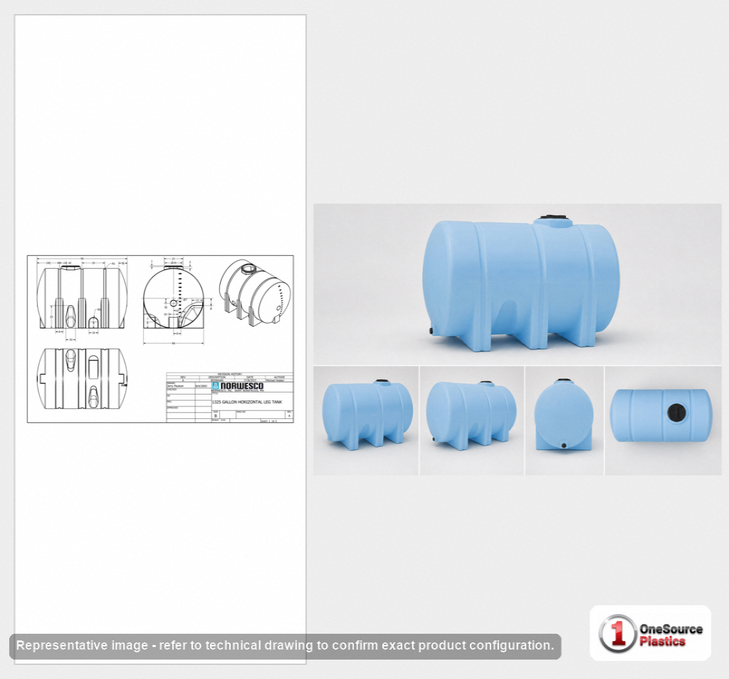
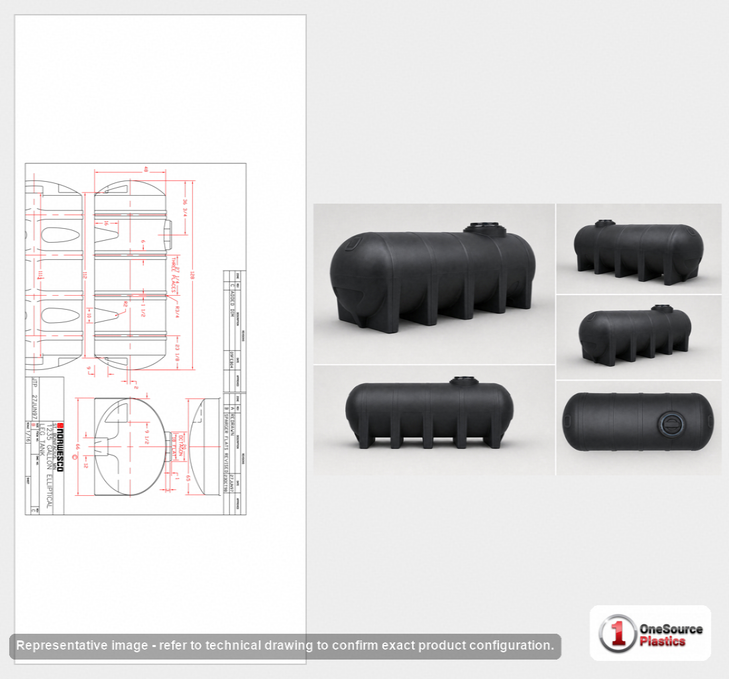
- Drawing. Norwesco's drawing for this tank, linked under Technical Drawing on this page, shows the exact outlet and manway positions and the leg layout for strap planning.
Sizes nearby
Same shape at the standard 1.5 rating: the 1335 gallon black elliptical leg tank in black and the 1335 gallon elliptical leg tank in white. Same heavy duty rating in blue: the 1335 gallon heavy duty elliptical leg tank in blue. One size down: the 1235 gallon black elliptical leg tank. One size up: the 1635 gallon elliptical leg tank in white. The colour swatches above the price switch between the versions of this tank.
Shipping and receiving
The tank ships LTL at freight class 300 from Norwesco's Lancaster, Ohio or St. Bonifacius, Minnesota plant, 126 by 66 by 55 inches and 414 lb. A forklift makes unloading simple. The listed price is before freight; the freight cost estimator gives the lane cost to your ZIP, or request a written quote for a purchase order. Bands ordered with the tank travel with it. At the tailgate, check the part number against 42929B on the bill of lading, look at all the legs for transit damage, and fill it with water the first time before it carries anything heavier.
Questions before you order? Call 866-418-1777.
Freight and documents
Ships from: St. Bonifacius, MN; Lancaster, OH. LTL freight is quoted to your ZIP with the freight cost estimator or by phone at 866-418-1777. The listed price is before freight.
Technical drawing (PDF) for Norwesco 42929B.
See this tank
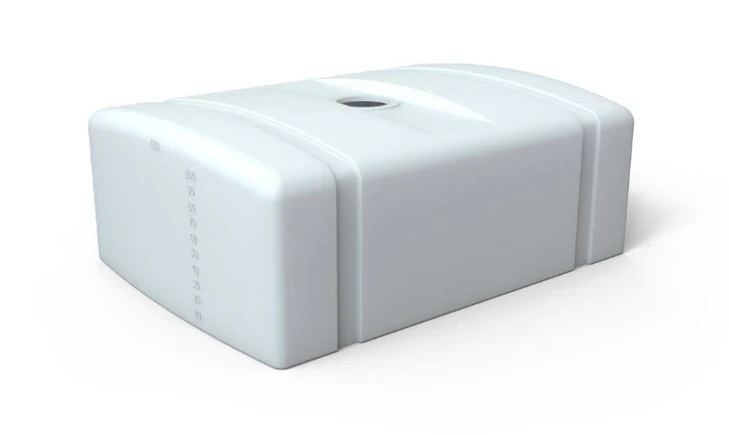
Interactive 3D model with live fill. This tank has an interactive 3D model built to its manufacturer dimensions. Rotate it, and set a fill level to see how much liquid it holds at any height. Open the 3D view on the product photo above. Download the 3D model (GLB).
Ready to order?
Add it to your cart at the top of this page, get LTL freight to your ZIP, request a written quote, or call 866-418-1777. The listed price is before freight.