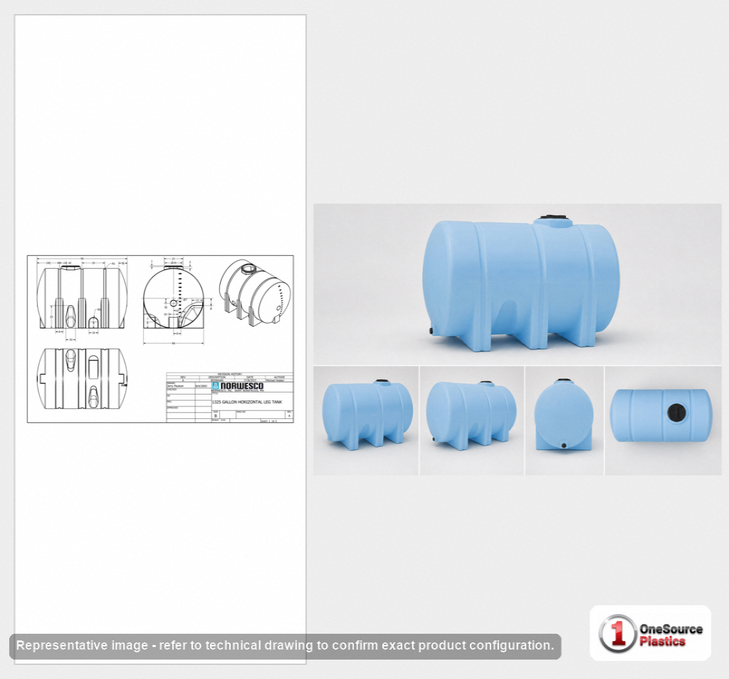
A 1625 gallon heavy duty leg tank for a nurse trailer or a fertilizer truck
The Norwesco 1625 gallon horizontal leg tank, part number 40133, is a blue high density linear polyethylene transport and storage tank 139 inches long, 63 inches wide and 68 inches tall, weighing 514 lb empty. It is the heavy duty version of this size: rated for liquids up to 1.9 specific gravity, which covers water, every common liquid fertilizer and the heavier treatment chemicals. A full load of water weighs 13552 lb and a full load at the 1.9 limit weighs 25750 lb, so this is a tank for a tandem axle trailer or a truck chassis, not a pickup. The moulded legs let it sit flat on a trailer deck or a skid without a cradle. It comes with a 2 inch polypropylene female NPT bulkhead fitting as the outlet and a 16 inch threaded vented manway on top. The resin is FDA compliant per Norwesco, the service limit is 120 F, and Norwesco backs the tank with a 5 year warranty.
Putting it on a trailer? Call 866-418-1777 with the deck length and the axle rating, or get freight to your ZIP and add it to your cart above.
On a trailer, a truck or a skid
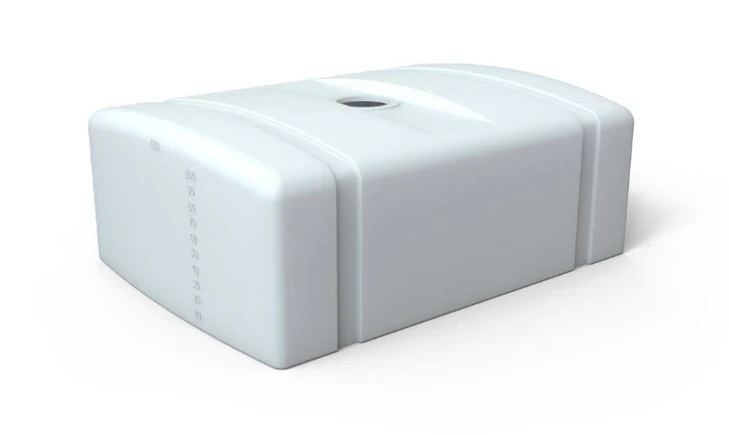
At 139 inches long the tank wants a deck of roughly that length with room at the ends for the plumbing; at 63 inches wide it sits inside the rails of a standard trailer bed. Where the tank rides on a vehicle, Norwesco requires four support bands on this size, band part number N-60079; add them on this page so they ship with the tank. The bands spread the load across the shell and keep the tank from walking on the deck under braking. Strap or band through the moulded leg recesses, never over the manway. On the ground it needs a flat, continuous surface under all the legs; a leg hanging over the edge of a pad cracks at that leg. Our guide to Norwesco applicator and leg tanks for fertilizer and the DOT non-roadable trailer rules covers how these tanks are classified on the road. For the size family as a whole, see our 1625 gallon horizontal leg tank page.
What goes in it
Liquid fertilizer is the usual load at this size and rating, and the 1.9 rating covers the heavy blends that a standard 1.5 tank cannot carry full. Water and the farm and treatment chemicals that polyethylene handles are fine too. Before anything goes in, check the liquid in our chemical compatibility guide; the entries for urea solution, DEF, calcium chloride, sodium hypochlorite and sulfuric acid are the ones leg tank buyers ask about most. The 1.9 rating is a weight limit, 15.87 lb per gallon, not a chemical approval. Keep the contents under 120 F. If you blend fertilizer, read our note on fertilizer blend stratification. For the volume itself, use the tank sizing calculator and the tank sizing guide.
Openings and fittings
- Outlet. A 2 inch polypropylene female NPT bulkhead fitting, factory installed low in the end wall. Your ball valve, camlock or pump suction threads straight into it. Support the valve and the first length of hose on the deck so the fitting carries liquid, not hardware.
- Manway. A 16 inch threaded vented manway on top, wide enough to fill from a hose or a pump, drop a float in, and get a hand and a brush inside. The vent lets air in as the pump draws; keep the lid on while you drive.
- Drawing. Norwesco's drawing for this tank, linked under Technical Drawing on this page, shows the exact outlet and manway positions and the leg layout for band and strap planning.
The same size in other ratings and colours
Same size, heavy duty, in black: the 1625 gallon black heavy duty horizontal leg tank. Same size in black, check its rating on its page: the 1625 gallon black horizontal leg tank. One size down: the 1325 gallon black horizontal leg tank. One size up: the 1800 gallon white horizontal leg tank. The swatches above the price switch between the versions of this tank.
Shipping and receiving
The tank ships LTL from Norwesco's Lancaster, Ohio plant, 139 by 63 by 68 inches, on a flatbed or a trailer with the length for it. The listed price is before freight; the freight cost estimator gives the lane cost to your ZIP. Have a forklift or a loader on site; a tank this long is not unloaded by hand. Bands ordered with the tank travel with it. At the tailgate, check the part number against 40133 on the bill of lading, walk the length of the tank and look at all the legs and the outlet fitting for transit damage, and fill it with water the first time before it carries anything else.
Questions before you order? Call 866-418-1777.
Freight and documents
Ships from: Lancaster, OH. LTL freight is quoted to your ZIP with the freight cost estimator or by phone at 866-418-1777. The listed price is before freight.
Technical drawing (PDF) for Norwesco 40133.
See this tank
Interactive 3D model with live fill. This tank has an interactive 3D model built to its manufacturer dimensions. Rotate it, and set a fill level to see how much liquid it holds at any height. Open the 3D view on the product photo above. Download the 3D model (GLB).
Product video. Watch the Norwesco 1625 Gallon HDPE Horizontal Leg Tank video (69 seconds) with dimensions, fittings and shipping notes.
Ready to order?
Add it to your cart at the top of this page, get LTL freight to your ZIP, request a written quote, or call 866-418-1777. The listed price is before freight.