The black 1550 rated 120 F / 48 C
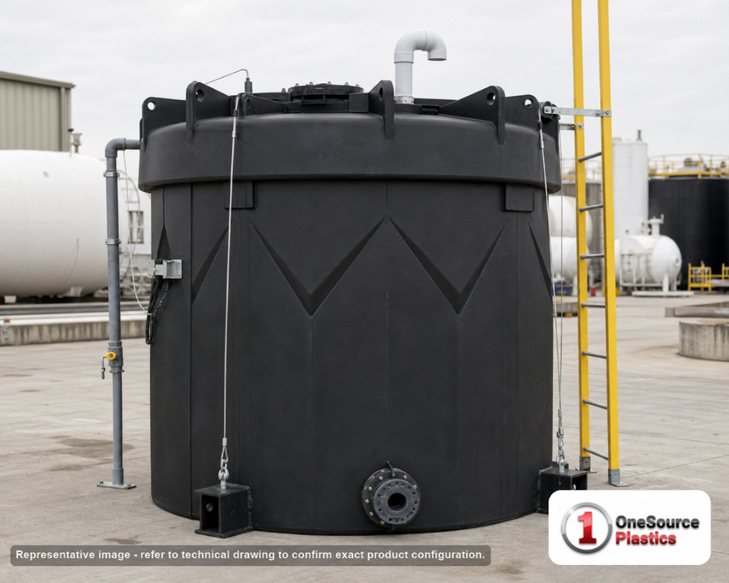
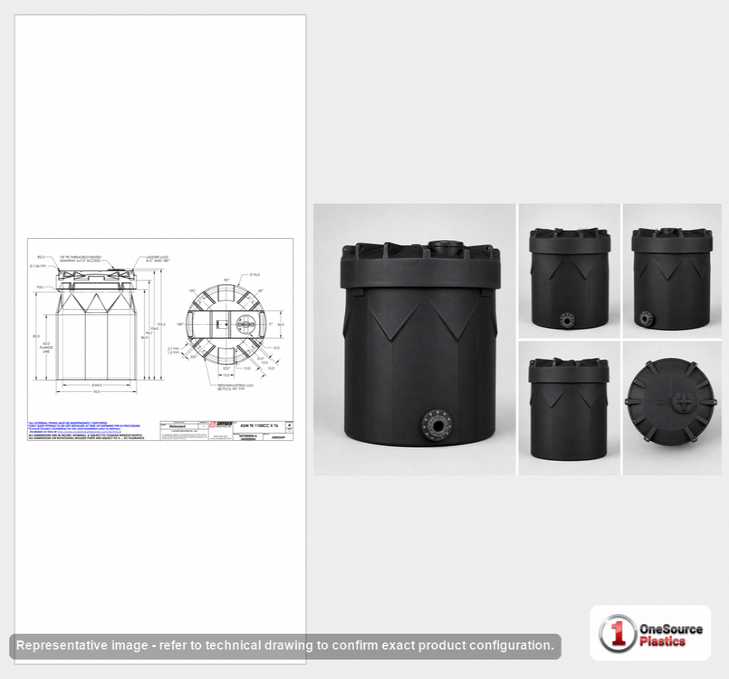
The Snyder 5490000N51 is a 1,550 gallon double wall tank, listed on its sheet as an ASTM Black Captor. Those name words are the maker's name for the product and nothing is claimed from them; Captor is Snyder's product name for this containment range. It is moulded in black high density linear polyethylene at 76 inches long by 76 inches wide by 136 inches tall and 780 pounds empty. The sheet publishes one capacity, one set of overall dimensions, one weight and one rating for the whole assembly, with no separate inner tank figure, no separate outer containment figure, no annulus dimension and no containment percentage, so none is stated or implied here. The wall is rated at a specific gravity of 1.9, and the sheet gives 12,927 pounds for 1,550 gallons of water at 8.34 pounds per gallon with 24,561 pounds of max contents. The published opening is an 18 inch threaded vented manway; the outlet field reads "1 Manway / Lid", an opening rather than a pipe size, and the inlet field is blank. The structural record on this sheet is 8 lifting lugs, ladder lugs and two flange lines. The service limit is 120 F / 48 C and the warranty is a 3 Year Warranty. Freight is LTL at class 300 with no NMFC number, moulded at Philippi, West Virginia.
Two ways to buy. Add it to your cart above with freight quoted to your ZIP, or request a written quote for a job that needs paperwork.
Duty that has to stay out of daylight
The duty that puts this part number on a site rather than the opaque white listing beside it is one where light is part of the problem. The shell is black, and a black wall keeps daylight out of the contents. That matters wherever the vessel stands outdoors, in a compound, under an open canopy, beside a roller shutter that spends the working day open, or in a bay with rooflights over it. The duties that come with those positions are ordinary enough: coagulant and polymer feed at a water or wastewater works, reagent holding at a quarry, wash plant or mine, cooling water and boiler treatment on a process site, plating and surface finishing feed, agricultural and horticultural chemical storage, and a bulk holding for a wash rack or a vehicle wash compound. Fifteen hundred and fifty gallons is the quantity a site holds when it buys by the load rather than the tote, and the argument for the step up is usually the bulk chemical cost per gallon on a full drop set against a part one. What the black wall costs you is the level reading, and it is worth naming the cost plainly. On an opaque white tank an operator sees the liquid through the shell; on this one the only published opening is a manway 136 inches up, and the sheet publishes no gauge, no sight arrangement and no level switch. Decide how the level gets read and how the pump gets stopped before the tank is set, not after the first dry run. Service limit next, because this is the field that separates the three listings on this shell. This sheet publishes 120 F / 48 C, and the cross-linked listing on the identical envelope carries a higher figure on its own sheet. We print each sheet's own number on its own page and never borrow across the group; ask and we will read you each of them before you choose. The proportion asks something of the ground. This tank stands over eleven feet on a base 76 inches square, so 12,927 pounds of water and 24,561 pounds at the published 1.9 rating land on roughly forty square feet, concentrated rather than spread. Flat, continuous, level, no rocking, nothing shimmed under a corner, and a signed calculation for anything that is not a ground bearing slab. Two engineering references belong before the order. The hardest service a polyethylene wall sees is at the vapour line rather than under the liquid, which the wall thickness at the vapour saturated headspace guide works through, and it explains why an inspection from the liquid side gives false comfort. The usable volume is not the nameplate figure either, which is the subject of the Captor double wall freeboard sizing guide. Put your own turnover through the tank sizing calculator, take the freeboard discipline from the tank sizing guide, and where the second wall is going into a written spill prevention plan start with our Captor double wall spill prevention walkthrough. Where the duty is private fire water storage rather than chemical holding, that is a different design problem and the fire water reservoir design guide for rural and remote sites is where to take it; nothing here is a claim about that use.
The 136 inch shell and the two shorter alternatives
| Part | Name on the sheet | Gallons | Size and weight |
|---|---|---|---|
| 5490000N51 | this tank, ASTM Black Captor | 1550 | 76 x 76 x 136 in, 780 lb |
| 5490000N48 | ASTM XLPE Black Captor | 1550 | 76 x 76 x 136 in, 780 lb |
| 5490000N52 | Sodium Hypochlorite (UV) Captor, opaque white | 1550 | 76 x 76 x 136 in, 780 lb |
| SII-5490000N30 | opaque white, listed at a heavier weight | 1550 | 76 x 76 x 136 in, 970 lb |
| 5990302N30 | Sulfuric Acid, wide and low | 1500 | 93 x 93 x 76 in, 950 lb |
| 5570000N48 | ASTM XLPE Black Captor, wider again | 2000 | 102 x 102 x 103 in, 900 lb |
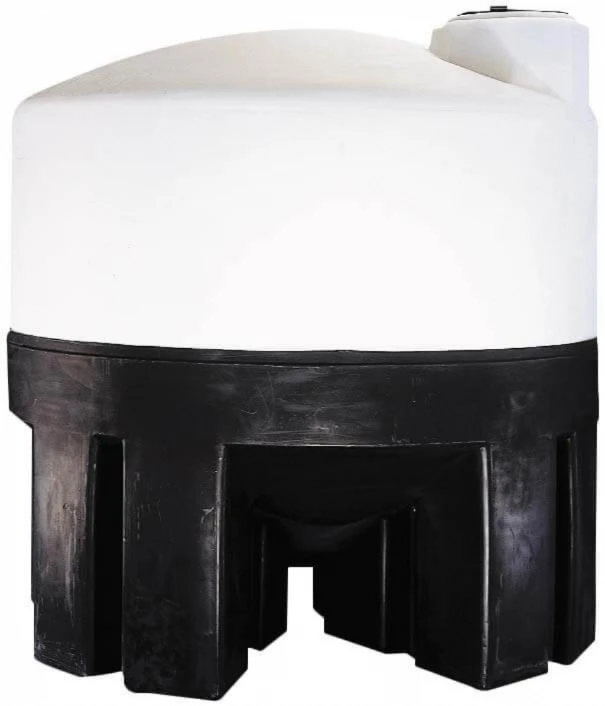
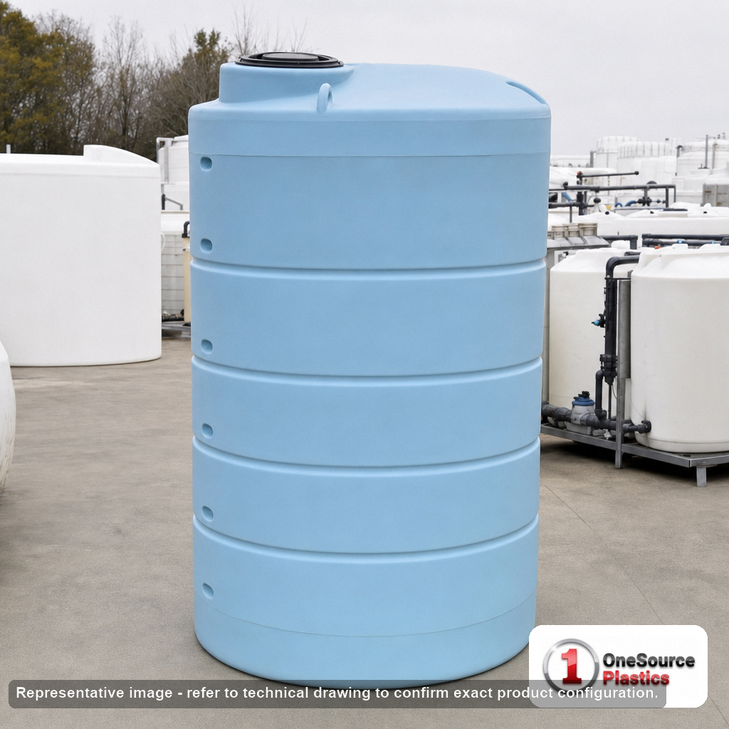
Four part numbers, one 76 by 76 by 136 inch shell, four names, and three of them at 780 pounds against SII-5490000N30's 970. That weight and that prefix are printed exactly as the sheet gives them and neither is explained, because the sheet explains neither. Two of the four are black and two are opaque white, which is the only difference in this group you can see doing its work: daylight kept out against a level you can read through the wall. The rest is naming, and naming is a conversation rather than a code to break. Where the table earns its place is the two rows underneath, because both of them are the same capacity class in a completely different shape. 5990302N30 holds 1,500 gallons on a 93 inch plan at 76 inches tall and 950 pounds. That is fifty gallons less than this tank, standing barely over six feet, with the manway within reach of a short platform instead of a fixed structure. 5570000N48 holds 2,000 gallons on a 102 inch plan at 103 inches and 900 pounds. Set the three side by side and the decision is almost never about volume. It is about whether your site is short of floor or short of height, and about what it costs you to get an operator safely to the manway twice a month. Work that out first, then pick the capacity, and if the yard has room the low wide vessel is usually the easier tank to live with.
Torn between two rows? Call 866-418-1777 with the liquid and the ceiling height, or ask for a quote on both and compare the freight.
Pulling from a hundred and thirty-six inches: lift, prime and the drop pipe
- The discharge path: the outlet field reads "1 Manway / Lid" and the inlet is blank, so this sheet publishes no outlet dimension, thread, bulkhead, flange or valve and none is claimed here. What gets built is a drop pipe through the manway to a pump beside the tank, and that is a suction lift, not a flooded suction. Give us the duty, the line size, the temperature and the pump and we will confirm what this part number carries before anything is ordered.
- The lift itself: the bottom of a 136 inch tank is a long way below the top, and the suction line length, the fittings and the fluid all decide whether the pump keeps prime as the level falls. Design the pump against the worst case, which is a nearly empty tank on a warm day, not against a full one.
- Low level protection: fit the cut-out at installation. On a black shell nothing is visible through the wall, and this sheet publishes no level device, gauge or sight arrangement, so the instrument is the only warning anybody gets.
- The opening: an 18 inch threaded vented manway, the only published opening, doing duty as fill point, drop pipe route, inspection hatch and cleaning access at once.
- Reaching it: 136 inches means a fixed platform and fall protection designed with the tank, and a fill connection brought down to working level so nobody climbs to take a drop.
- The vent: listed as vented. That path protects the wall on a fast fill and a hard pump-down; keep it clear, inspect it whenever the manway is open and never blank it.
- Structure: this sheet publishes 8 lifting lugs, ladder lugs and two flange lines. Rig on the lugs to the maker's instructions and claim nothing beyond the published record.
- The space between the walls: no monitoring port, gauge or alarm is published, so that arrangement is specified separately and written down.
- Limits: 120 F / 48 C, a specific gravity rating of 1.9, and a 3 Year Warranty, as this sheet gives them.
Tell us the product when you order. On a contained vessel the manway seal and the suction fitting are the only route a release can take, and both are selected against the chemistry rather than from a default.
Coagulant and polymer feed on a lit floor
A black contained tank at this capacity goes to sites where the vessel stands in daylight and the draw is continuous: coagulant, polymer and pH control feed at a municipal water or wastewater works, reagent holding at a quarry, wash plant or mine, boiler and cooling water treatment on a process site, agricultural and horticultural chemical storage in a yard, plating and surface finishing lines, and bulk feed for a truck or rail wash compound. Fifteen hundred and fifty gallons takes a tanker drop rather than tote handling, which is usually the point of buying it, and the second wall is what lets it stand on a finished surface or inside a compound without a bund being constructed first. One discipline is worth building into the installation because the black wall removes the easy option: put the level indication and the pump cut-out in as part of the job, and mark your working full level and your stop level on the outside of the shell in paint on the day the tank is first filled.
Class 300, one tall shipment, and the lintel on the route
Philippi, West Virginia is the plant named on this sheet and West Virginia the only ship-from state, which puts the mid-Atlantic and the Ohio valley on short lanes. Freight is LTL at class 300 with no NMFC number, and the shipment is the tank at 76 by 76 by 136 inches and 780 pounds. Price your own lane with the freight cost estimator; the listed price is before freight. The weight is not the problem here and the height is: an object over eleven feet tall finds every low lintel, cable tray and overhead pipe run between the truck and the final position, so walk the route, measure the lowest point rather than the average one, and keep the tank upright wherever the building allows rather than laying it down and standing it up in a confined space. Take it under the base or on the published lugs, never by the manway. Set it on the finished, cured, level pad in its final position, check it is plumb from two directions, secure it against being knocked and only then connect anything. Fill it with clean water, hold the 12,927 pound load, and read the manway seal, the whole base and the pad underneath in daylight. Drain it, let it dry, open the space between the walls and write the date and what you saw on the shell. Then photograph the tank on its pad, full, from two sides on day one; on a black vessel that is the only baseline anybody will ever have to compare a later inspection against. The first fill is the only cheap time to find a problem, so do it in daylight with someone watching the base.
Freight and documents
Ships from: Philippi, WV. LTL freight is quoted to your ZIP with the freight cost estimator or by phone at 866-418-1777. The listed price is before freight.
Technical drawing (PDF) for Snyder Industries 5490000N51.
See this tank
Interactive 3D model with live fill. This tank has an interactive 3D model built to its manufacturer dimensions. Rotate it, and set a fill level to see how much liquid it holds at any height. Open the 3D view on the product photo above. Download the 3D model (GLB).
Ready to order?
Add it to your cart at the top of this page, get LTL freight to your ZIP, request a written quote, or call 866-418-1777. The listed price is before freight.