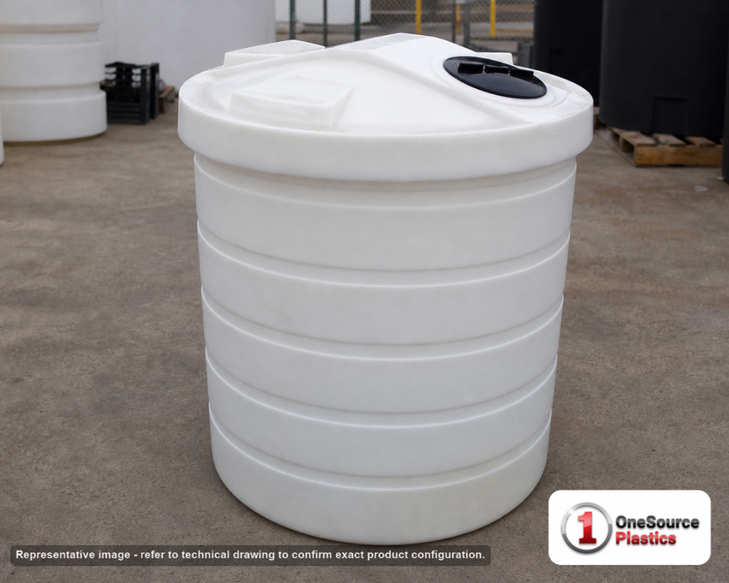
A 250 gallon double wall chemical tank, ASTM certified
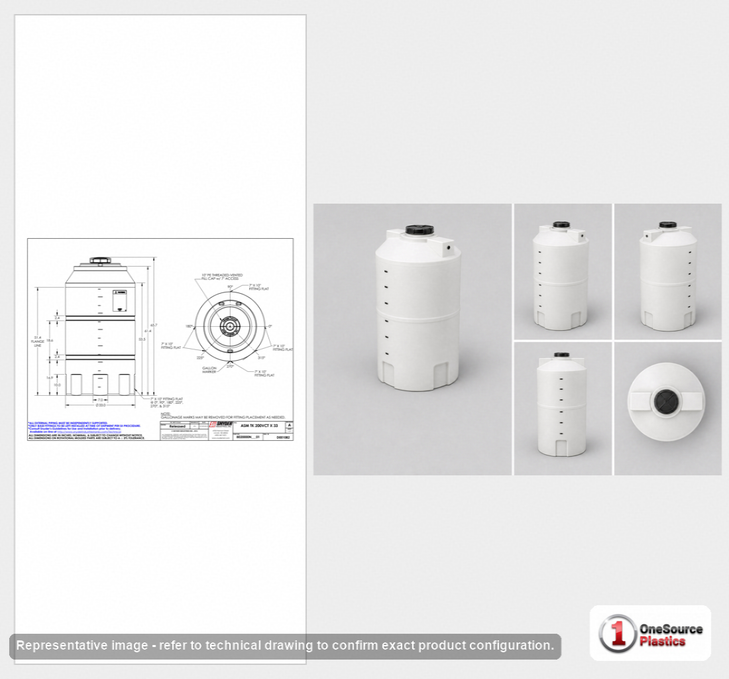
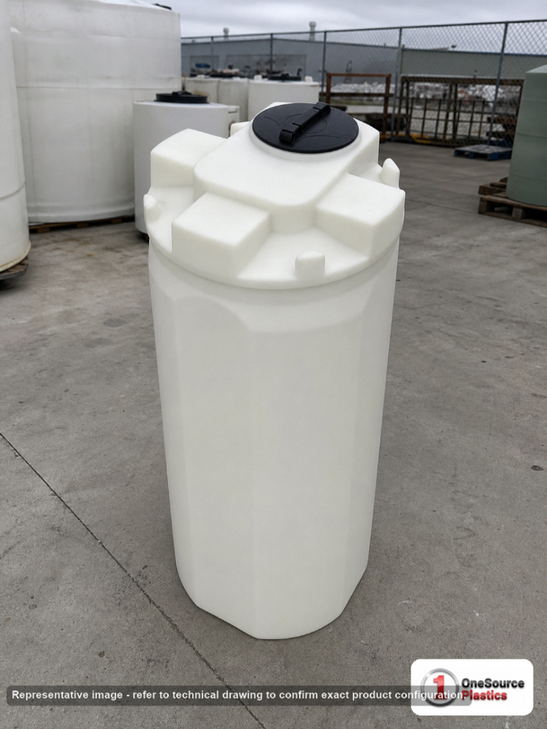
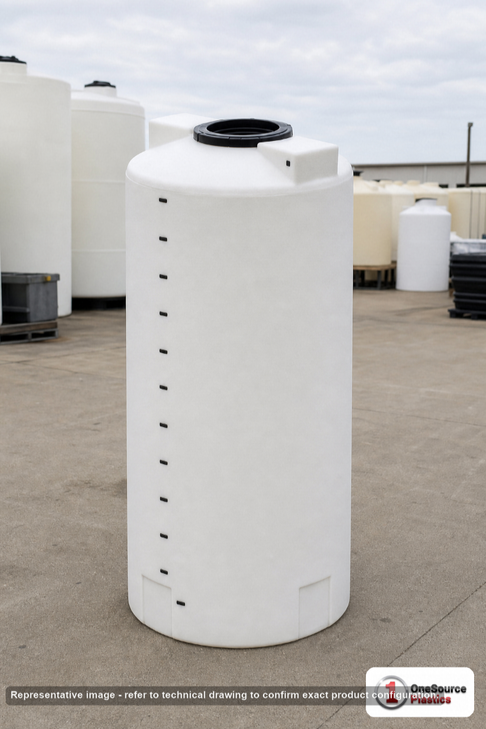
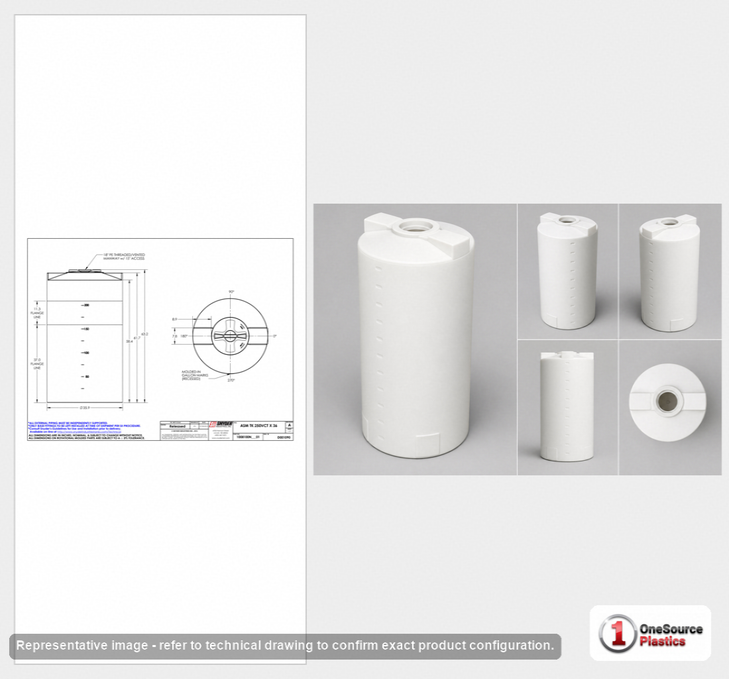
The Snyder 5990502N45 is a double wall chemical storage tank: a 250 gallon white high density linear polyethylene primary rated for a specific gravity of 1.9, or 3,962 pounds of contents against 2,085 for water, standing inside its own secondary containment in a shell 34 inches across and 83 inches tall, weighing 150 pounds. It is sold with ASTM certification for the submittal, it goes through a standard door, and the double wall carries the containment a spill plan asks for inside the tank's own footprint. A 14 inch threaded, vented lid on the primary, and a 3 year warranty.
Want it on your site? Get LTL freight to your ZIP, add it to your cart above, or call 866-418-1777 and a tank specialist will confirm the fit.
Containment, certified, at day-tank scale
A day tank stands beside the dosing pump inside an occupied building, and a spill there reaches a floor drain in seconds; a double wall tank catches it in the interstitial space instead, so the tank needs no spill pallet and no berm. The SPCC 40 CFR 112 compliance walkthrough walks through when a double wall tank stands in for a berm under a spill plan. The certification is against ASTM D1998, the standard rotationally molded polyethylene tanks are specified to; the HDPE tank wall thickness guide explains the D1998 sizing logic and why the vapor headspace is where a wall fails first, and the Captor double wall freeboard sizing guide works out how much of the nominal 250 gallons is usable once thermal expansion, chemistry and the interstice are accounted for. Below is the resin's rated chemistry; check the liquid at its concentration in the chemical compatibility database.
Grades on the 34 x 83 inch double wall, and the sizes beside it
| Part | Gallons | Diameter x height | Empty weight |
|---|---|---|---|
| 5990502N45 (this tank, ASTM certified) | 250 | 34 x 83 in | 150 lb |
| 5990502N30 (sulfuric grade) | 250 | 34 x 83 in | 150 lb |
| 5990502N42 (XLPE) | 250 | 34 x 83 in | 150 lb |
| 5990500N45 (single wall) | 250 | 34 x 83 in | 75 lb |
| 5740102N30 (squat, sulfuric grade) | 275 | 47 x 63 in | 200 lb |
The N30 is the sulfuric acid grade and the N42 is cross-linked polyethylene for oxidizers, both at 150 pounds in the same shell. The 5990500N45 is the same 250 gallon primary without the containment, at half the weight, for the site that already has a spill pallet. The 5740102N30 is the squat double wall, 20 inches shorter on a 47 inch base, for under a low ceiling.
Picked the 250 gallon tank? Add it to your cart above; freight is quoted to your ZIP before you pay anything.
Where the pipe goes, and the two alarms
- Access: 14 inch threaded, vented lid on the primary, 83 inches up; a dip tube takes the fill from a hose or tote pump; a fuming liquid gets a vent line to the outside.
- Outlet: through both walls as one penetration, with the transition carried off the floor; tell us the chemical and the fitting is matched to it.
- Service limit: 120 F / 48 C.
- Listing: ASTM certification.
Two levels need watching: the primary, with a sender chosen for the chemical per the level gauge selection guide, and the interstitial space, which is the leak alarm and gets a float switch and a logged check. Strap the tank to a wall; a 34 inch base under 83 inches of dense liquid has a high center of gravity. Put the dosing pump below the outlet, where it primes by gravity, and give the vent a line routed away from the pump's electrical gear. The tank sizing calculator sizes a day tank to the pump's rate and the refill schedule, and the tank sizing guide covers the reserve.
Who buys this tank
Hypochlorite, caustic and coagulant day tanks inside occupied buildings, acid and inhibitor feed at cooling towers, polymer make-down on a skid, and any small regulated chemical tank at a site an inspector visits or a plant that needs the certification on file. One chemical per tank, labeled, lid closed against vapor loss, refilled on a schedule the chemistry tolerates.
Delivery day
The 5990502N45 ships palletized as LTL freight (NMFC 156600-03) at a class rate; the freight cost estimator shows it for your ZIP, and the listed price is before freight. Two people carry 150 pounds through a door. Water-test the primary, confirm the interstice stays dry through the hold, then drain and dry before the first chemical fill, and keep the certification with the project file. Keep the delivery paperwork with the tank; the serial number on the shell is what a warranty claim starts from.
Chemical service ratings
The resin is rated for the liquids below at the concentrations shown; the fitting and gasket called out are the ones to order with the tank. Verify the exact service on the linked page or in the chemical compatibility database before ordering.
- Acetic Acid (60%) - PP/PVC fittings, EPDM gaskets
- Aluminum Sulfate (50%) - PVC fittings, EPDM gaskets
- Calcium Chloride (40%) - PVC fittings, EPDM gaskets
- DEF (32.5%) - 316SS fittings, EPDM gaskets
- Ethylene Glycol (100%) - PVC fittings, EPDM gaskets
- Ferric Chloride (50%) - PVC fittings, EPDM gaskets
- Ferric Sulfate (60%) - PVC fittings, EPDM gaskets
- Ferrous Sulfate (20%) - PVC fittings, EPDM gaskets
- Hydrochloric Acid (37%) - PVC fittings, Viton gaskets
- Hydrofluoric Acid (48%) - PP/PVC fittings, Viton gaskets
- Hydrofluosilicic Acid (26%) - PP/PVC fittings, Viton gaskets
- Hydrogen Peroxide (50%) - PVC fittings, Viton gaskets
- Magnesium Chloride (30%) - PVC fittings, EPDM gaskets
- Peracetic Acid (30%) - 316SS fittings, Aflas gaskets
- Phosphoric Acid (85%) - PVC fittings, Viton gaskets
- Polyaluminum Chloride - PVC fittings, EPDM gaskets
- Potassium Carbonate (50%) - PVC fittings, EPDM gaskets
- Potassium Hydroxide (saturated) - PVC fittings, EPDM gaskets
- Propylene Glycol - PP/316SS fittings, EPDM gaskets
- Sodium Bisulfate - PVC/PP fittings, EPDM gaskets
- Sodium Bisulfite - PVC/PP fittings, EPDM gaskets
- Sodium Carbonate (30%) - PVC fittings, EPDM gaskets
- Sodium Hypochlorite (
- Sodium Thiosulfate (40%) - PVC fittings, EPDM gaskets
- Sulfuric Acid (98%) - CPVC fittings, Viton gaskets
- Urea Solution (50%) - PP/PVC fittings, EPDM gaskets
- Zinc Orthophosphate - PP/316SS fittings, EPDM gaskets
Freight and documents
Ships from: Lincoln, NE. LTL freight is quoted to your ZIP with the freight cost estimator or by phone at 866-418-1777. The listed price is before freight.
Technical drawing (PDF) for Snyder Industries 5990502N45.
See this tank
Interactive 3D model with live fill. This tank has an interactive 3D model built to its manufacturer dimensions. Rotate it, and set a fill level to see how much liquid it holds at any height. Open the 3D view on the product photo above. Download the 3D model (GLB).
Product video. Watch the Snyder Industries 250 Gallon HDLPE Vertical Double Wall Liquid Chemical Storage Tank with ASTM Certification video (71 seconds) with dimensions, fittings and shipping notes.
Ready to order?
Add it to your cart at the top of this page, get LTL freight to your ZIP, request a written quote, or call 866-418-1777. The listed price is before freight.