2000 gallons on a 90 inch base, 88 inches tall, out of Marked Tree
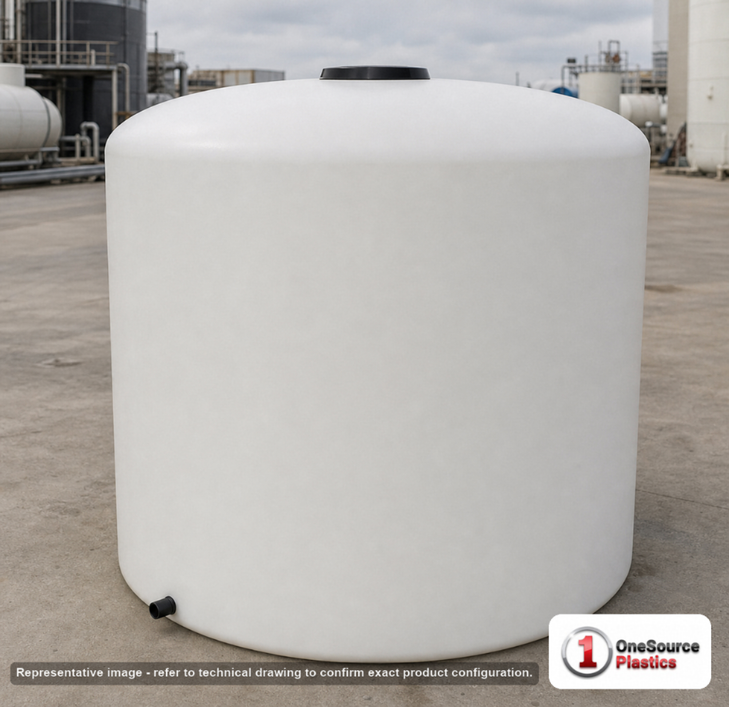
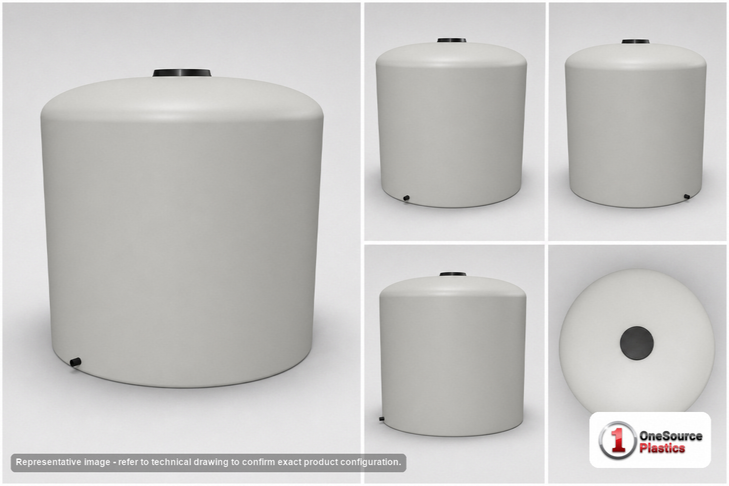
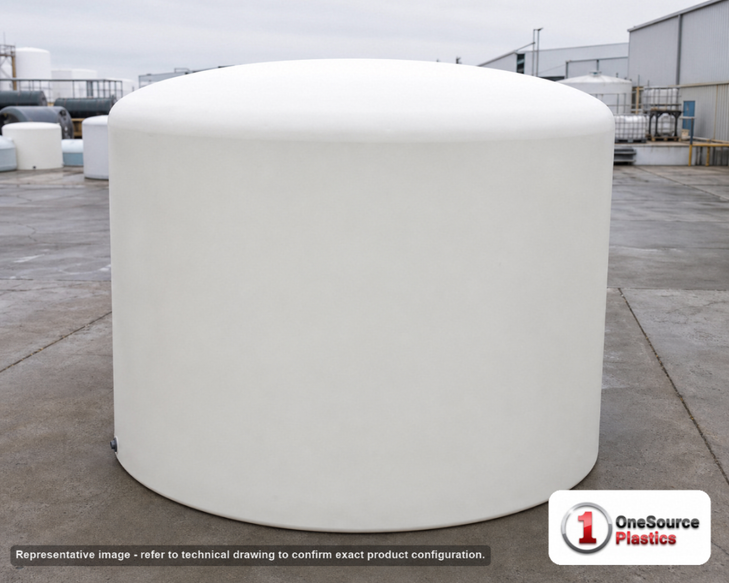
The Snyder SII-8130000C26 holds 2000 gallons of liquid in a white polyethylene vertical shell 90 inches across and 88 inches tall, weighs 475 pounds empty, and is molded at Marked Tree, Arkansas. The sheet rates the wall at a specific gravity of 1.9, which is 31692 pounds of contents against the 16680 pounds the same 2000 gallons weigh as water at 8.34 pounds per gallon. It is fitted with an 18 inch threaded vented manway on top and a 2 inch polypropylene female NPT bulkhead outlet at the base. Freight is class 400 and it moves as an oversize load. This sheet publishes no service limit and no warranty term, so this page states neither; ask us and we will get Snyder's current terms in writing before you order.
Engineer on the job? Request a written quote with the spec attached, or get freight to your ZIP and add to cart above; 866-418-1777 answers the technical questions.
Marked Tree, Arkansas, and the Delta lane that makes this 2000 cheap to land
Start with where it is built, because on a tank this shape the lane costs more than the tank does. Marked Tree sits in the Arkansas Delta with the Mississippi, Tennessee and Missouri lines inside a short day's drive, and that puts a buyer in Memphis, Jonesboro, Tupelo, Cape Girardeau or the lower Bootheel on the short end of an oversize move. Oversize is the word that matters: 90 inches across is wider than a trailer is meant to carry as ordinary freight, so this is a permitted load rather than a rate off a table, which means the route, the stop and the machine that lifts it are part of the purchase. Walk the approach before you book the truck. Then look at the ground, because a rotationally molded floor bears on the whole surface it touches and nothing else, and every pound of the 31692 the sheet allows lands on a 90 inch circle through whatever that floor is resting on. A low corner or a void under the middle is not cosmetic, it is the new bearing point. Engineer the slab to the framework in the concrete pad sizing guide, level, in full contact, poured wider than the tank, with the overflow drained away from the pad edge rather than into it. At 475 pounds empty the tank is light enough for a storm to move before the first fill, so band it while it is empty. Confirm the volume is the right one before the order rather than after: run 2000 gallons against your real draw and the interval between deliveries in the tank sizing calculator, and take the reserve you never dip into, plus the freeboard a liquid needs as it warms, from the tank sizing guide.
One 90 by 88 inch shell, four part numbers, two listed weights
| Part | Gallons | Diameter x height | Empty weight |
|---|---|---|---|
| SII-8130000C26 (this tank, white, rated 1.9) | 2000 | 90 x 88 in | 475 lb |
| 5050000C26 (heavy duty, same shell) | 2000 | 90 x 88 in | 340 lb |
| 5050000C34 (black, heavy duty) | 2000 | 90 x 88 in | 340 lb |
| 5050000C37-BLACK (black, same shell) | 2000 | 90 x 88 in | 340 lb |
| 1780200N40 (crosslink, slim and tall) | 1900 | 72 x 119 in | 445 lb |
| 5090000C26 (larger, same base) | 2500 | 90 x 107 in | 450 lb |
The reason to take this part number over the three moldings beside it in the same shell is the wall the sheet rates and the plant it comes out of, not the silhouette, which is identical: 90 inches across and 88 inches tall on every one of them. Two of those three are black walls, which is the buy when daylight on the liquid is the problem rather than the density. Step outside the shell and the trade is shape: 1780200N40 puts 1900 gallons on a 72 inch base and stands 119 inches, nearly ten feet, in a crosslinked wall, which is the tank for a narrow bay with height to spare, while 5090000C26 keeps this tank's 90 inch base and adds volume by standing 107 inches. This one is the white 1.9 rated 2000 on the low, wide base, out of Arkansas, with a bulkhead outlet already in the floor.
Height or floor the limit? The table has both shapes; freight to your ZIP is quoted on each row, or call 866-418-1777 with the site.
The manway sits 88 inches up, which is a step and a hand on the rim
- Access: an 18 inch threaded vented manway on top, 88 inches off the pad. Seven feet four inches is the height that decides how this tank is worked: a short platform or a fixed step gets a person to the rim without a leaned ladder, and 18 inches of opening is enough to get a light, a dip stick and an arm inside for the annual look. Keep it closed between deliveries and keep the vent clear, because a blocked vent with a pump drawing will pull a polyethylene wall inward.
- Headspace: the band of wall just above the liquid line is the part that ages first, and it is the part nobody sees from the ground. Look at it with a light every time the lid comes off, and read the headspace wall thickness article for why liquid-side inspection misses it.
- Vent sizing: the vent has to pass air faster than the delivery pump pushes liquid in and faster than the transfer pump pulls it out. That is arithmetic rather than a guess, and the atmospheric vent capacity guide works the cases through for verticals of this size.
- Outlet: a 2 inch polypropylene female NPT bulkhead fitting at the base, as the sheet lists it. Name the liquid at order and the fitting, the gasket and the bolting are matched to it. Make the thread up once, properly, then put a union a short way downstream so any valve change happens there and never on the tank fitting.
The first joint off that outlet is flexible, always, because a rigid run bolted to a polyethylene base puts every degree of thermal movement and every pump start into the fitting. The first valve rides on its own support off the pad rather than hanging on the wall. Put the transfer pump below the outlet so the column keeps it flooded, give it a straight run before the first elbow, and fit a low level float so it stops with liquid still over the fitting. Where winter bites, trace or insulate the valve and the exposed pipe and leave the body to ice from the top down. Keep a spare gasket for the outlet on the shelf rather than on a purchase order.
Bulk storage where the ceiling is low and the draw is steady
A shell 88 inches tall gets bought by the room it has to live in. It goes under the eave of an open sided chemical building, inside a machine shed, in a bay whose purlins would stop a ten foot tank, and on an outdoor pad where a taller vessel would need a heavier strapping job than the site wants to pay for. The duties that suit it are the steady ones: a dosing or feed tank at a water or wastewater plant holding most of a tanker load between deliveries, a process chemical held at a manufacturing plant close to the point of use, a fertilizer or crop input solution at a co-op or a farm, a wash and rinse chemical at a packing or processing plant, and a tank that replaces a stack of totes so there is one fitting to check instead of a dozen. Water held as a reserve against fire is a different design exercise entirely, because a reserve is defined by draw rate, connection and freeze protection rather than by gallons sitting in a tank, and the fire-water reservoir design guide sets out what it takes to make that claim honestly. Two buyers guides are worth reading beside this page before you commit to a shape: the guide to the slim, tall 2000 gallon shell and the guide to the wide 2000 gallon shell, whose listed height differs from this molding by a few inches. Each of those guides carries the figures its own shell publishes, and this page asserts none of them.
Class 400 out of Arkansas, 475 pounds on the deck
The SII-8130000C26 ships from Marked Tree, Arkansas at class 400 as the sheet lists it, shipping at 90 inches by 90 inches by 88 inches, moving as an oversize load rather than as ordinary freight. Seven and a half feet of width is the constraint, not the 475 pounds: the truck needs somewhere to stop, the gate needs to be wider than the tank, and a field entrance soft after rain will not take a loaded trailer. The freight cost estimator prices the lane to your ZIP, and the listed price is before freight. Take it off the deck with a forklift, a telehandler or slings under the body, never a hook through the manway, and set it straight onto the finished pad rather than parking it on the dirt beside the pad. Then accept the tank properly instead of filling it and hoping: water to the manway, held, with somebody reading the pad edge and the outlet bulkhead through the hold, drained and dried before the real liquid arrives. Photograph the outlet fitting from below before the pipe goes on, because a slow weep is easier to compare against than to describe. The vent screen is the cheapest part on the tank and the one that saves it; look at it every time the manway opens.
Freight and documents
Ships from: Marked Tree, AR. LTL freight is quoted to your ZIP with the freight cost estimator or by phone at 866-418-1777. The listed price is before freight.
Technical drawing (PDF) for Snyder Industries 8130000C26.
See this tank
Interactive 3D model with live fill. This tank has an interactive 3D model built to its manufacturer dimensions. Rotate it, and set a fill level to see how much liquid it holds at any height. Open the 3D view on the product photo above. Download the 3D model (GLB).
Product video. Watch the 2000 Gallon Plastic Vertical Liquid Storage Tank video (64 seconds) with dimensions, fittings and shipping notes.
Ready to order?
Add it to your cart at the top of this page, get LTL freight to your ZIP, request a written quote, or call 866-418-1777. The listed price is before freight.