18,800 gallons at 1.5 specific gravity, ASTM model
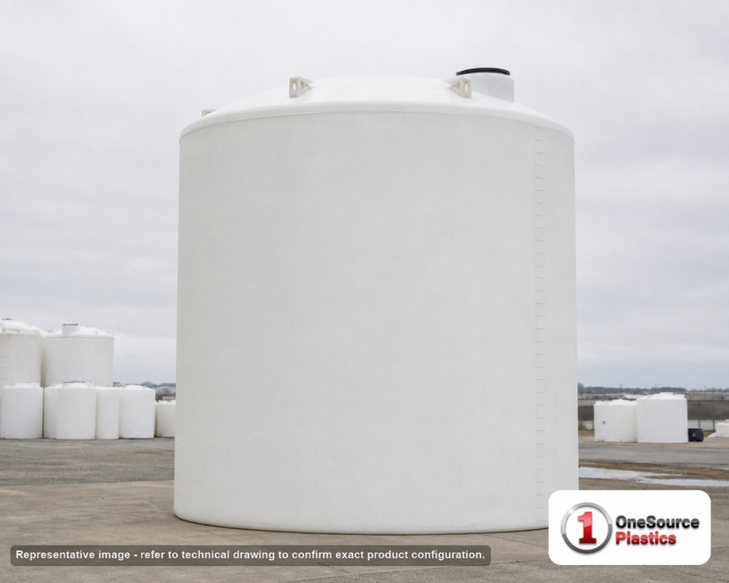
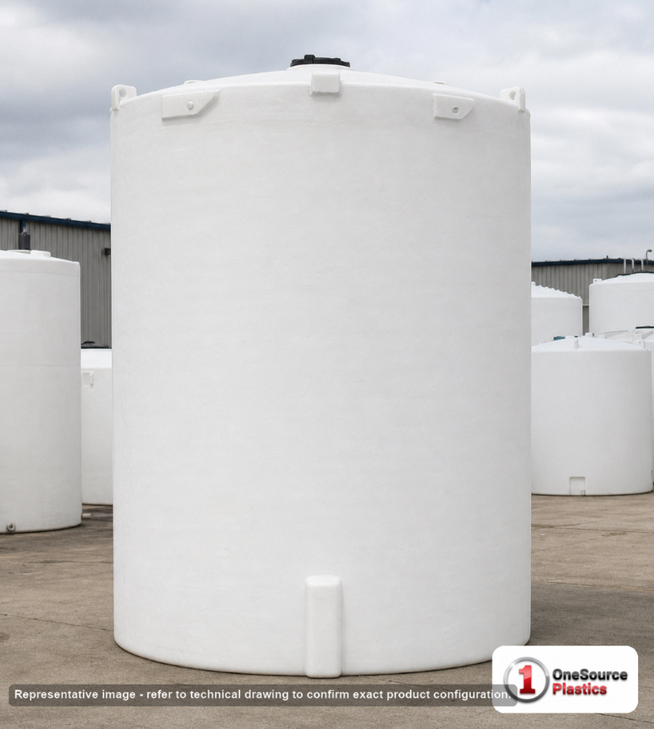
The Snyder 3030000N43 is a white polyethylene vertical liquid storage tank, 165 inches across and 242 inches tall, holding 18,800 gallons at 5,000 pounds. Its wall is rated for a specific gravity of 1.5, or 235,188 pounds of contents against 156,792 for water, so it holds brine, fertilizer solution and coagulant as delivered as well as water, and it is sold from Snyder's ASTM line for the community system or the plant that needs the paper on file. A 24 inch manway wide enough to enter for cleaning, a 3 year warranty, and it ships as oversize freight on a permitted load.
Ready to price it? The listed price is before freight; quote freight to your ZIP in a few seconds, then add to cart above or call 866-418-1777.
Seventy-eight tons of water on a fourteen foot circle
Full of water, the 3030000N43 puts 156,792 pounds on a 165 inch circle, and a rotationally molded floor bears on the whole pad, so the pad is what matters: an engineered slab bearing under every inch of the floor, per the concrete pad sizing guide, screeded flat, with no pipe trench or drain crossing under it. An empty tank gets strapped, because 242 inches of empty polyethylene is a sail, and the straps go slack once it is full. The certification is against ASTM D1998, and the way a tank meets it is in the wall; the HDPE tank wall thickness guide explains the sizing logic and why a wall this tall is inspected from the top, in the headspace, and the freeboard sizing guide works out the usable volume once thermal expansion is accounted for. The tank sizing calculator tells you whether 18,800 gallons covers the draw, and the tank sizing guide covers days of supply.
Grades on the 165 x 242 inch tank, and the sizes beside it
| Part | Gallons | Diameter x height | Empty weight |
|---|---|---|---|
| 3030000N43 (this tank, 1.5 SG, ASTM model) | 18,800 | 165 x 242 in | 5,000 lb |
| 3030000N45 (1.9 SG, ASTM model) | 18,800 | 165 x 242 in | 5,500 lb |
| 3030000N39 (1.35 SG) | 18,800 | 165 x 242 in | 5,000 lb |
| 3030000N49 (black) | 18,800 | 165 x 242 in | 5,500 lb |
| 3030000C37-BLACK | 20,000 | 165 x 242 in | 5,000 lb |
| 5380000C126 (narrow, light wall) | 16,500 | 142 x 257 in | 3,000 lb |
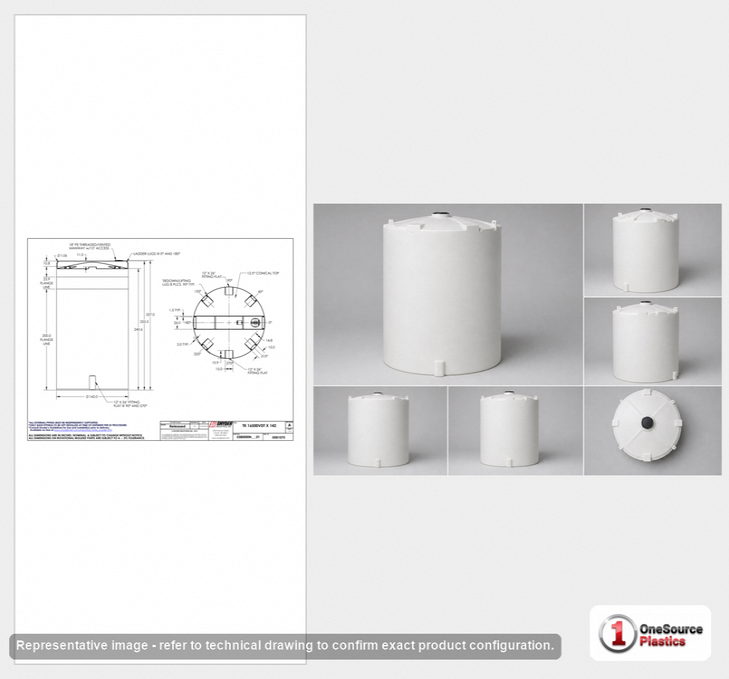
The N45 is the certified 1.9 wall, 500 pounds heavier, for ferric at strength and the heavy brines; the N39 is the 1.35 wall at this tank's weight, the N49 the black tank for water in the sun, and the C37-BLACK this same shell rated for 20,000 gallons in the general grade. The 5380000C126 holds 16,500 gallons on a 142 inch base 15 inches taller in a light wall.
Want us to check the fit? Send the site dimensions to 866-418-1777 or through a written quote request and we will confirm the tank, the pad and the freight.
Ports and access
- Outlet: specify the bulkhead fitting for the liquid when ordering; a flexible connector at the bulkhead, an expansion joint in the run, and a valve on its own support off the slab. Order a large outlet if the tank is a fire reserve.
- Access: 24 inch threaded, vented manway, 242 inches up, reached from a fixed platform with a rail.
- Service limit: 120 F / 48 C.
- Snyder line: ASTM.
A tank this big breathes hard as it fills, empties and warms, so size the vent to the pump-out and fill rates, screen it, and do not rely on the manway default. Fit a sender read at ground level so nobody climbs for a number. In a cold climate the outlet valve and the first run of pipe are insulated or drained; at this volume the body freezes slowly and from the top down.
Receiving a tanker
The driver's pump can deliver faster than the manway vent can breathe, so the vent is sized for the unload rate or the fill goes through a dedicated top bulkhead with its own vent line. The fill pipe runs to the floor so the liquid does not free-fall and foam. The first delivery into a new tank is watched from start to finish, with the slab edge and the outlet fitting checked as the level climbs, and each delivery after it is logged with its date and strength; at this volume the log is also the inventory.
Typical duty
Community and municipal water storage where the certification has to be on file, a fire reserve of the kind the fire-water reservoir design guide describes, irrigation storage on a large property, and brine, fertilizer solution or coagulant as delivered at the 1.5 rating. One liquid per tank, labeled.
Freight to your ZIP
At 165 inches across and 242 inches long on the deck the 3030000N43 is a permitted oversize load (NMFC 156600) on a flatbed with escorts; the freight cost estimator prices the lane to your ZIP, and the listed price is before freight. A crane sets 5,000 pounds upright on the slab. Water to the manway once, a hold, the outlet fitting checked, and the certification paperwork filed with the job. A photo of the tank on its pad, full, on day one is worth keeping; it is the baseline every later inspection is compared against.
Freight and documents
Ships from: Washington Court House, OH. LTL freight is quoted to your ZIP with the freight cost estimator or by phone at 866-418-1777. The listed price is before freight.
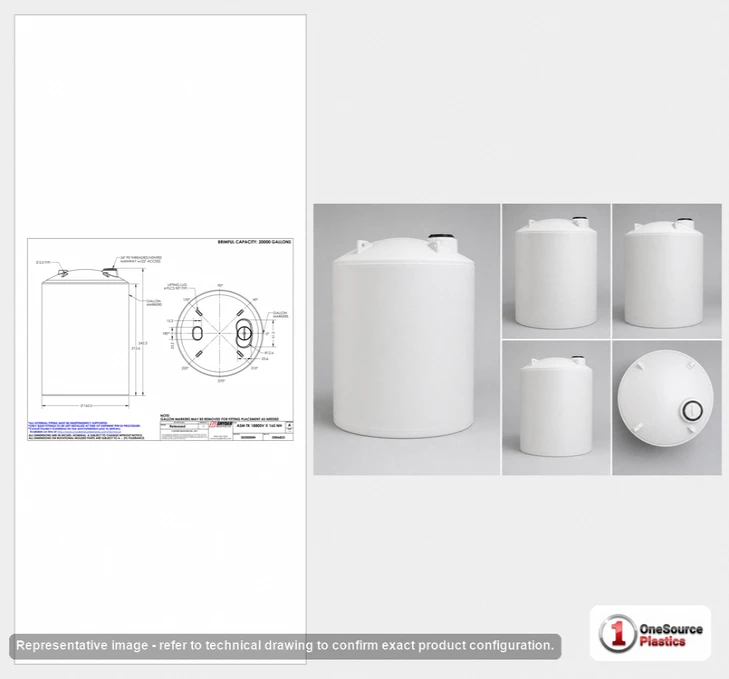
Technical drawing (PDF) for Snyder Industries 3030000N43.
See this tank
Interactive 3D model with live fill. This tank has an interactive 3D model built to its manufacturer dimensions. Rotate it, and set a fill level to see how much liquid it holds at any height. Open the 3D view on the product photo above. Download the 3D model (GLB).
Product video. Watch the Snyder Industries 18800 Gallon HDPE Vertical Liquid Storage Tank with ASTM Certification video (64 seconds) with dimensions, fittings and shipping notes.
Ready to order?
Add it to your cart at the top of this page, get LTL freight to your ZIP, or call 866-418-1777. The listed price is before freight.