175 gallons of chemical storage in a 29 inch circle
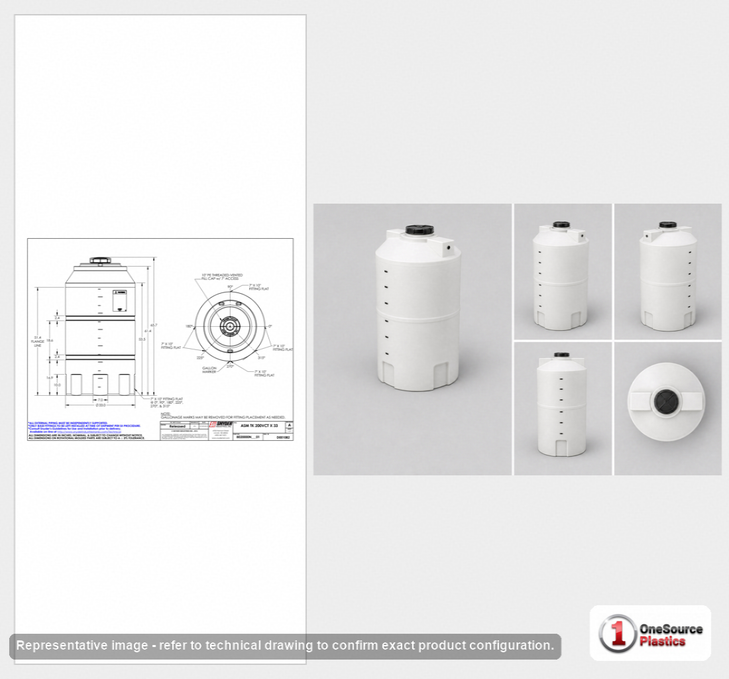
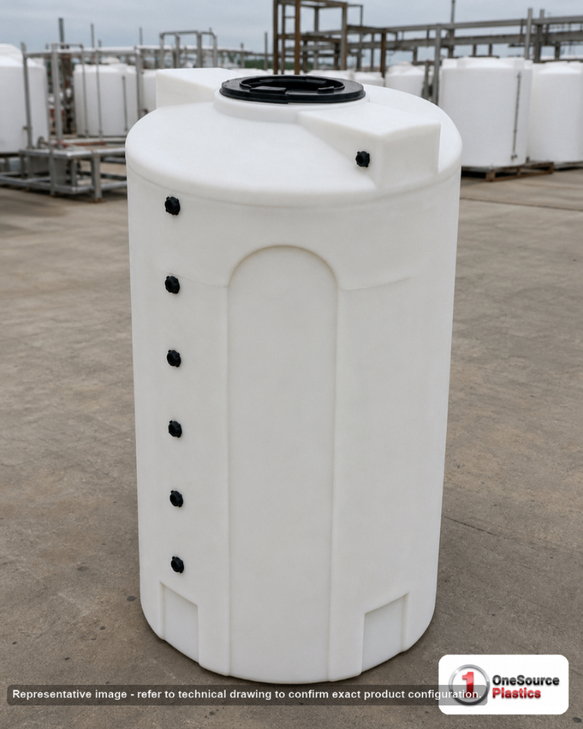
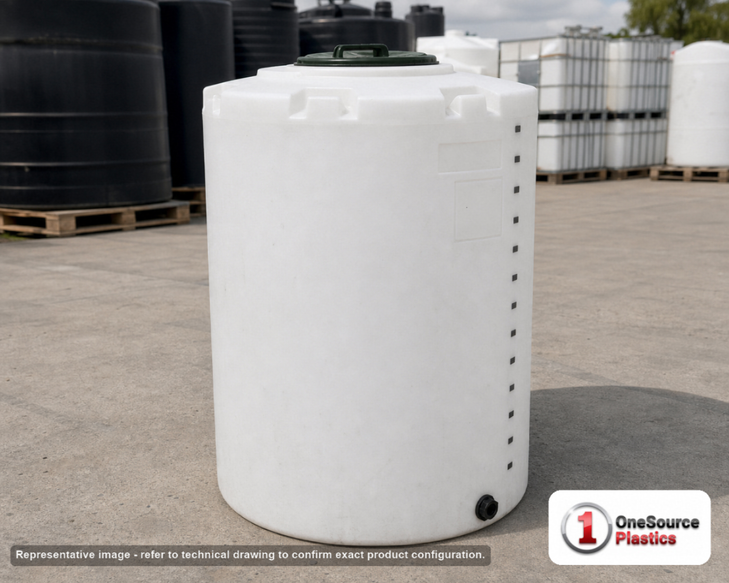
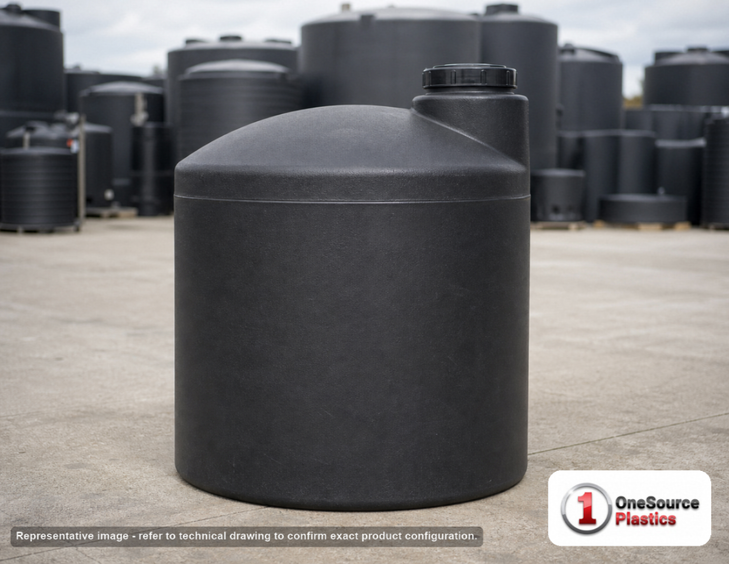
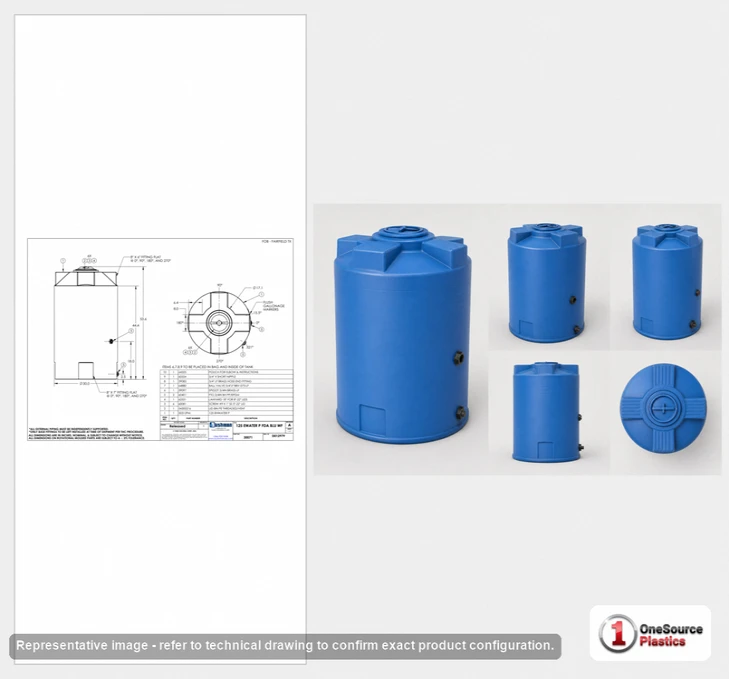
The Snyder 1008400N45 is a slim vertical chemical storage tank: 175 gallons of white high density linear polyethylene, 29 inches across and 66 inches tall, 60 pounds empty. Its wall is rated for a specific gravity of 1.9, or 2,773 pounds of contents against 1,460 for water, so it holds concentrated treatment chemicals on a footprint that fits between two pumps on a skid. An 8 inch threaded lid on top, a 3 year warranty, and it ships as standard LTL freight.
Ready to price it? The listed price is before freight; quote freight to your ZIP in a few seconds, then add to cart above or call 866-418-1777.
The narrowest day tank
A day tank holds one shift or one day of chemical close to the dosing pump, so a leak is a small one and a wrong fill is caught early, and the 29 inch base puts 175 gallons where a 36 inch tank will not go. The rated chemistry for the resin is listed below; check the liquid at its concentration in the chemical compatibility database, because weight rating and chemical resistance are separate properties. The 175 gallon vertical tank buyers guide compares the shapes in this class across makers; the tank sizing calculator turns the pump's rate and the refill schedule into a tank size, and the tank sizing guide covers the reserve a day tank carries. Strap it to a wall; a 29 inch base under 66 inches of dense liquid has a high center of gravity.
Snyder's 150 to 190 gallon chemical tanks
| Part | Gallons | Diameter x height | Empty weight |
|---|---|---|---|
| 1008400N45 (this tank) | 175 | 29 x 66 in | 60 lb |
| 1008400N42 (XLPE) | 175 | 29 x 66 in | 60 lb |
| 1012800C26 | 150 | 30 x 59 in | 55 lb |
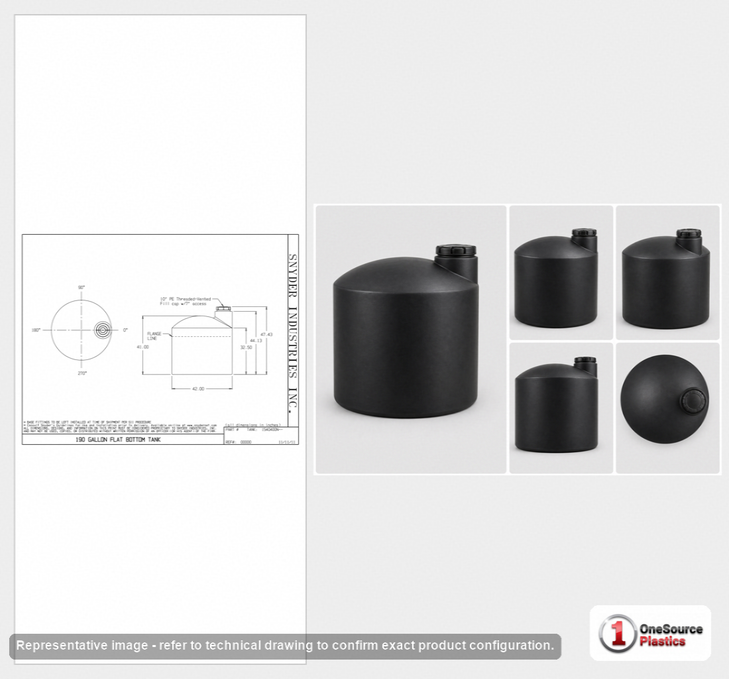
| 1540400N45 (squat, ASTM certified) | 190 | 42 x 47 in | 70 lb |
| 1540400N42 (squat, XLPE) | 190 | 42 x 47 in | 60 lb |
The N42 is the cross-linked twin for hypochlorite and the other oxidizers. The 1012800C26 is 25 gallons smaller and 7 inches shorter on a base an inch wider. The 1540400 tanks put 190 gallons in a squat 42 by 47 inch shell, 19 inches shorter, for under a bench; the N45 carries ASTM certification and the N42 is cross-linked.
Want us to check the fit? Send the site dimensions to 866-418-1777 or through a written quote request and we will confirm the tank, the pad and the freight.
Openings, instruments, containment
- Access: 8 inch threaded lid; the tank is filled by hose or tote pump, not poured.
- Outlet: specify the bulkhead fitting for the chemical when ordering; flex hose to the pump suction, valve braced off the floor so the fitting carries no pipe weight.
- Service limit: 120 F / 48 C.
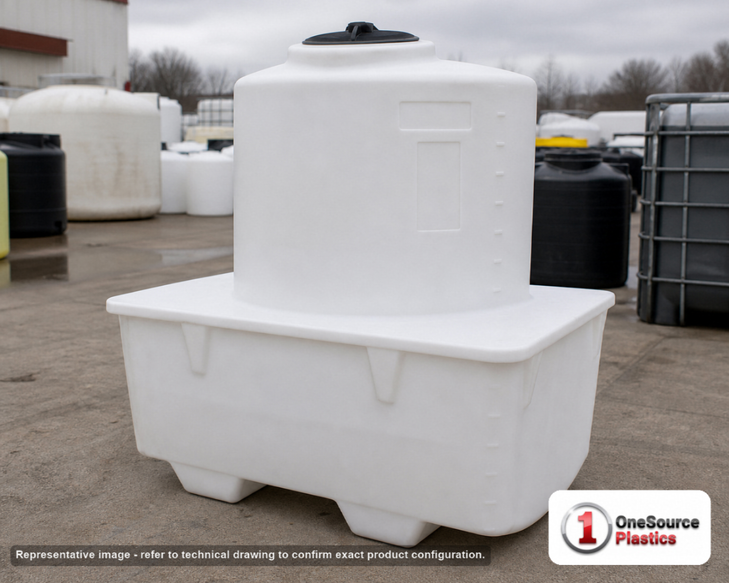
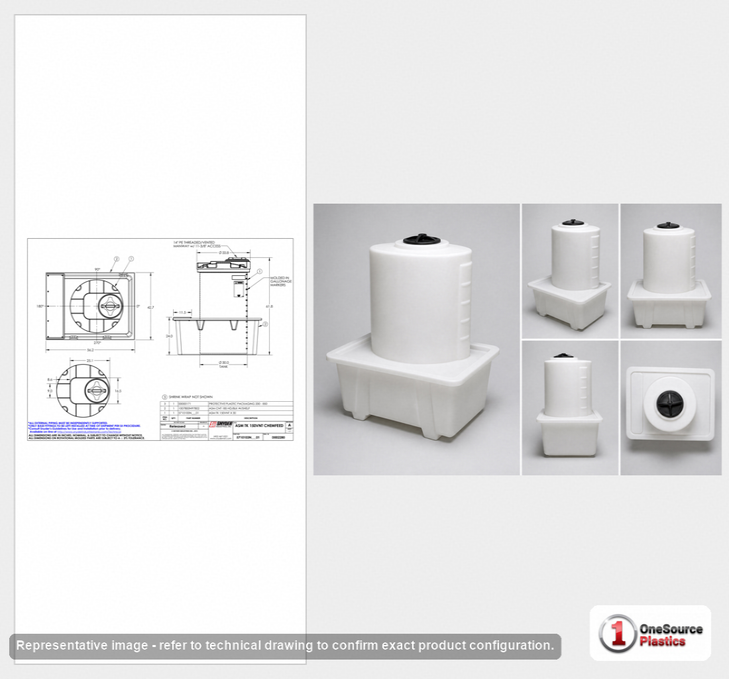
Choose the level sender for the chemical with the level gauge selection guide; on a 66 inch white tank a float switch for low level and a sight line for the operator are often enough. Set the dosing pump lower than the outlet so gravity primes it, and route the vent outside on anything that fumes. A 29 inch tank fits a standard spill pallet; how much containment a small chemical tank needs, and when the rules change with size, is worked through in the chemical secondary containment sizing guide, and the Snyder Captor 110 percent containment comparison covers when a double wall tank is the cleaner answer.
Containment for a small tank
A 175 gallon tank of regulated chemical still needs secondary containment sized to its volume, and at this size the answer is usually a spill pallet or a small basin rather than a berm: the pallet holds the whole tank plus freeboard, sits on a level floor, and drains nowhere. Which rule applies, and where the sizing method changes as tanks get bigger, is worked through in the containment guide linked above; the practical version is that the pallet is bought with the tank, the tank is strapped so it cannot tip out of it, and the pallet is emptied and cleaned if it ever catches anything. A double wall tank replaces the pallet entirely, which matters where floor space is tight or where a spill would reach a drain.
Filling from a tote
An 8 inch lid means the tank is filled by a tote pump through a hose, never poured. Run the hose to the floor of the tank so the chemical does not free-fall and foam, keep the lid closed between fills, and give the vent a short line routed away from the dosing pump so any mist does not settle on its electrical gear. Log each fill with its date and strength; that log is what turns a guess about turnover into a schedule.
Turnover and changeover
Size the refill schedule so the tank turns over before the chemical degrades; hypochlorite in particular is bought in small lots often. A 29 inch tank is cleaned in minutes: drain through the outlet, rinse through the lid with a wand, drain again, and let it dry before the new fill. Keep the lid shut so nothing is lost as vapor, and shade the tank if the chemical is light-sensitive.
Typical duty
Hypochlorite and caustic day tanks at small water systems, polymer make-down on a wastewater skid, acid and inhibitor feed at a cooling tower, brine for a softener, and the lab or pilot plant that needs 175 gallons of reagent between two pumps. One chemical per tank, labeled.
Freight to your ZIP
The 1008400N45 ships palletized as LTL freight (NMFC 156600-02) at a class rate; the freight cost estimator gives the number for your ZIP; the price shown here is before freight. One person carries 60 pounds through a door. Strap it, water-fill to the lid and hold it, then drain and dry before the chemical connection is made. A photo of the tank on its pad, full, on day one is worth keeping; it is the baseline every later inspection is compared against.
Freight and documents
Ships from: Lincoln, NE. LTL freight is quoted to your ZIP with the freight cost estimator or by phone at 866-418-1777. The listed price is before freight.
Technical drawing (PDF) for Snyder Industries 1008400N45.
See this tank
Interactive 3D model with live fill. This tank has an interactive 3D model built to its manufacturer dimensions. Rotate it, and set a fill level to see how much liquid it holds at any height. Open the 3D view on the product photo above. Download the 3D model (GLB).
Product video. Watch the Snyder Industries 175 Gallon HDLPE Vertical Chemical Storage Tank in White video (70 seconds) with dimensions, fittings and shipping notes.
Ready to order?
Add it to your cart at the top of this page, get LTL freight to your ZIP, request a written quote, or call 866-418-1777. The listed price is before freight.