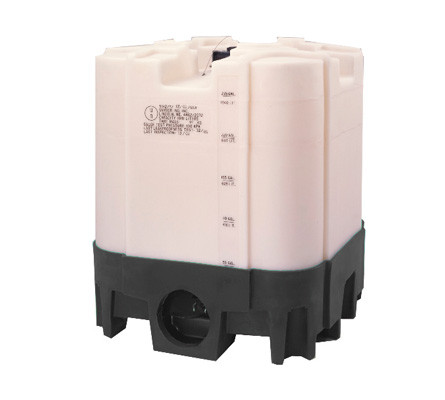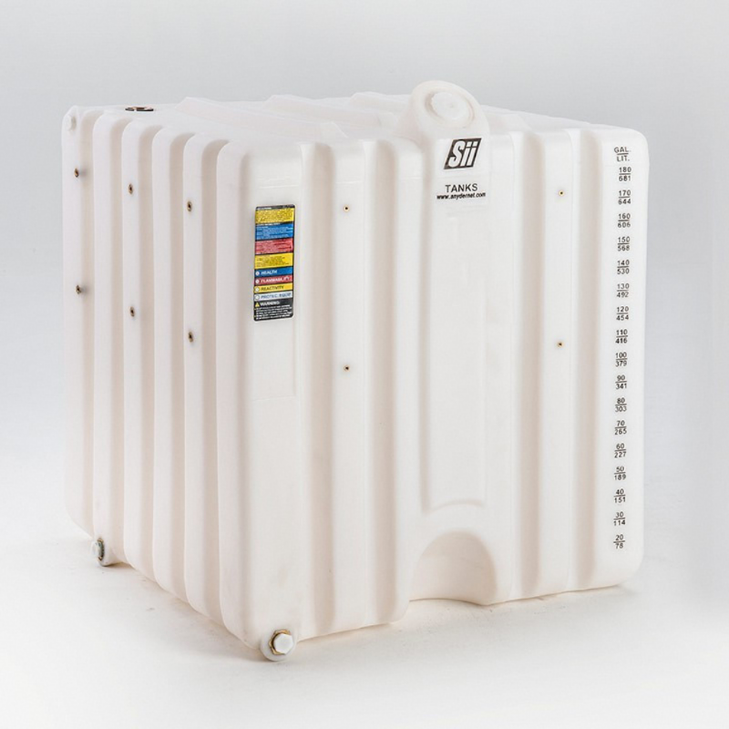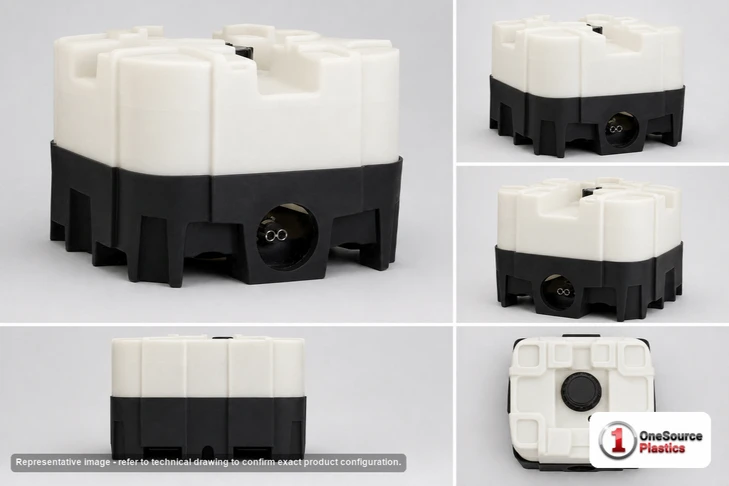
A 220 gallon stackable tote with a 2 inch outlet, a pallet's worth of floor
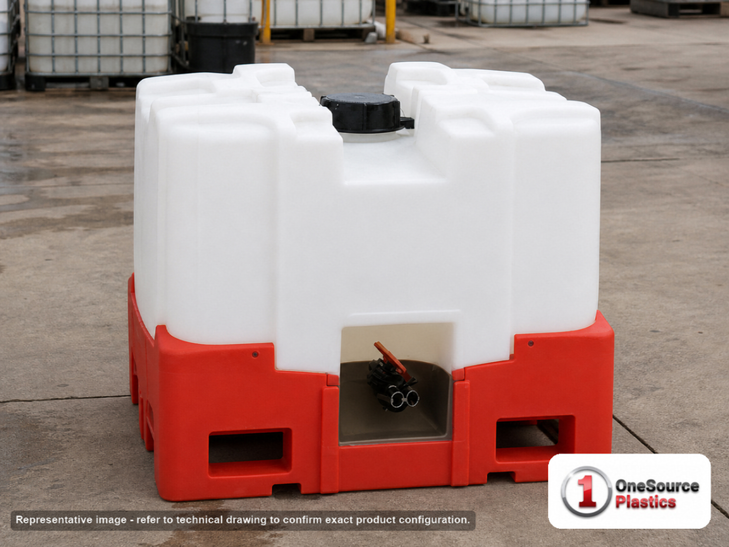
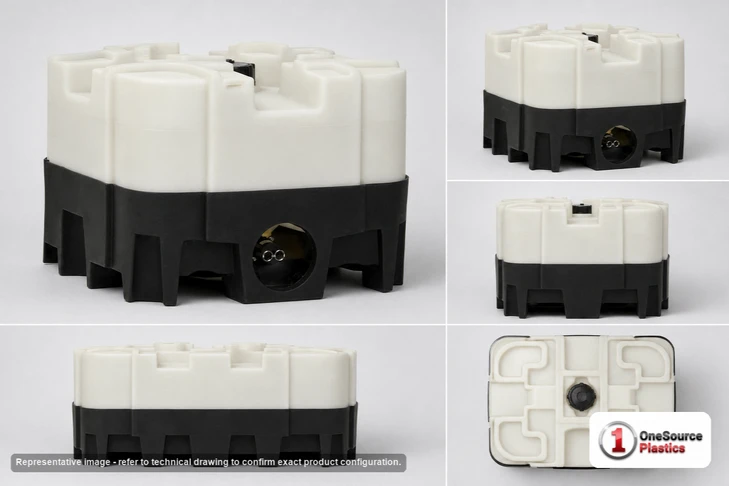
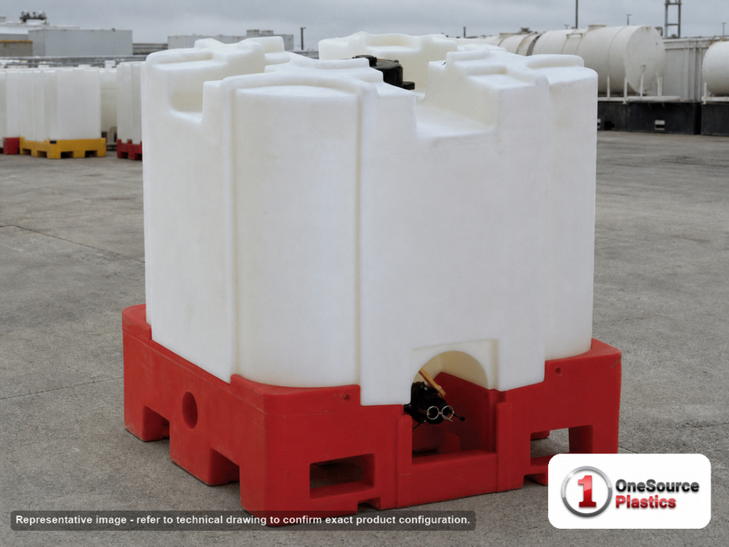
Snyder part number 6630023B97204 is a 220 gallon stackable IBC tote tank in white high density linear polyethylene, 45 inches long, 46 inches wide and 48 inches tall, weighing 243 lb empty. It is the size an operation buys when drums have become a handling problem and a bulk tank would be holding product rather than supplying it: one vessel, one connection and one delivery inside a pallet sized rectangle. The connections are a 2 inch outlet and a 2 inch inlet, with a 6 inch lid on top. The wall is rated for liquids up to 1.9 specific gravity, which covers nearly every treatment and process chemical sold in bulk; 220 gallons of water weighs 1,835 lb. This is the tote itself, not a caged unit: a cage, a pallet, a valve and a service temperature are not stated on this listing, so tell us how the product is drawn off and we will confirm what the tote ships with.
Replacing a row of drums? Call 866-418-1777 with the chemical and your monthly use, or get freight to your ZIP and add it to your cart above.
Where it goes
The argument for this tote is the tile it occupies: 220 gallons on a 45 by 46 inch plan, the same aisle and the same bund as a stack of drums with far fewer containers to move. Height pays for it. At 48 inches the lid is at chest height, so filling from the top means a step unless the fill is piped to the 2 inch inlet; decide that before the tote is set. Set it on flat, continuous, level support across the whole base; 1,835 lb of water stands on it once it is full, and a floor that is fine under an empty tote can be the wrong floor under a full one, particularly on a mezzanine or an old slab. Where the tote stands over a drain or inside a building, our Captor containment comparison and the RCRA secondary containment article are worth reading before the bund is poured. Size the volume in the tank sizing calculator and take the headspace from the tank sizing guide.
What goes in it
Chemical stores and dosing points at water and wastewater plants, food plant sanitation, metal finishing lines, laundries and vehicle wash sites. Check the chemical in our chemical compatibility guide; sodium hypochlorite, sulfuric acid, ferric chloride and hydrogen peroxide are the entries tote buyers ask about most, and the gasket and valve material change with the chemical. Whether a tote, a drum or a bulk tank is cheapest has a numerical answer; our drum versus tote versus bulk tank break-even analysis runs the numbers, and the container versus tank guide is the short version.
Openings and fittings
- Outlet. 2 inch. Carry the valve and the first run of line on their own bracket so nothing hangs on the tote, with a flexible connector at the first joint.
- Inlet. 2 inch.
- Lid. A 6 inch lid at the top of a 48 inch tote, above most people's comfortable reach for a hose. It takes a lance and a dip tube, not an arm, so decide the cleaning method before the first product goes in. The lid is not described as vented; a tote being pumped out needs an air path, so confirm the vent arrangement with us.
- Valve. Not stated on this listing. Tell us whether the product is pumped or gravity fed and we will confirm what the tote ships with.
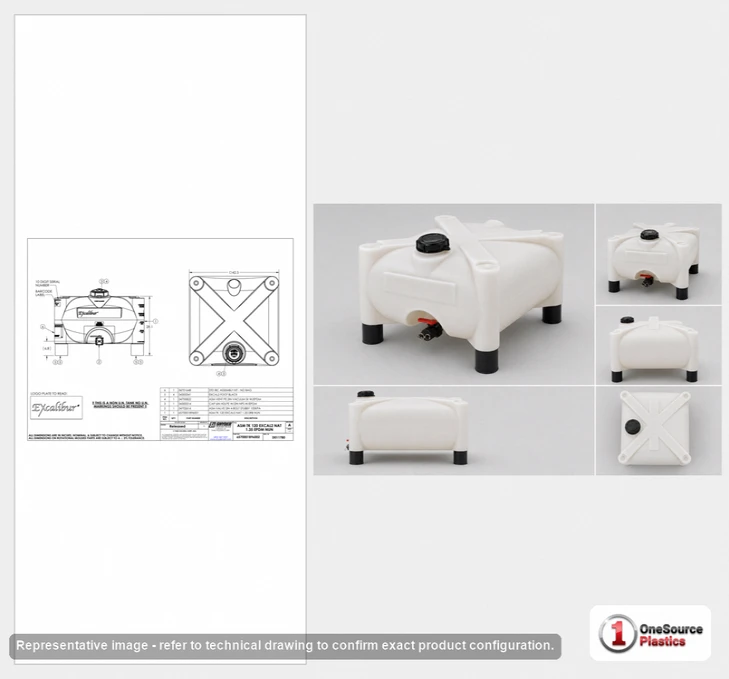
- Drawing. Snyder's drawing for this tote is linked under Technical Drawing on this page.
Sizes nearby
The same tote in black, for contents you want shielded from light or identified at a glance, is the 220 gallon stackable IBC tote tank in black; a second white 220 on a slightly different body is the 220 gallon stackable IBC tote tank 66345. One size down is the 120 gallon stackable IBC tote tank. Where the contents or a customer specification call for steel, the 245 gallon 304 stainless steel Supertainer with side drain is the one to ask us about; nothing on this page about polyethylene ratings applies to it.
Shipping and receiving
The tote ships LTL from Snyder's plant in Lincoln, Nebraska, 45 by 46 by 48 inches on the pallet at 243 lb, so have a forklift or a pallet jack at the dock. The listed price is before freight; the freight cost estimator gives the cost to your ZIP. Lift from under the base, never by the lid or the fittings, and measure the doorway before the truck is booked; 48 inches of tote on a pallet is taller again on the way in. At the tailgate, check the part number against 6630023B97204 on the bill of lading and look over both fittings and the lid. Fill it with water and hold the 1,835 lb load while you read the lid, both connections and the surface under the base, then drain and dry it before the first delivery.
Ready to order? Add it to your cart at the top of this page, get LTL freight to your ZIP, or call 866-418-1777. The listed price is before freight.
Freight and documents
Ships from: Lincoln, NE. LTL freight is quoted to your ZIP with the freight cost estimator or by phone at 866-418-1777. The listed price is before freight.
Technical drawing (PDF) for Snyder Industries 6630023B97204.
See this tank
Product video. Watch the Snyder Industries 220 Gallon HDPE Stackable IBC Tote Tank video (65 seconds) with dimensions, fittings and shipping notes.
Ready to order?
Add it to your cart at the top of this page, get LTL freight to your ZIP, or call 866-418-1777. The listed price is before freight.