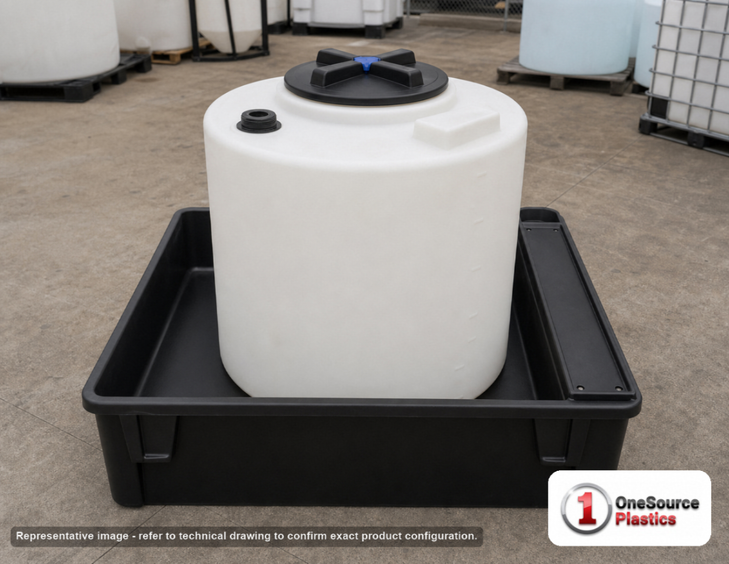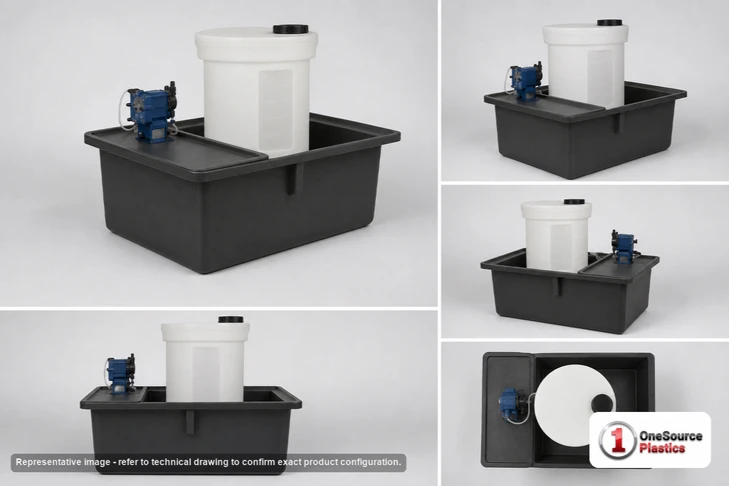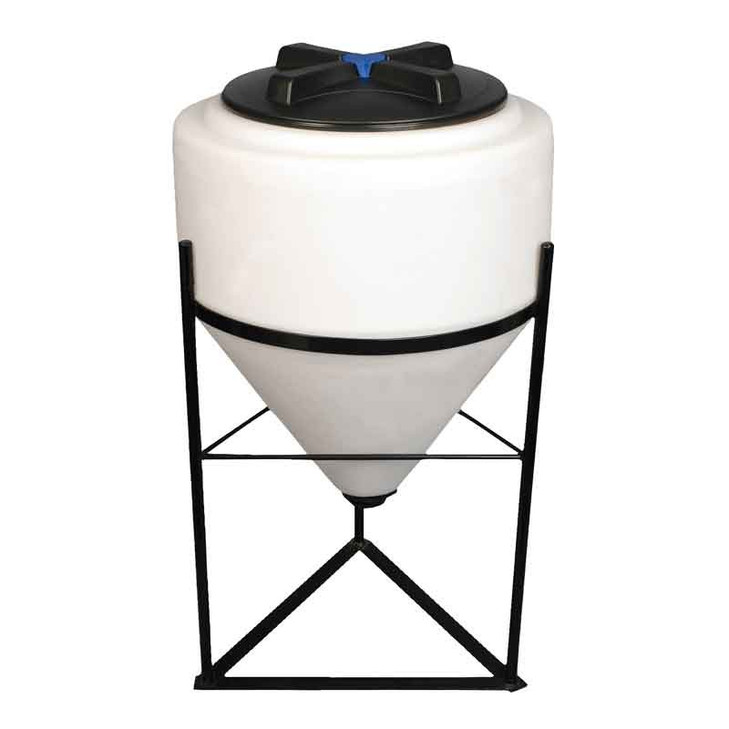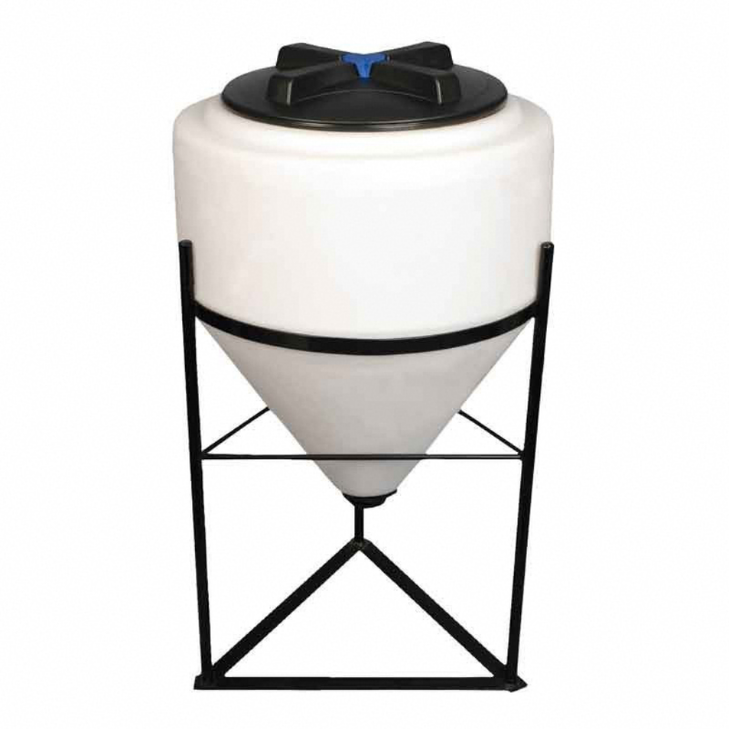
A 35 gallon chemical feed station tank with stand, lifted to 52 inches
Snyder part 1000124CFWS45 is a 35 gallon chemical feed station tank in white high density linear polyethylene supplied with its stand. On the stand it is 47 inches long, 36 inches wide and 52 inches tall and weighs 101 lb empty, with a 6 inch lid. The extra height over the floor-standing 35 gallon station is the stand, and on a small dosing system it is worth more than it sounds: it keeps a small metering pump primed. The wall is rated to 1.9 specific gravity and 120 F; 35 gallons of water weighs 292 lb (35 x 8.34). Snyder does not list an outlet size on this part number, so tell us the pump connection and we will confirm what ships.
Ready to order? Add the tank to your cart above with freight quoted to your ZIP, or call 866-418-1777 with the pump you are feeding.
Small feed rates, and a pump that has to stay primed
A small metering pump is the least forgiving thing in most plant rooms. It moves a few gallons a day, runs unattended, and will happily lose its prime on a short column of liquid and keep stroking while nothing reaches the process. A cooling tower dosing inhibitor and biocide. A boiler house on scavenger and phosphate. A small water system feeding hypochlorite where a missed dose is a reportable event. A pool on sanitizer. A greenhouse metering nutrient into irrigation. In all of them the feed rate is tiny, the interval between deliveries is long, and the last third of the vessel is exactly when the pump gives trouble. Standing the tank on its stand at 52 inches puts its low point above the pump so the suction stays flooded, lets a drain reach a bucket under gravity, and gives you space to see under the vessel, which on a small station in a corner is often the only way a slow weep is ever noticed. It also puts the 6 inch lid at a comfortable working height for a fill coupling and a level device without a step. The footprint stays 47 by 36 inches; only the height changes. The floor sees 292 lb of water at full carried through the stand, so bear the whole plan on a flat, level, continuous surface and anchor the stand before the first fill. Run the feed rate through the tank sizing calculator and take the freeboard from the tank sizing guide.
What goes in it
Where the chemistry is the question, start with the entry for what you are feeding in our chemical compatibility guide: sodium hypochlorite, sulfuric acid or DEF are the ones small station buyers look up. Keep the liquid at or below 120 F and under 1.9 specific gravity. Before you drill the top, our guide to laying out the vent, fill, level and drain fittings on a polyethylene tank is the right read; the level gauge selection guide covers reading a lifted tank from the floor, and the labelling and signage guide covers the placards.
Openings and what to confirm
- Lid. 6 inches on top, at the 52 inch mark on the stand: fill hose, suction line and level sensor.
- Outlet. Not listed for this part number. Give us the pump suction size and we confirm before it ships.
- Stand. Included. Snyder publishes no separate stand height or load rating here; the assembly is 52 inches and 101 lb.
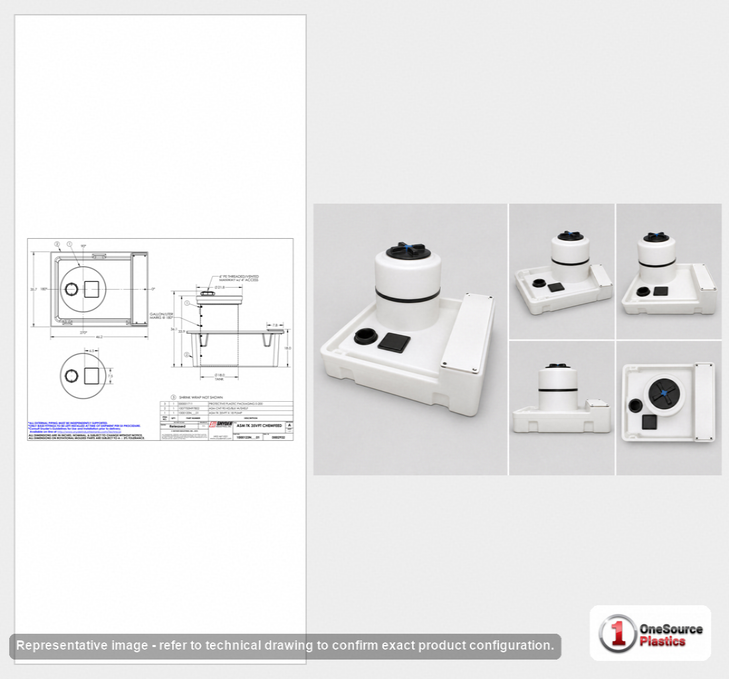
- Drawing. Snyder's drawing for 1000124CFWS45 is linked under Technical Drawing on this page.
The 35 gallon family and the operator tanks beside it
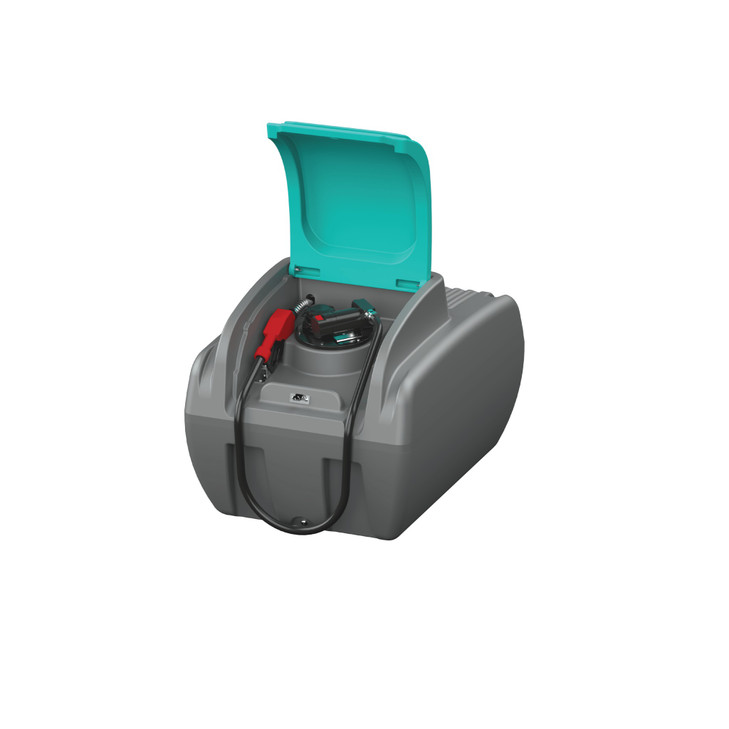
Without the stand, the same tank is the 35 gallon chemical feed station tank, part 1000123CF45. In cross-linked polyethylene, Snyder makes the 35 gallon XLPE feed station with stand and the 35 gallon XLPE feed station with containment basin. For a spray rig rather than a plant room, see the 30 gallon pest control operator tank and the 50 gallon pest control operator tank with lid.
Shipping and receiving
LTL from Snyder's Marked Tree, Arkansas plant, 47 by 36 by 52 inches and 101 lb on a pallet. The listed price is before freight; the freight cost estimator gives the cost to your ZIP. Check 1000124CFWS45 against the bill of lading, look over the stand legs and the lid, and fill with water before the chemical goes in.
Questions before you order? Call 866-418-1777.
Freight and documents
Ships from: Marked Tree, AR. LTL freight is quoted to your ZIP with the freight cost estimator or by phone at 866-418-1777. The listed price is before freight.
Technical drawing (PDF) for Snyder Industries 1000124CFWS45.
See this tank
Product video. Watch the Snyder Industries 35 Gallon Plastic Chemical Feed Station Tank with Stand video (72 seconds) with dimensions, fittings and shipping notes.
Ready to order?
Add it to your cart at the top of this page, get LTL freight to your ZIP, or call 866-418-1777. The listed price is before freight.