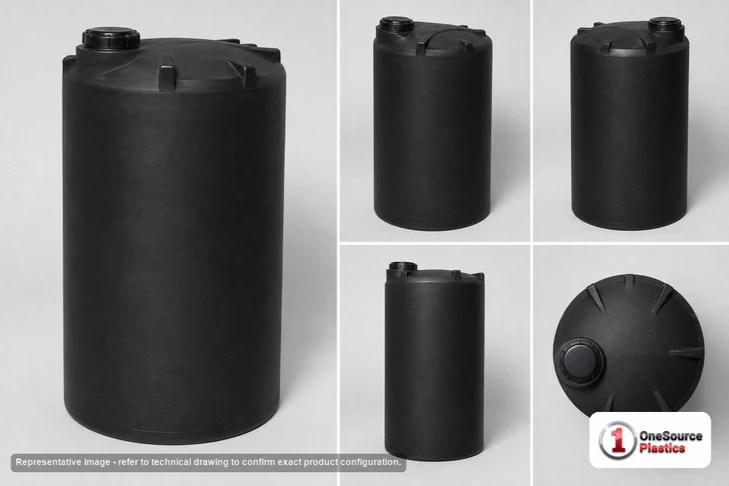
750 gallons of black cross-linked wall, listed to 140 F / 60 C
The service limit is what this tank is for. Snyder's 5990900N48 is a cross-linked polyethylene tank in black, 750 gallons in a 68 inch circle at 66 inches tall, 155 pounds empty, and the sheet lists it to 140 F / 60 C where most tanks around it stop lower. It is rated for a specific gravity of 1.9 as the sheet gives it, reading 11,884 pounds of maximum contents against 6,255 pounds for plain water at 8.34 pounds per gallon. An 18 inch threaded, vented manway on top, a 3 year warranty, and freight at class 400 out of Chowchilla, California.
Spec sheet in hand? Call 866-418-1777 and read us the liquid and the pad; or get freight to your ZIP and add it to your cart above.
Chowchilla only, and class 400 on a light tank
One plant and an unusual class, so price this one before you plan it. Chowchilla, California is the only origin on the sheet, which makes the western states, the Southwest and the Mountain West short-lane buyers and everybody east of the Rockies a long-lane buyer; and the sheet gives freight class 400 rather than the lower class most of the range carries. Class is a measure of density, not of value, and at 155 pounds inside a 68 inch circle this tank is very light for the space it takes, which is exactly what puts it in the higher class. That combination, a single western plant and a high class on a light, wide parcel, means the lane can be a real line item, so put the destination ZIP into the freight cost estimator before the requisition is written and read the listed price as before freight. The site is the easier half. At 66 inches the shell stops at five and a half feet, which clears a low roof, a mezzanine or a pipe rack, and puts the manway within a short climb. Underneath, the 1.9 rating allows 11,884 pounds of contents and plain water alone puts 6,255 pounds inside the shell, and a rotationally molded floor bears on its whole floor, so that load spreads over a 68 inch circle rather than concentrating on a small one. Pour the slab to the concrete pad sizing guide, level and in full contact, inside a berm sized to the tank where the liquid is regulated, because a wide tank on a pad with a low corner puts its weight on that corner. Heat is the thing to plan for beyond the pad: sites that need a 140 F / 60 C wall tend to punish tanks in other ways too, with warm air, warm liquid and full sun at once, and a black wall answers the sun by passing no light into the liquid while costing you any view of the level. Band it while it is empty, check the bands after the first storm and at the end of the first hot summer, and size the volume in the tank sizing calculator with the extra thermal freeboard the tank sizing guide calls for on a warm liquid.
Two walls in the 68 by 66 inch shell
| Part | Gallons | Diameter x height | Empty weight |
|---|---|---|---|
| 5990900N48 (this tank, black, cross-linked, listed to 140 F) | 750 | 68 x 66 in | 155 lb |
| 5990900N42 (natural white, same shell) | 750 | 68 x 66 in | 155 lb |
| SII-1008500C26 (wider, lower) | 750 | 72 x 50 in | not listed |
| SII-1008500C34 (black, lower) | 750 | not listed x 50 in | not listed |
| 1700200N42 (smaller, narrower, taller) | 710 | 60 x 68 in | 185 lb |
| 1810000C34 (larger, slim, very tall) | 850 | 48 x 117 in | 210 lb |
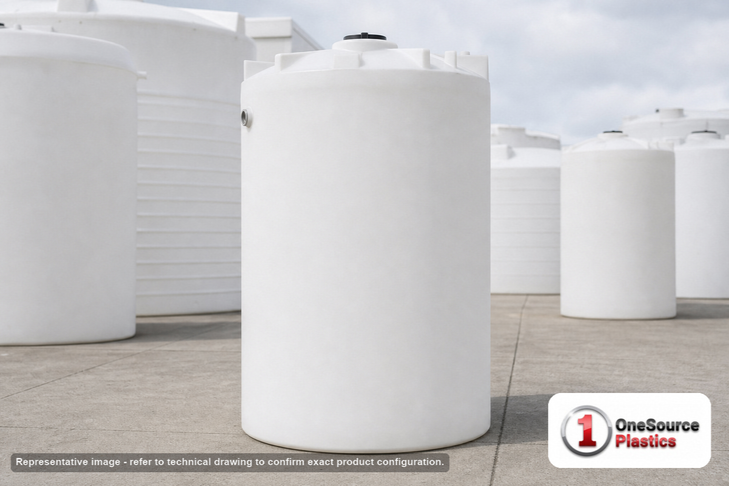
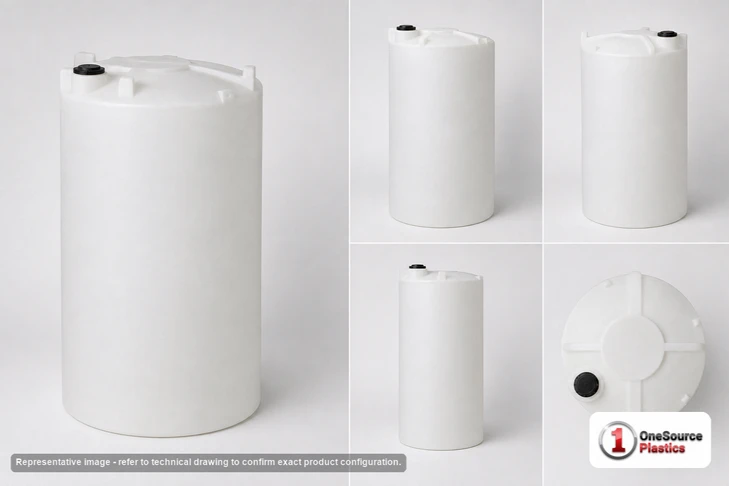
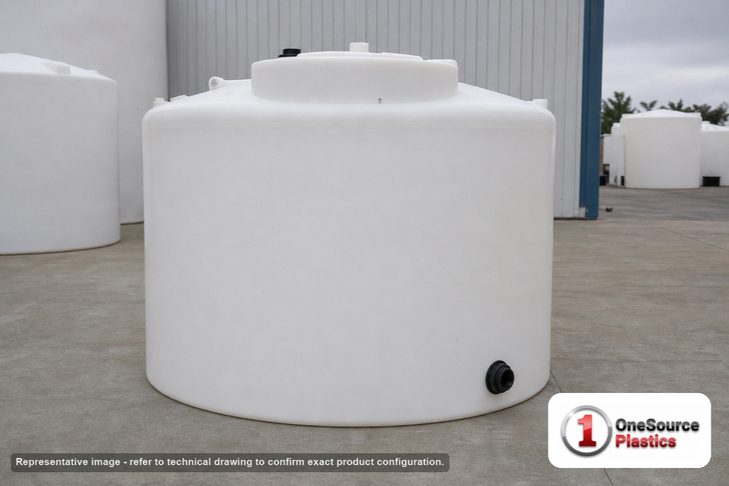
Two tanks share this shell and the only difference is colour, so the decision is about light and sight. Take this black one when the liquid degrades, fades, ferments or grows in light, or when the tank stands outdoors and the shell itself has to take the sun; take the natural white tank in the same shell when somebody needs to read the level through the wall. Everything else about them is identical: the same footprint, the same height, the same weight, the same rating and the same listed service limit, which is why neither is a compromise on fit. Against the neighbours, the 1008500 tanks hold the same volume in a lower shell and the sheet does not list a weight for either of them, which we print rather than fill in; the 1700200N42 is a narrower and taller step down in volume, and the 1810000C34 is the slim, very tall step up for an alley rather than a pad.
Two rows look the same? The difference is the wall; call 866-418-1777 with the liquid and we will say which, or ask for a quote on both.
Five feet six inches to the lid, and what a hot liquid does up there
- Access and its height set the routine: an 18 inch threaded, vented manway at the top of a 66 inch shell, five and a half feet up. That is a short climb or a low platform rather than tall work, and on a tank that may hold a warm liquid it is worth making the access good, because a cover that is awkward to reach is a cover that gets left loose.
- Outlet: the sheet gives the outlet as "1 Manway / Lid" and no bottom fitting size appears on it. We print the field as it stands and do not read a pipe size into it. Tell us the liquid, its working temperature and the draw-off you want at order, and we confirm what this molding accepts and in what material, because a fitting and a gasket that hold at room temperature are not automatically right at the top of this tank's range.
- Fill and vent: a dip tube to the floor so a warm liquid does not cascade and flash inside the headspace, the vent piped outdoors, and the vent sized to the fill rate, because a warm liquid breathes more than a cold one and a blocked vent is how a tank gets hurt.
- Service limit: 140 F / 60 C, the field that defines this tank. Warranty: 3 year. Rating: specific gravity 1.9 as the sheet gives it.
Heat is what makes the plumbing discipline non-negotiable. Polyethylene moves with temperature, so every run leaving the base is carried on its own support off the pad with a flexible connector between tank and hard pipe, and a run that was neatly aligned cold will not be aligned hot. The headspace of a warm tank is the part of the wall that ages first, so the light goes on the band above the liquid line every time the cover is open, and the date goes on the log. Because the wall is black, nothing about the level or the sediment is visible, which makes the sender and the local readout part of the install rather than an accessory. Keep the cover threaded and shut between deliveries, put the one liquid's name and the sheet's service limit on the wall where an operator reads them, and where the site also freezes in winter, protect the base piping and the first valve and leave the body to ice from the top down.
Hot-side duty that also has to stay dark
A heated cleaning or caustic solution, a hot wash-water makeup tank, a plating or finishing bath feed that arrives warm, a boiler or cooling chemistry skid, a dense concentrate that has to stay out of the light, and any outdoor pad in a hot climate where the liquid never really cools down overnight. The black wall is the reason to choose this one over its white twin, and the cross-linked wall is the reason to choose the shell at all; whether the cross-linking is genuinely earning its place on your chemical or whether a high-density wall would do the same work is settled best before the order, and our guide to when cross-linking matters for chemistry duty takes it chemical by chemical. Where a site rule or an insurer wants the liquid inside a second wall, the Captor double wall freeboard guide works out the usable volume a contained vessel really returns at this size, which a warm liquid makes more pressing because it needs more freeboard. Water sits far inside the rating, but a private fire reserve is a separate specification in a water-rated vessel, as the fire-water reservoir design guide sets out.
One plant, class 400, and the cost of cube
The sheet gives freight class 400 and 155 pounds shipping weight from Chowchilla, California. Class 400 on a tank this light is a statement about density rather than about the tank: a wide, hollow parcel at 68 inches across takes deck space out of proportion to its mass, and the single California origin means eastern buyers are paying for distance as well. Price the lane to your ZIP in the freight cost estimator before the order goes in and read the listed price as before freight. A forklift or two people with a pallet jack take 155 pounds off the trailer, straps under the body and never a sling through the manway, and it sets on the cured pad rather than on gravel it will be dragged off later. Fill it with cold water to the manway and hold it there long enough to walk the pad edge twice before anything warm ever goes in, then drain and dry it; a cold hydrostatic test is the cheap way to find a pad problem and a hot liquid is the expensive way. Mark the vent and the outlet on the outside of the shell so nobody caps the wrong one in the dark.
Freight and documents
Ships from: Chowchilla, CA. LTL freight is quoted to your ZIP with the freight cost estimator or by phone at 866-418-1777. The listed price is before freight.
See this tank
Interactive 3D model with live fill. This tank has an interactive 3D model built to its manufacturer dimensions. Rotate it, and set a fill level to see how much liquid it holds at any height. Open the 3D view on the product photo above. Download the 3D model (GLB).
Ready to order?
Add it to your cart at the top of this page, get LTL freight to your ZIP, request a written quote, or call 866-418-1777. The listed price is before freight.