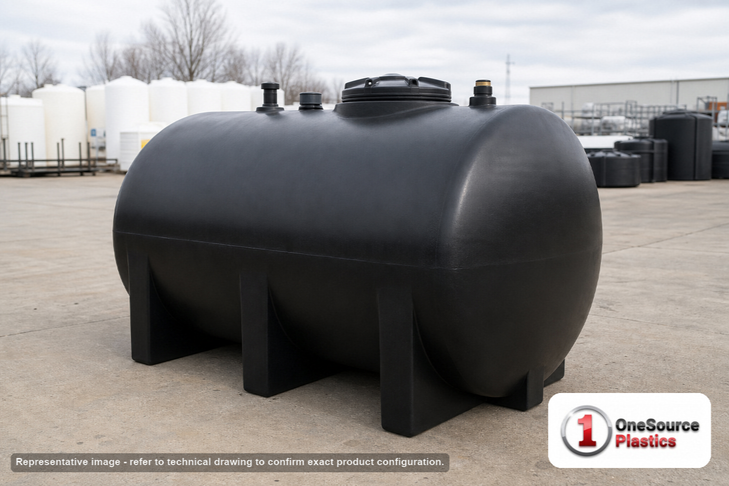
A 535 gallon black leg tank rated for heavy liquids
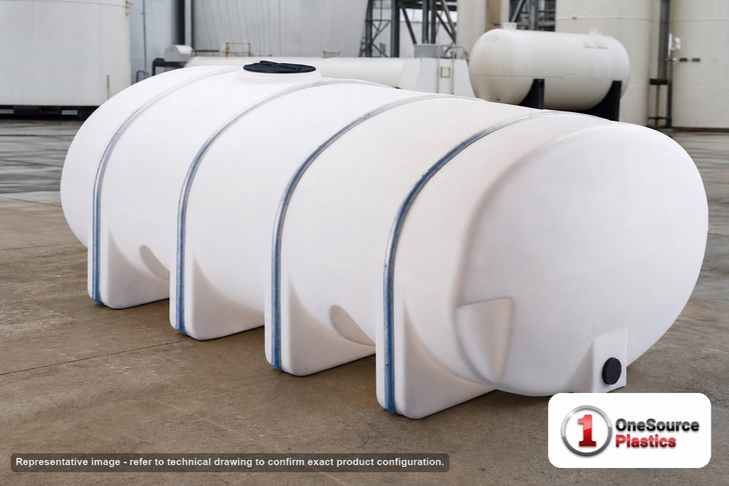
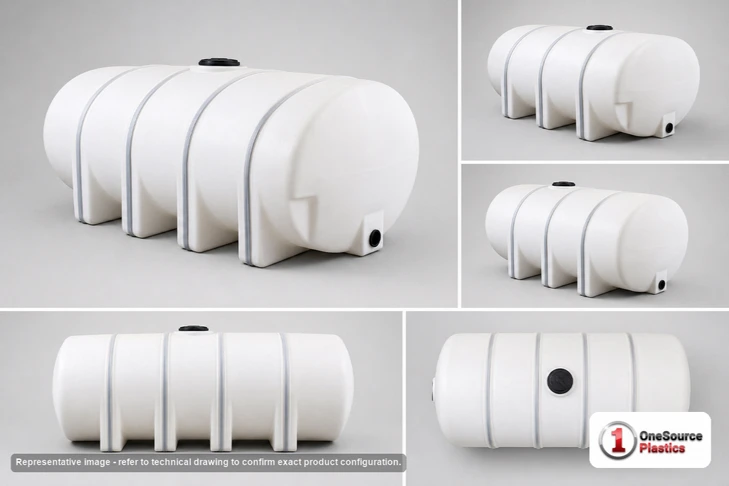
Snyder's 535 gallon horizontal leg tank in black, part number 1400300N51, is a polyethylene tank 78 inches long, 47 inches wide and 52 inches tall, weighing 124 lb empty. It is the long, low shape in this size range, the one that fits a narrow trailer deck or rides under a rack. The moulded legs stand it flat without a cradle. It comes with a 2 inch outlet in the end wall and an 18 inch manway on top. The wall is rated for liquids up to 1.9 specific gravity, the heavy-duty rating, so it carries the dense fertilizer solutions and most treatment chemicals as well as water; 535 gallons of water weighs 4462 lb. The service limit is 120 F. Black keeps light out, which slows algae in stored water and protects light sensitive liquids.
Carrying something heavier than water? Call 866-418-1777 with the liquid, or get freight to your ZIP and add it to your cart above.
Where it rides
At 78 inches long and 47 inches wide this tank runs lengthwise in a full size pickup bed or sits on a narrow utility trailer with room beside it, and 52 inches of height clears most racks. Full of water it is over two tons, past the payload of most pickups, so on a light truck it rides part-full. Strap through the leg recesses, never over the manway, and pull the straps up again once the shell has settled under its first load. Our guide to leg tanks for fertilizer and the non-roadable trailer rules covers how it is classified on the road. Parked, it needs a flat, continuous surface under every leg.
What goes in it
Water, liquid fertilizer, and the farm and treatment chemicals polyethylene handles. A 1.9 rating means liquids up to nearly twice the weight of water are within the design, so the heavy fertilizer solutions and the strong treatment chemicals are in range where a 1.5 tank is not. Check the liquid in our chemical compatibility guide first; the entries for urea solution, sodium hypochlorite, hydrochloric acid, sulfuric acid and ferric chloride are the ones buyers of a 1.9 tank ask about. Keep the contents under 120 F. Fuel and oil still need a double wall tank; see our Snyder Captor double wall walkthrough. For blends, our note on fertilizer blend stratification explains what to watch. The tank sizing calculator and tank sizing guide settle the volume.
Openings and fittings
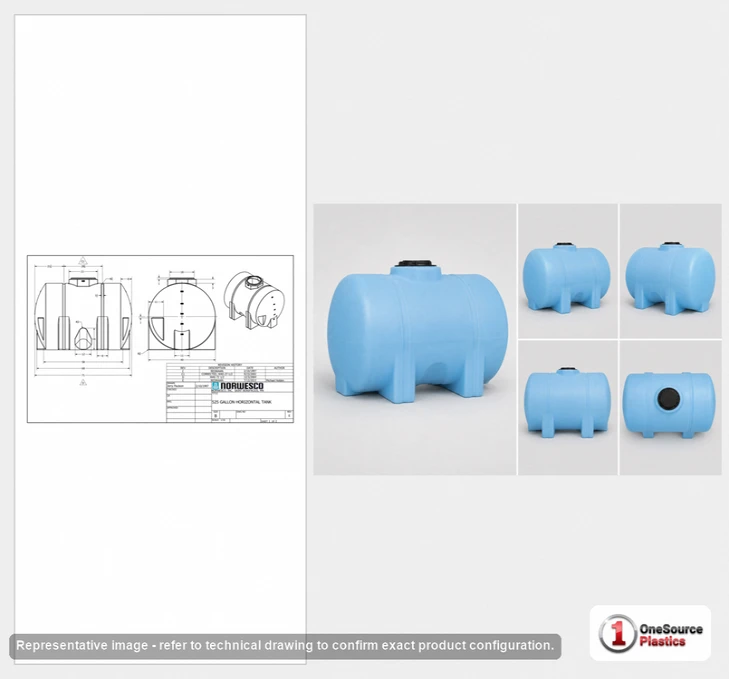
- Outlet. 2 inches, in the end wall. Your valve or camlock adapter has to match, so carry the 2 inch figure into the plumbing order. The fitting type and thread are not listed on this page; Snyder's drawing under Technical Drawing shows them and we confirm before the tank ships.
- Manway. 18 inches on top: fill hose, pump, float, and room for an arm and a brush.
- Drawing. Leg layout for strap planning is on the same drawing.
Sizes nearby
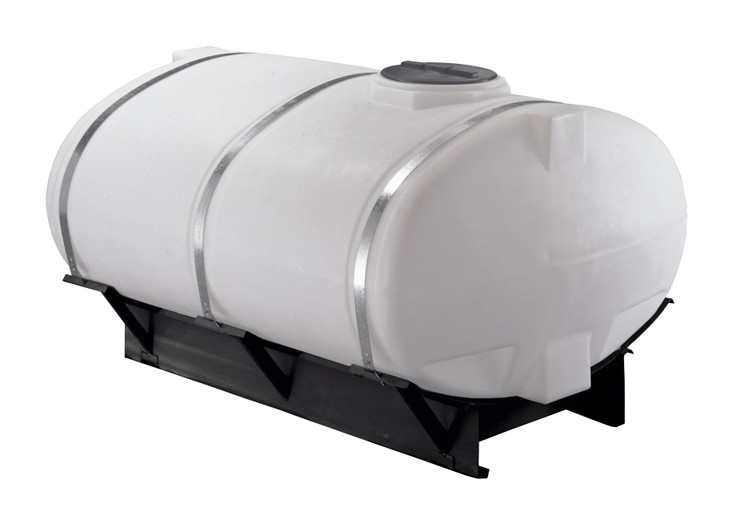
The same tank in white: the 535 gallon leg tank, part 1400300N45, for liquids where you want to see the level through the wall. Close in size: the 525 gallon leg tank. Next up: the 730 gallon leg tank with securing hoop.
Shipping and receiving
The tank ships LTL from Snyder's plant at Marked Tree, Arkansas, 78 by 47 by 52 inches and 124 lb on the pallet. Two people take it off a lift gate. The listed price is before freight; the freight cost estimator gives the lane cost to your ZIP. At the tailgate, check 1400300N51 against the bill of lading, look at every leg for transit damage, and fill with water the first time before anything heavier goes in.
Questions before you order? Call 866-418-1777.
Freight and documents
Ships from: Marked Tree, AR. LTL freight is quoted to your ZIP with the freight cost estimator or by phone at 866-418-1777. The listed price is before freight.
Technical drawing (PDF) for Snyder Industries 1400300N51.
See this tank
Interactive 3D model with live fill. This tank has an interactive 3D model built to its manufacturer dimensions. Rotate it, and set a fill level to see how much liquid it holds at any height. Open the 3D view on the product photo above. Download the 3D model (GLB).
Product video. Watch the Snyder Industries 535 Gallon Plastic Horizontal Leg Tank in Black video (67 seconds) with dimensions, fittings and shipping notes.
Ready to order?
Add it to your cart at the top of this page, get LTL freight to your ZIP, or call 866-418-1777. The listed price is before freight.