500 gallons, a 2 inch outlet and an 18 inch lid
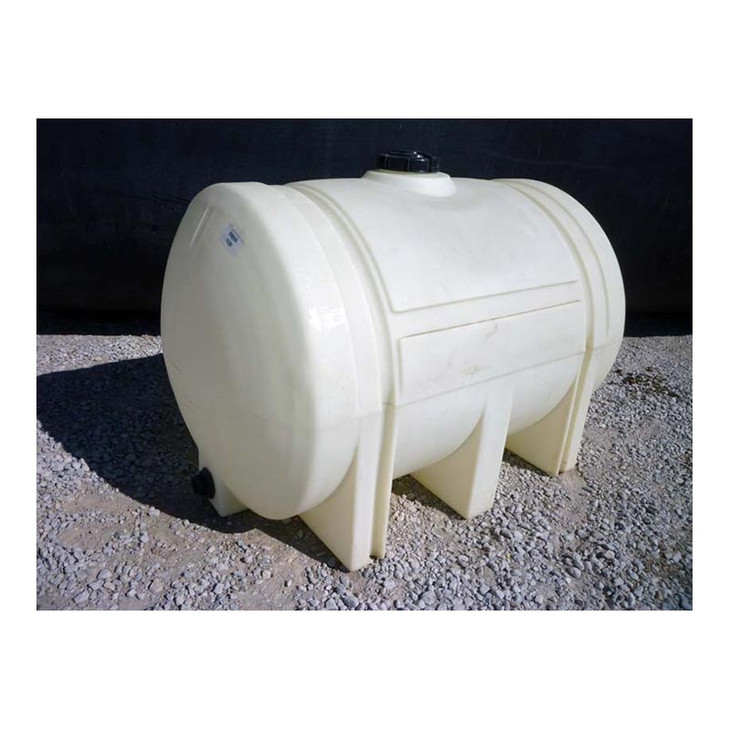
The Snyder SII-1400100N45 is the 500 gallon horizontal leg tank with the fittings sized for a hurry. It is white polyethylene, 72 inches long, 49 inches wide and 55 inches tall, 160 pounds empty, and it carries a 2 inch outlet and an 18 inch lid where the smaller leg tanks in the family carry narrower outlets and smaller lids. That pairing is what the tank is for: an opening wide enough to fill fast and see into, and a drain wide enough to empty in a shift. The sheet rates the wall at a specific gravity of 1.9, so 500 gallons of water at 8.34 pounds per gallon is 4,170 pounds and max contents is 7,923 pounds. Service limit 120 F / 48 C. The sheet publishes no warranty term, no leg load rating and no over-the-road rating, and this page asserts none of them.
Ready for the pad? Quote freight to your ZIP, add the 500 gallon tank to your cart above, and 866-418-1777 will confirm the truck and the unload.
The custom applicator filling and dumping against the clock
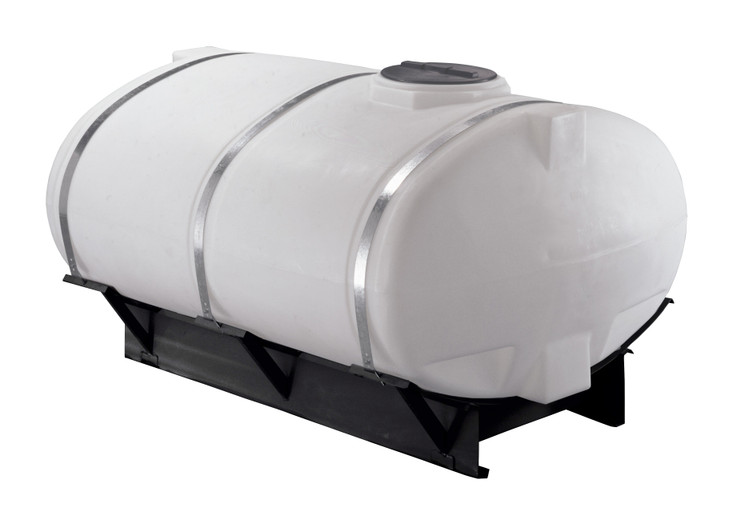
The duty that sells this tank is turnaround. A custom applicator loading a nurse tank at a co-op and emptying it into a rig four times a morning. A spray contractor who is paid by the acre and not by the hour spent at a hydrant. A municipal crew that has a window to flush a main and then move. A dairy or feedlot washing down between milkings. A construction water truck whose job is to keep a roller moving. For all of them the two numbers that matter are on this sheet, and they are the fitting sizes rather than the gallons: an 18 inch lid takes a big fill hose without a funnel and lets a hand and a light inside afterwards, and a 2 inch outlet takes a load out through a real pump rather than a garden hose. Against that, the tank is 49 inches wide and 55 inches tall, which is wider than a pickup bed between the wheel wells and high enough to raise the loaded centre of mass, so it belongs on a flatbed, a trailer or a skid and it wants a saddle or cradle that follows the body rather than two bare bands on a flat deck. The legs bear along their full length on a flat, continuous surface: no gap under the middle, no leg hanging over an edge, nothing bolted through a leg. Strap over the body at both ends and take the fore and aft load against a headboard, because there is 4,170 pounds of water above the legs, 7,923 pounds at the rating, and all of it wants to keep going when the vehicle stops. Check the volume against the acres and the refill trip in the tank sizing calculator and take the freeboard from the tank sizing guide. Where the load is a blend leaving the yard on spec, the fertilizer-blend tank stratification article is the one to read, because a 500 gallon horizontal body holds a lot of surface and not much depth.
One 500 shell in two part numbers, with a 335 and a 525 beside it
| Part | Gallons | Length x width x height | Empty weight |
|---|---|---|---|
| SII-1400100N45 (this tank) | 500 | 72 x 49 x 55 in | 160 lb |
| SII-1400100C26 (same shell, second part number) | 500 | 72 x 49 x 55 in | 160 lb |
| SII-1400000N45 (larger, longer, lower, lighter) | 525 | 75 x 48 x 53 in | 124 lb |
| SII-1004100N45 (smaller, short body) | 335 | 56 x 44 x 49 in | 116 lb |
The interesting comparison on this sheet is not the 335. It is SII-1400000N45, which holds twenty-five more gallons than this tank in a body three inches longer, an inch narrower and two inches lower, and is listed at 124 pounds against this tank's 160. On paper that looks like the better buy every time, and for a lot of jobs it is; what this tank has that the 525 does not is the 18 inch lid, where the 525 is listed at 10 inches. If the tank gets filled from a big hose, cleaned between products, or inspected inside, the lid is worth more than the weight it saves and the gallons it gives up. If it gets filled from a fitting and never opened, take the 525. The 335 gallon SII-1004100N45 is the short-deck answer at 56 inches long and 116 pounds, for an operator who is out of length rather than out of patience. Against SII-1400100C26 there is nothing to choose: the sheet lists both at 72 by 49 by 55 inches, 160 pounds, 500 gallons, the same 2 inch outlet and the same 18 inch lid, and it explains no further, so buy the part number your fleet or your co-op already carries so the saddle and the spare lid fit.
Still deciding between these? Freight to your ZIP often settles it; the wider tanks ship differently. Or call 866-418-1777 and we will walk the table with you.
Two inches of drain, and the pump that empties it in a shift
- The pump path: a 2 inch outlet is the biggest drain on any leg tank in this group and it is the reason a 500 gallon load goes out in one pass. Mount the transfer pump below the outlet, keep the hose short and falling toward it, and take the first bend well clear of the fitting. The 55 inch body gives more standing height over the outlet than the smaller leg tanks do, and a pump set below it uses all of it.
- Prime and protection: even with that head, use a self priming pump or a foot valve, because the surface in a 72 by 49 inch body drops fast on the last of a load. Put a cleanable strainer where a hand can reach it, and a run-dry stop on the pump so the operator can watch the field instead of the tank.
- Fast filling: the 18 inch lid is sized for a delivery hose. Keep the hose end below the rim so the load is not falling in from height, keep the vent path clear while filling and while pumping, and put the lid back on before the vehicle moves.
- Emptying completely: the outlet is the low point, so park the deck with a slight fall toward that end for the last of a load, and flush and drain in that same attitude before changing liquids. A 2 inch line makes the flush quick enough that people actually do it.
- Service limit: 120 F / 48 C, the only limit published on this sheet.
The first joint off the outlet is a flexible connector, and the valve rides on its own bracket off the deck. A 2 inch hard line clamped to a vehicle and threaded into a tank fitting is the most expensive way to learn what road shock does to polyethylene. Name the liquid when you order and the outlet fitting, gasket and bolting are matched to it. Where a regulated product is stored on the yard between loads and containment has come up, the Snyder Captor SPCC 40 CFR 112 walkthrough sets out what a second wall does and what it takes back in usable volume.
Nurse duty, flush duty and water trucks
Five hundred gallons with fast fittings goes out for nurse and applicator supply in custom application, spray and rinse water for contractors, main and hydrant flushing at small utilities, wash-down at dairies and feedlots, and dust control and compaction water on construction jobs. Before a loaded tank goes on the road behind a farm vehicle, read what the exemption actually covers in the 49 CFR 173.5 agricultural exemption article, and if the shape itself is still open, the applicator and leg tank guide compares leg tanks, loaf tanks and applicator tanks against the duty rather than the price.
Listed chemical service for this shell
The maker's list for this resin: each liquid, the concentration it is rated to, and the fitting and gasket that go on the order. Verify your own service on the linked page or in the chemical compatibility database before ordering.
- DEF and
- Peracetic Acid both require 316 stainless steel fittings, not plastic, and peracetic acid is the only service in this set that calls for Aflas gaskets.Tho
- Acetic Acid
- Aluminum Sulfate
- Calcium Chloride
- Ethylene Glycol
- Ferric Chloride
- Ferric Sulfate
- Ferrous Sulfate
- Hydrochloric Acid
- Hydrofluoric Acid
- Hydrofluosilicic Acid
- Hydrogen Peroxide
- Magnesium Chloride
- Phosphoric Acid
- Polyaluminum Chloride
- Potassium Carbonate
- Potassium Hydroxide
- Propylene Glycol
- Sodium Bisulfate
- Sodium Bisulfite
- Sodium Carbonate
- Sodium Hypochlorite
- Sodium Thiosulfate
- Sulfuric Acid
- Urea Solution
- Zinc Orthophosphate
Off the deck at 160 pounds, out of Chowchilla
This one is molded at Chowchilla, California. The sheet gives the freight class as LTL under NMFC 156600-02 and it shipments at 72 by 49 by 55 inches, so it arrives on a pallet and it needs a machine at the far end: 160 pounds and four feet one inch of width is past a comfortable two-person lift. Price the lane to your ZIP in the freight cost estimator, and the listed price is before freight. Take it off with forks under the legs, never by the lid and never by the outlet, and set it on the finished deck or skid before anything is plumbed. Then fill it with clean water on level ground, hold it while you read along the legs for full contact and at the 18 inch lid seal and the 2 inch fitting for weeping, and drain it before the working liquid goes in. Do the first pump-out with clean water too, because a 2 inch line finds every loose clamp on the vehicle at once. Write the outlet fitting size and material on the site plan; the replacement is ordered by those two words.
Freight and documents
Ships from: Chowchilla, CA. LTL freight is quoted to your ZIP with the freight cost estimator or by phone at 866-418-1777. The listed price is before freight.
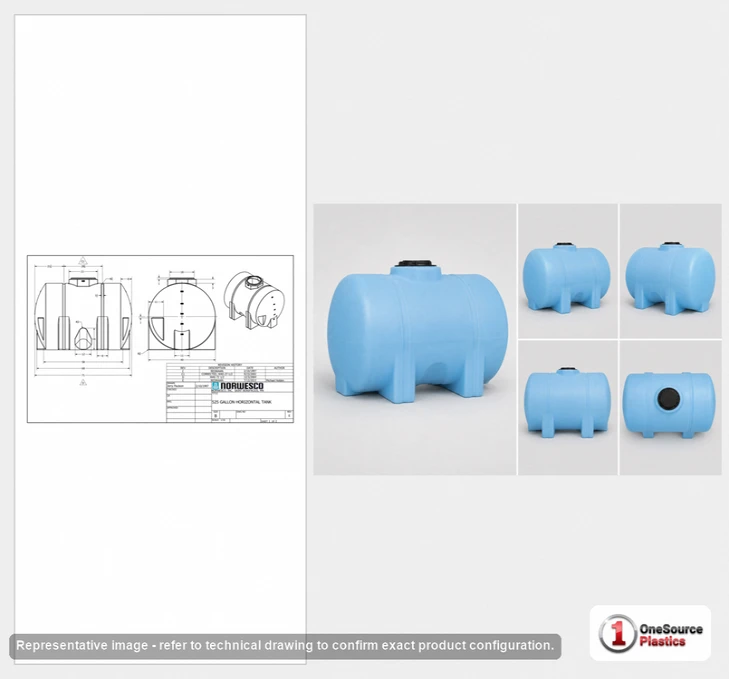
Technical drawing (PDF) for Snyder Industries 1400100N45.
See this tank
Interactive 3D model with live fill. This tank has an interactive 3D model built to its manufacturer dimensions. Rotate it, and set a fill level to see how much liquid it holds at any height. Open the 3D view on the product photo above. Download the 3D model (GLB).
Product video. Watch the Snyder Industries 500 Gallon Plastic Horizontal Leg Tank video (67 seconds) with dimensions, fittings and shipping notes.
Ready to order?
Add it to your cart at the top of this page, get LTL freight to your ZIP, request a written quote, or call 866-418-1777. The listed price is before freight.