A cross-linked 200 that fits under a low ceiling
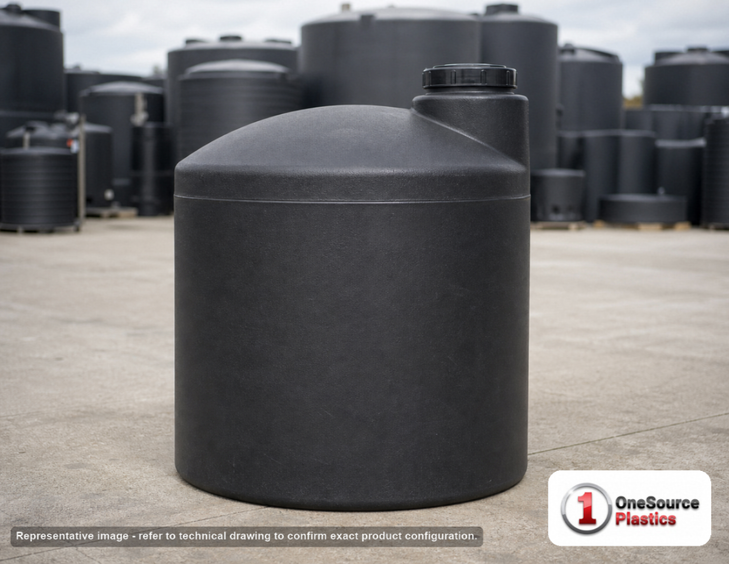
Wall material is what you are buying here. The Snyder SII-5720103CF42 holds 200 gallons in a cross-linked polyethylene shell, white, listed 76 inches long, 62 inches wide and 57 inches tall at 198 pounds empty, and it is the cross-linked member of the short 200 gallon pair. Cross-linked polyethylene is a harder, less forgiving wall than linear polyethylene, and it is what gets specified when the liquid or the handling is hard on a tank. The sheet rates this one at a specific gravity of 1.9 and gives 1,668 pounds for 200 gallons of water at 8.34 pounds per gallon, with 3,169 pounds of max contents. Access is a 14 inch lid. The service limit is 120 F / 48 C. No outlet size, no inlet size, no vent fitting and no warranty term appear on this sheet, so this page states none of them.
Two ways to buy. Add it to your cart above with freight quoted to your ZIP, or request a written quote for a job that needs paperwork.
Wall material is the only thing separating this one from its twin
The family decides this one in a single line: SII-5720103CF45 is listed at the same 76 by 62 by 57 inches and the same 198 pounds, and the sheet separates the two by material rather than by shape. That one is high density linear polyethylene; this one is cross-linked. Everything else on the two sheets reads alike, including the 1.9 specific gravity rating, the 120 F / 48 C limit and the 14 inch lid, and neither sheet explains the choice further, so we will not invent a reason. What we will say is how the choice is normally made: buy the cross-linked wall when the chemistry is aggressive, when the station will be drained, washed and refilled hard for years, or when your own standard or an engineer's specification calls for it, and buy the linear wall when it does not. The second decision in the group is height. This part is the short 200 at 57 inches, which is what puts it under a low ceiling, under a mezzanine, or beside a line where a taller station would not clear. Its stand-mounted relatives are listed at 74 inches on the same plan, so if the pump has to sit under the outlet, you want one of those rather than this one on blocks. Site it on a flat, level, continuous surface carrying the whole 76 by 62 inch base, because a cross-linked wall bridging a gap is still a wall bridging a gap. Check the 200 gallon number against your real draw in the tank sizing calculator, take the freeboard from the tank sizing guide, and where a kerb or a basin is part of the specification read the Snyder Captor containment comparison before somebody promises containment that has not been sized.
The 200 gallon four, and the 250 above them
| Part | Volume | Length x width x height | Empty weight |
|---|---|---|---|
| SII-5720103CF42 (this station, cross-linked, no stand) | 200 gal | 76 x 62 x 57 in | 198 lb |
| SII-5720103CF45 (linear wall, no stand) | 200 gal | 76 x 62 x 57 in | 198 lb |
| SII-5720104CFWS42 (cross-linked, with stand) | 200 gal | 76 x 62 x 74 in | 242 lb |
| SII-5720104CFWS45 (linear wall, with stand) | 200 gal | 76 x 62 x 74 in | 242 lb |
| SII-5730103CF42 (larger, cross-linked, no stand) | 250 gal | 76 x 62 x 69 in | 209 lb |
| SII-6370424N95402 (dry hopper bin, a different family) | 25 cu ft | 48 x 48 x 57 in | 330 lb |
Four 200 gallon parts, two questions. Wall first: this one and SII-5720104CFWS42 are the cross-linked pair, SII-5720103CF45 and SII-5720104CFWS45 the linear pair. Stand second: the two parts listed at 74 inches and 242 pounds arrive standing, the two listed at 57 inches and 198 pounds do not. Take the cross-linked wall without the stand, which is this part, when the duty is hard on a tank but the pump is already below floor level or the fill point is fixed low. If you want more supply on the same slab, SII-5730103CF42 gives 250 gallons on the identical 76 by 62 inch plan at 69 inches and 209 pounds, which is the honest upgrade path: the floor does not change, the height and the weight do. The last row is not a feed station at all. SII-6370424N95402 is a Flowmaster dry hopper bin, 25 cubic feet, recorded at 190 gallons, 48 by 48 by 57 inches and 330 pounds, made to discharge dry material through a hopper; it sits in the sibling list and nothing about liquid service is asserted for it here.
Torn between two rows? Call 866-418-1777 with the liquid and the ceiling height, or ask for a quote on both and compare the freight.
Breathing through the lid when no vent is listed
- Headspace first: no vent fitting appears anywhere on this sheet. The 14 inch lid is the only opening published, and the air above the liquid moves through it every time the station is filled or drawn down. Keep that path open. A pump drawing against a sealed top will pull the wall inwards, cross-linked or not, and it does it quietly.
- Fill discipline: bring the fill line to the lid with the hose end below the rim rather than falling in from above, which keeps splash, aerosol and static out of the room. At 57 inches the opening sits at a comfortable working height, which is the one real advantage of the short body at fill time.
- Outlet: the sheet lists no outlet size and no inlet size, and we will not print one it does not carry. Confirm the fitting on your part with us before the pipework is fabricated. Whatever it is, keep the pump below the low point on its own base and the suction run short and falling.
- Isolation and protection: an isolation valve at the tank, a flexible connector at the first joint, a cleanable strainer ahead of the pump, and a low level cut-out that stops the pump with liquid still above the fitting. A metering pump run dry on a chemical duty is a maintenance call and sometimes a day.
- Reading and marking: a gauge chosen for the chemistry, not for the price, and a label that an inspector and a delivery driver can both read. The level gauge selection guide and the tank label and signage guide cover both properly.
- Service limit: 120 F / 48 C. The sheet publishes no warranty term.
Name the chemical when you order. The fittings, gaskets and bolting that go into a cross-linked station are chosen against the liquid, and a generic set on a hard duty is the part that fails first.
Duty that argues for a cross-linked day tank
The work that puts a cross-linked wall on the order is the work that wears tanks out: acid and caustic feed at a water or wastewater plant, a day tank on a plating or finishing line, bleach and treatment chemical at a cooling system, a sanitiser or a cleaning concentrate in a food or beverage plant, a mine or a power station dosing from a small chemical room. All of them live or die on knowing what is in the tank when the pump runs, so draw samples properly rather than conveniently: the chemical sampling protocol article explains what a badly drawn sample hides and how to stop doing it.
Chemical service ratings
The resin is rated for the liquids below at the concentrations shown; the fitting and gasket called out are the ones to order with the tank. Verify the exact service on the linked page or in the chemical compatibility database before ordering.
- Acetic Acid
- DEF
- Ferric Chloride
- Hydrofluosilicic Acid
- Potassium Hydroxide
- Urea Solution and the rest of the list.
What a 76 inch shipment and 198 pounds cost to move
Marked Tree, Arkansas is the plant on this sheet, and the freight class is given as LTL under NMFC 156600-01. Shipping at 76 by 62 by 57 inches it rides as a pallet, so the questions to answer before the truck is booked are the dock, the door and the aisle between them. Price the lane to your ZIP with the freight cost estimator; the listed price is before freight. One hundred and ninety-eight pounds comes off with a forklift or a pallet truck under the base rather than by the lid or by any fitting. Before the chemical arrives, water-fill the station on its finished pad, leave it standing while you read the base, the lid and the floor beneath, then drain and dry it. A cross-linked wall tolerates a lot, but it is not a reason to skip the water test; that test is the cheapest hour of the whole installation. The first fill is the only cheap time to find a problem, so do it in daylight with someone watching the base.
Freight and documents
Ships from: Marked Tree, AR. LTL freight is quoted to your ZIP with the freight cost estimator or by phone at 866-418-1777. The listed price is before freight.
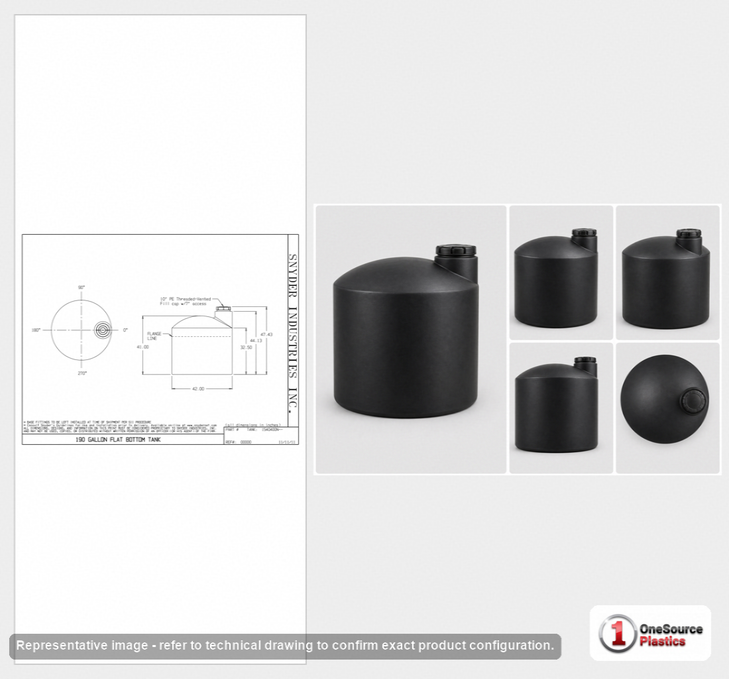
Technical drawing (PDF) for Snyder Industries 5720103CF-42.
See this tank
Product video. Watch the Snyder Industries 200 Gallon XLPE Chemical Feed Station Tank video (74 seconds) with dimensions, fittings and shipping notes.
Ready to order?
Add it to your cart at the top of this page, get LTL freight to your ZIP, request a written quote, or call 866-418-1777. The listed price is before freight.