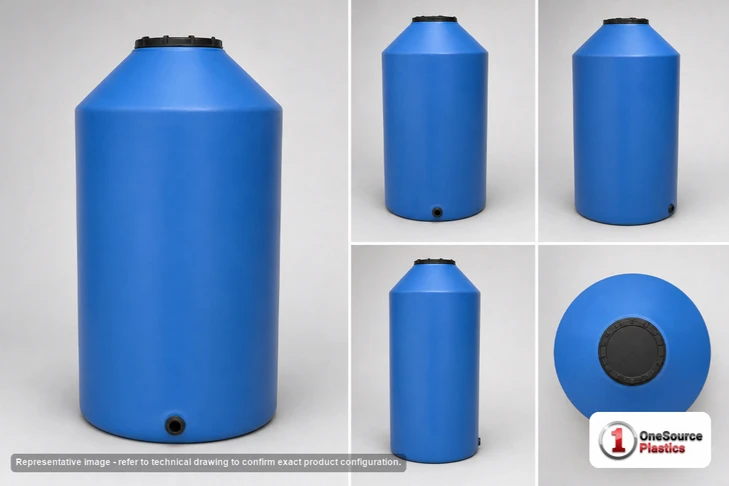
290 gallons of chemical storage through a 36 inch door
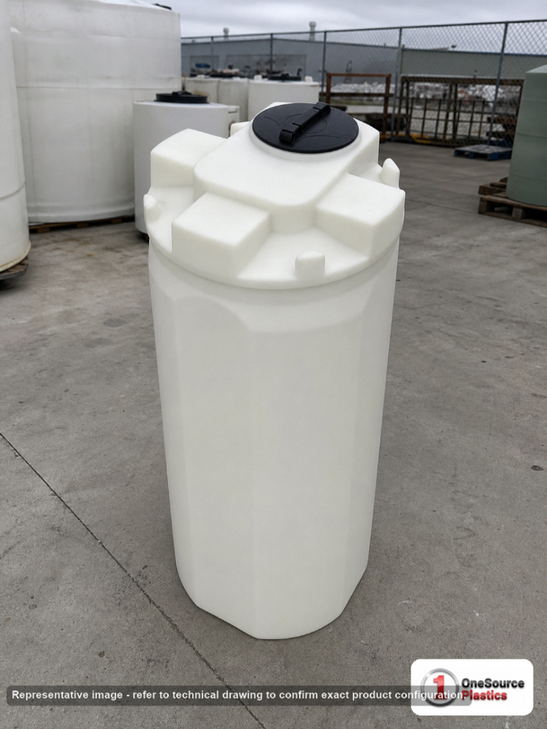
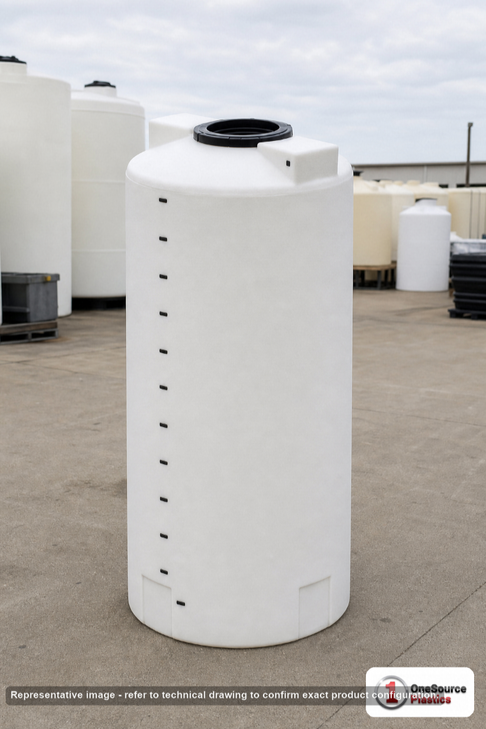
The Snyder 1013000N45 is a white high density linear polyethylene vertical chemical storage tank, 36 inches across and 72 inches tall, holding 290 gallons at 80 pounds. Its wall is rated for a specific gravity of 1.9, or 4,595 pounds of contents against 2,419 for water, so it holds concentrated treatment chemicals in a footprint that goes through a standard door and stands beside a dosing pump, with six feet of column to keep the pump's suction flooded. An 18 inch threaded, vented manway on top, a 3 year warranty, and it ships as standard LTL freight.
Want it on the pad this month? Check freight to your ZIP, add it to your cart above, and 866-418-1777 will confirm the ship date.
The bulk tank for a small chemical feed
Two hundred and ninety gallons is a tote and a bit, delivered on a schedule and drawn down by a dosing pump over a week or two, and the 36 by 72 inch shape puts that volume on a footprint smaller than a pallet. The chemistry list below is what the resin is rated for; check the liquid at its concentration in the chemical compatibility database, because density rating and chemical resistance are decided separately. Size the tank to the feed rate and the delivery interval with the tank sizing calculator, and carry the reserve the tank sizing guide recommends. Strap it to a wall; a 36 inch base under 72 inches of dense liquid has a high center of gravity, and full it puts 4,595 pounds on that circle at the rating, which a paver pad or a slab in full contact supports.
Snyder's 250 to 300 gallon chemical tanks
| Part | Gallons | Diameter x height | Empty weight |
|---|---|---|---|
| 1013000N45 (this tank) | 290 | 36 x 72 in | 80 lb |
| 1013000N42 (XLPE) | 290 | 36 x 72 in | 80 lb |
| 1008100N45 | 250 | 36 x 64 in | 70 lb |
| 1011200C26 | 300 | 35 x 82 in | 85 lb |
| 5740100N42 (squat, XLPE) | 275 | 47 x 59 in | 96 lb |
The N42 is the cross-linked twin for hypochlorite and the other oxidizers. On the same 36 inch base, the 1008100N45 is 40 gallons smaller and 8 inches shorter; the 1011200C26 adds 10 gallons at 82 inches on a base an inch narrower. The 5740100N42 lays 275 gallons down to 59 inches on a 47 inch base, in cross-linked resin, for under a bench.
Need a different size? Every tank in the table is in stock programs; ask for a quote on the one that fits, or call 866-418-1777.
Openings, sampling and labels
- Access: 18 inch threaded, vented manway; fill by hose or tote pump down a dip tube, and vent to the outside if the liquid fumes.
- Outlet: tell us the chemical when ordering and the bulkhead fitting is matched to it; run a flexible line to the pump suction and hang the valve off the floor, not the tank.
- Service limit: 120 F / 48 C.
Three practices make a small chemical tank a safe one. Choose the level sender for the chemical with the level gauge selection guide; a low-level float switch keeps the pump from running dry. Draw samples that represent the tank and not its stratified top, per the bulk tank chemical sampling protocol. And label it so the fire inspector and the workplace inspector read the same thing, NFPA 704 diamond and GHS pictograms reconciled as the tank label and signage compliance guide describes. A 36 inch tank fits a standard spill pallet, and the Snyder Captor 110 percent containment comparison covers when a double wall tank is the cleaner answer.
Setting it up beside the pump
Put the tank on its spill pallet at the pump, with the outlet facing the pump and the manway facing the operator. The dosing pump mounts below the outlet so it primes by gravity, with a union and a check valve in the suction line and a calibration column or a sight tube on it so the operator can check the feed rate without opening the tank. Bring the fill in through the manway by hose from the tote pump with a dip tube to the floor, and run the vent line to the outside or a scrubber; the off-gas from an open chemical tank is what corrodes the electrical gear beside it. A photo of the finished setup goes in the log, because the next person to touch it will not be the one who built it.
Turnover and changeover
Size the refill schedule so the tank turns over before the chemical degrades; hypochlorite in particular is bought in small lots often, and a tank that sits for a season wastes chlorine. At changeover the wide manway pays for itself: drain through the outlet, rinse through the manway with a wand, drain again, and let it dry before the new fill, because residue from the last product is the usual cause of a cloudy first batch. Keep the manway closed against vapor loss and the tank out of direct sun where the chemical is light-sensitive, and log each fill with its date and strength.
Where you will find one
Hypochlorite, caustic and coagulant storage at small water and wastewater systems, acid and inhibitor feed at cooling towers, brine for softeners, polymer make-down on a skid, and reagent storage on a pilot plant. One chemical per tank, labeled.
Shipping the tank
The 1013000N45 ships palletized as LTL freight (NMFC 156600-02) at a class rate; the freight cost estimator turns your ZIP into a freight number; the price on this page is before freight. One person carries 80 pounds through a door. Strap it, water-fill to the manway and hold it, then drain and dry before the chemical connection is made; mark the vent and the outlet on the shell so nobody caps the wrong one. Walk the base after the first hard rain; a pad that shifts shows it at the edge first.
Liquids this resin is rated to store
These entries are the manufacturer's ratings for this resin, each with the concentration limit and the fitting and gasket to specify. Your concentration and temperature are confirmed on the chemical page or in the chemical compatibility database before ordering.
- Acetic Acid at 60% - PP/PVC fittings, EPDM gaskets
- Aluminum Sulfate at 50% - PVC fittings, EPDM gaskets
- Calcium Chloride at 40% - PVC fittings, EPDM gaskets
- DEF at 32.5% -
- Ethylene Glycol at 100% - PVC fittings, EPDM gaskets
- Ferric Chloride at 50% - PVC fittings, EPDM gaskets
- Ferric Sulfate at 60% - PVC fittings, EPDM gaskets
- Ferrous Sulfate at 20% - PVC fittings, EPDM gaskets
- Hydrochloric Acid at 37% - PVC fittings
- Hydrofluoric Acid at 48% - PP/PVC fittings
- Hydrofluosilicic Acid at 26% - PP/PVC fittings
- Hydrogen Peroxide at 50% - PVC fittings
- Magnesium Chloride at 30% - PVC fittings, EPDM gaskets
- Peracetic Acid at 30% -
- Phosphoric Acid at 85% - PVC fittings
- Polyaluminum Chloride - PVC fittings, EPDM gaskets
- Potassium Carbonate at 50% - PVC fittings, EPDM gaskets
- Potassium Hydroxide at saturated concentration - PVC fittings, EPDM gaskets
- Propylene Glycol - PP/316SS fittings, EPDM gaskets
- Sodium Bisulfate - PVC/PP fittings, EPDM gaskets
- Sodium Bisulfite - PVC/PP fittings, EPDM gaskets
- Sodium Carbonate at 30% - PVC fittings, EPDM gaskets
- Sodium Hypochlorite at
- Sodium Thiosulfate at 40% - PVC fittings, EPDM gaskets
- Sulfuric Acid at 98% -
- Urea Solution at 50% - PP/PVC fittings, EPDM gaskets
- Zinc Orthophosphate - PP/316SS fittings, EPDM gaskets
Freight and documents
Ships from: Philippi, WV. LTL freight is quoted to your ZIP with the freight cost estimator or by phone at 866-418-1777. The listed price is before freight.
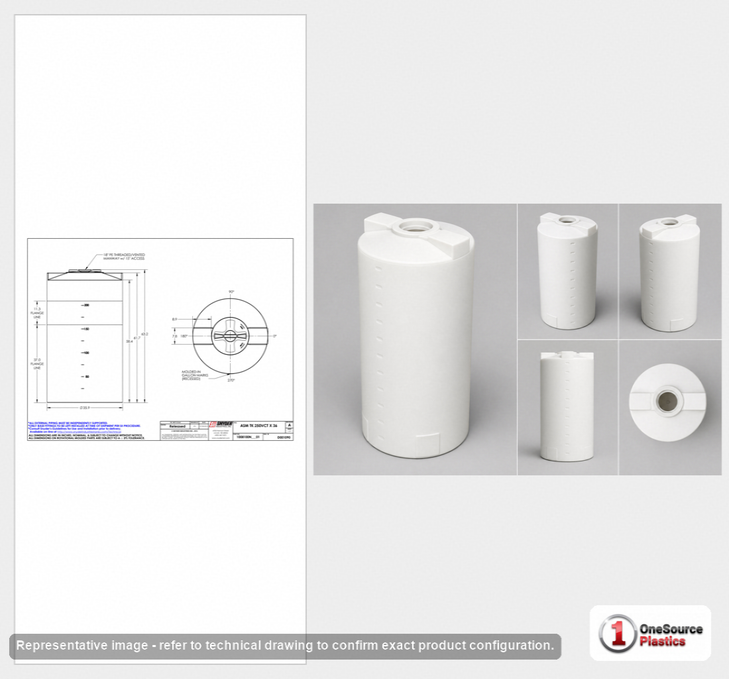
Technical drawing (PDF) for Snyder Industries 1013000N45.
See this tank
Interactive 3D model with live fill. This tank has an interactive 3D model built to its manufacturer dimensions. Rotate it, and set a fill level to see how much liquid it holds at any height. Open the 3D view on the product photo above. Download the 3D model (GLB).
Product video. Watch the Snyder Industries 290 Gallon HDLPE Vertical Chemical Storage Tank in White video (69 seconds) with dimensions, fittings and shipping notes.
Ready to order?
Add it to your cart at the top of this page, get LTL freight to your ZIP, request a written quote, or call 866-418-1777. The listed price is before freight.