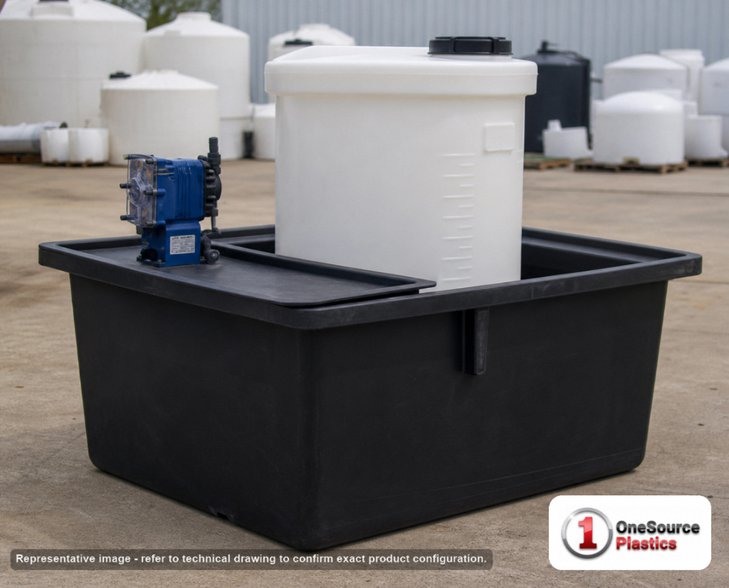
A 330 gallon cross-linked polyethylene feed station, floor-standing, 69 inches
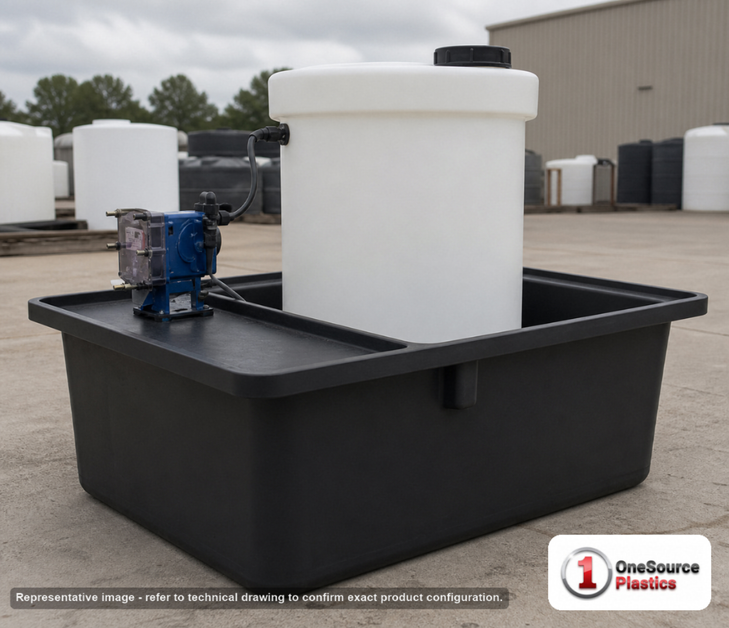
The wall is the story on this part. Snyder part 5750103CF-42 is a 330 gallon chemical feed station tank in white cross-linked polyethylene rather than the linear polyethylene its twin carries, 76 inches long, 62 inches wide and 69 inches tall, weighing 238 lb empty, standing on the floor with no stand under it. Cross-linked polyethylene is the harder, tougher wall in Snyder's line. The lid is 18 inches. The rating is 1.9 specific gravity and 120 F; 330 gallons of water weighs 2752 lb (330 x 8.34). Snyder does not list an outlet size on this part number, so we confirm the pump connection with you before it ships.
Buying for a site, a fleet or a district? Add it to your cart at the top of this page, get LTL freight to your ZIP, or call 866-418-1777. The listed price is before freight.
When the chemical argues for a cross-linked wall
The operator who specifies this build has usually had the conversation about the liquid before the conversation about the tank: a wastewater plant feeding a strong oxidant on a continuous dose, a plating shop making up a bath from bulk, a paper mill with a bleach or caustic service beside the line, a plant whose process chemical has already eaten something cheaper. In every one of those the tank is not the expensive item; the shutdown is. Cross-linked polyethylene is what you buy when you would rather over-specify the wall than find out where the limit was, and this is the part number that puts it on the standard 330 gallon body without a stand. The rest of the decision is floor. At 69 inches the lid, a fill coupling and a level device are within reach from floor level, a real advantage in a room the operator is in and out of every shift. Under it, 2752 lb of water at full comes down on the whole 76 by 62 inch footprint, so the surface has to be flat, level and continuous with no shim under a corner and no trench underneath. Size the volume against your feed rate in the tank sizing calculator and take the freeboard from the tank sizing guide. Snyder names no containment basin on this part number; where containment is a written requirement, the Snyder Captor containment and SPCC comparison is where that gets decided with the standards named properly.
What goes in it
Check the chemical against the wall in our chemical compatibility guide. Buyers of the cross-linked 330 look up ferric chloride, potassium hydroxide, hydrofluosilicic acid and acetic acid. Keep the liquid at or below 120 F and under 1.9 specific gravity. Our guide to drawing a representative sample from a chemical day tank, the level gauge selection guide and the labelling and signage guide cover the three routine jobs on a station like this.
Openings and what to confirm
- Lid. 18 inches on top at 69 inches from the floor: fill hose, suction line, level sensor and a brush go through it without a step.
- Outlet. Not listed for this part number. Give us the pump suction size and we confirm before it ships.
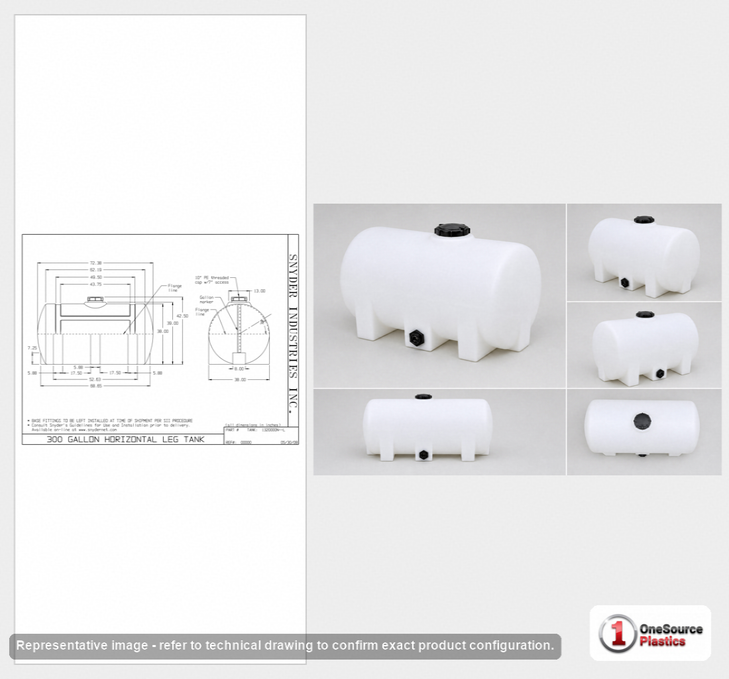
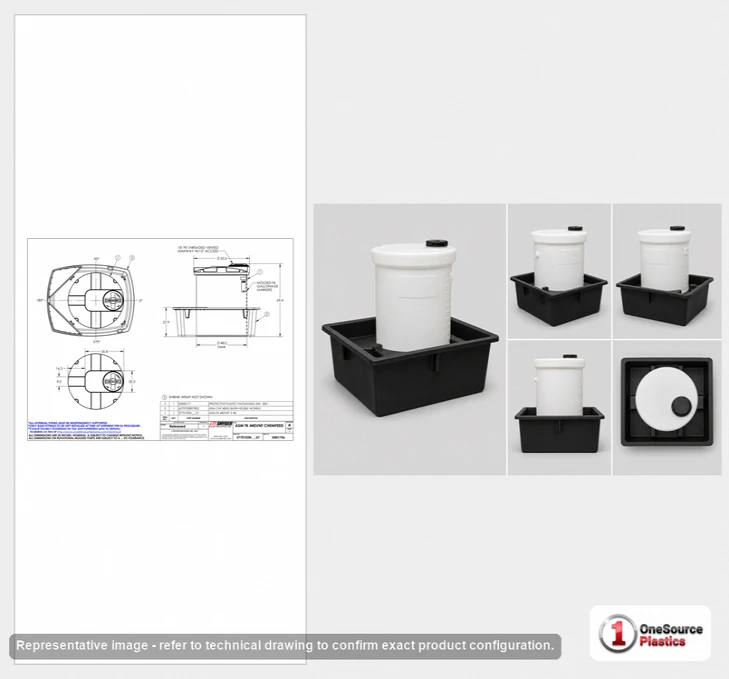
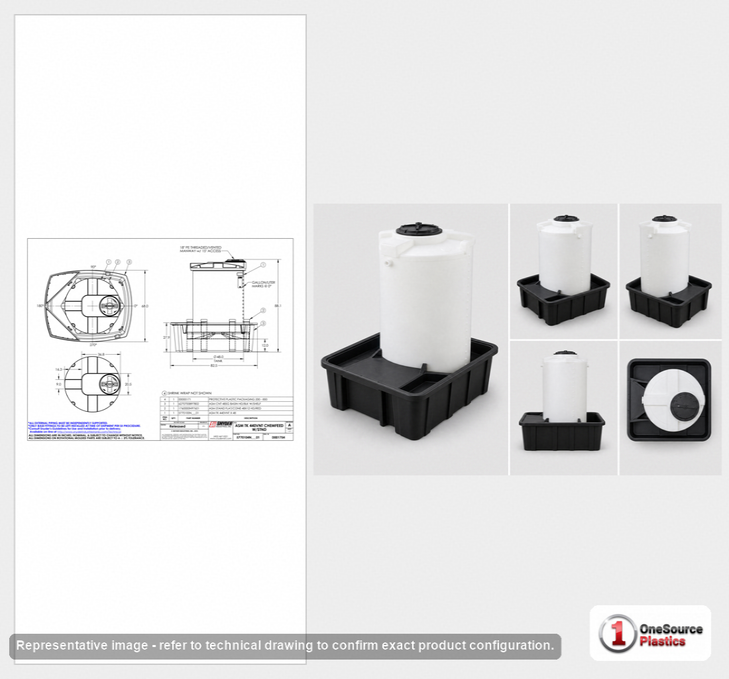
- Drawing. Snyder's drawing for 5750103CF-42 is linked under Technical Drawing on this page.
The 330 gallon family
The same floor-standing body in linear polyethylene is the 330 gallon chemical feed station tank, part 5750103CF45. For sulfuric acid service with its own basin, Snyder builds the 330 gallon feed station for sulfuric acid with containment basin and the same acid build on a stand. One size down in cross-linked is the 275 gallon XLPE feed station.
Shipping and receiving
LTL from Snyder's Marked Tree, Arkansas plant at 238 lb; the tank itself is 76 by 62 by 69 inches. The listed price is before freight; the freight cost estimator gives the cost to your ZIP. Check 5750103CF-42 against the bill of lading, look over the lid and base, and fill with water before the chemical goes in.
Questions before you order? Call 866-418-1777.
Freight and documents
Ships from: Marked Tree, AR. LTL freight is quoted to your ZIP with the freight cost estimator or by phone at 866-418-1777. The listed price is before freight.
Technical drawing (PDF) for Snyder Industries 5750103CF42.
See this tank
Product video. Watch the Snyder Industries 330 Gallon XLPE Chemical Feed Station Tank video (67 seconds) with dimensions, fittings and shipping notes.
Ready to order?
Add it to your cart at the top of this page, get LTL freight to your ZIP, or call 866-418-1777. The listed price is before freight.