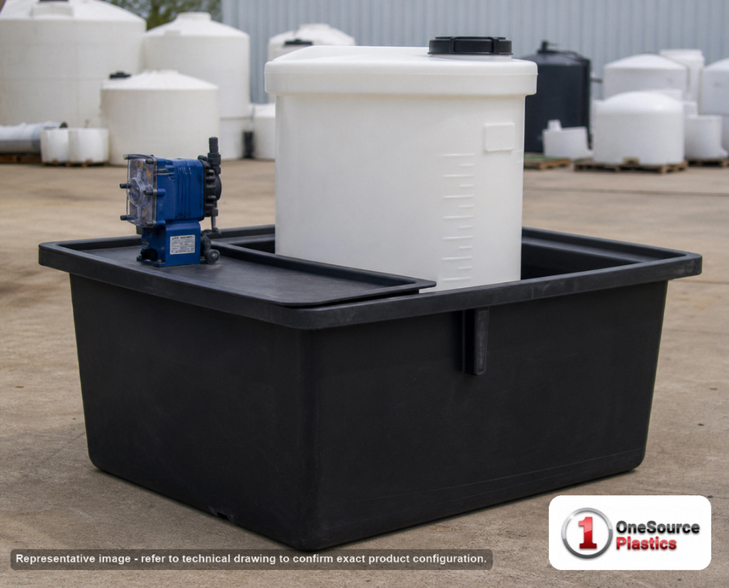
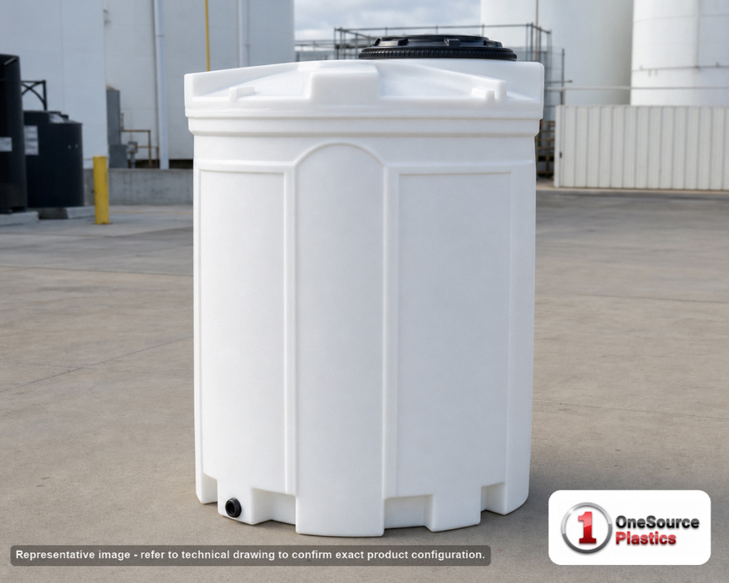
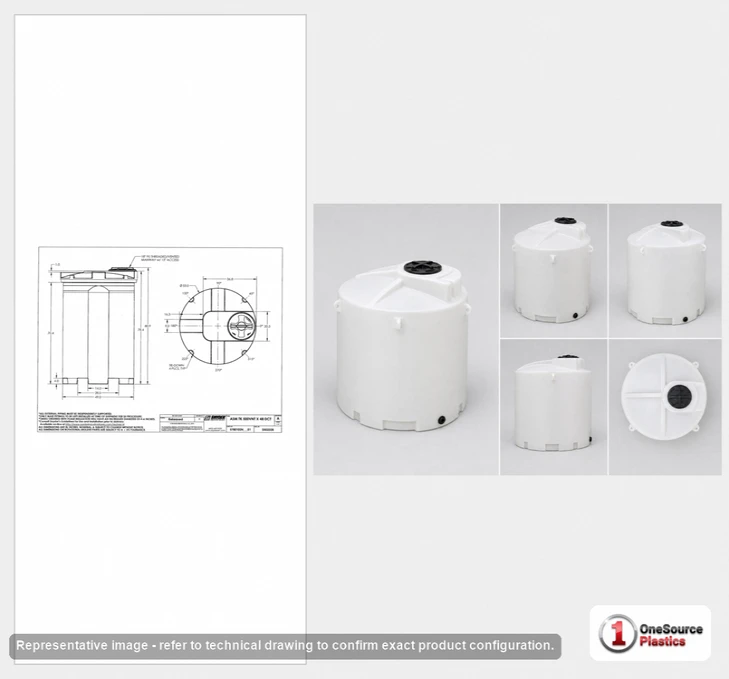
A stainless steel 550 gallon Jet-A Liquitote, 665 pounds empty
The Snyder SII-373449 is a 550 gallon Jet-A Liquitote aviation JET A fuel tank built in stainless steel, and the material is the first thing to know about it. It is listed at 42 inches long, 48 inches wide and 77.75 inches tall, weighing 665 pounds empty, which is a heavier empty vessel than anything plastic at this volume. Connections are given as a 2 inch inlet and a 2 inch outlet, with a 22 inch opening listed in the lid and manway field. Full of water the sheet works out at 4,587 pounds at 8.34 pounds per gallon. Freight is given as LTL under NMFC 156600, and it shipments at 42 by 48 by 78 inches. The sheet publishes no maximum operating temperature, no warranty term and no specific gravity rating, and this page claims none. It is a steel vessel, so nothing here is described in polyethylene terms. We describe it as the maker names it and assert no compliance, listing or fire-code status beyond what the sheet carries.
Spec sheet in hand? Call 866-418-1777 and read us the liquid and the pad; or get freight to your ZIP and add it to your cart above.
Stainless against the plastic totes listed beside it
Look at the family first and the decision makes itself. Three of the four vessels on this sheet are plastic IBC totes and this one is not. SII-6230000B97202 and SII-6230001B97202 are both 550 gallon plastic stackable IBC tote Megatainer systems at 81 by 48 by 60 inches, listed at 630.3 and 597.3 pounds, and SII-6610056B97205 is a 330 gallon HDPE stackable tote in red at 45 by 45 by 64 inches and 268 pounds. This one holds the same 550 gallons as the Megatainers in a completely different shape: 42 inches long against their 81, and 77.75 inches tall against their 60. That is the trade in one line. The stainless vessel takes barely half the floor length of the plastic 550s and gives the height back, so it suits a fuel farm corner, a hangar wall, a trailer deck or a bunded bay where length is the constraint and headroom is not. The 665 pound empty weight is the other half of the trade: it is the heaviest of the four and it is not a two-man lift under any circumstances, which is why it lives where it is set rather than moving between jobs. Buy the stainless one when the contents, the duty cycle or the customer's own specification call for a steel vessel and when the footprint is what you are short of. Buy a plastic tote from the same sheet when you want the lighter empty weight, the stacking pattern or the lower silhouette. Check the volume against your real turnover in the tank sizing calculator, and take the reserve and ullage discipline from the tank sizing guide, because 550 gallons that turns over weekly and 550 gallons that sits for a season are two different purchases.
The 550 stainless, the two 550 Megatainers and the 330
| Part | Gallons | Length x width x height | Empty weight |
|---|---|---|---|
| SII-373449 (this vessel, stainless steel) | 550 | 42 x 48 x 77.75 in | 665 lb |
| SII-6230000B97202 (plastic stackable tote, with inserts) | 550 | 81 x 48 x 60 in | 630.3 lb |
| SII-6230001B97202 (plastic stackable tote, without inserts) | 550 | 81 x 48 x 60 in | 597.3 lb |
| SII-6610056B97205 (plastic stackable tote in red) | 330 | 45 x 45 x 64 in | 268 lb |
Read the table by footprint rather than by gallons, because all three 550s hold the same volume. This vessel puts it in a 42 by 48 inch plan; the two Megatainers put it in an 81 by 48 inch plan that is nearly twice as long and seventeen and three-quarter inches lower. The two plastic 550s differ from each other by 33 pounds, listed with and without inserts, and the sheet says nothing more than that, so neither do we. The 330 gallon red tote is the small one, the lightest of the four at 268 pounds and the only one at 45 inches square, and it is the right buy when 550 gallons is more than the turnover justifies and a lighter vessel is worth the smaller batch. What none of the plastic vessels can offer is a steel wall, and that is the whole reason this part exists on the sheet. Where the real question is which packaging tier the operation should be in at all, the drum versus tote versus bulk tank break-even analysis does the arithmetic on turnover, handling and footprint, and the shorter container versus tank guide is the quick version of the same argument.
Two rows look the same? The difference is the wall; call 866-418-1777 with the liquid and we will say which, or ask for a quote on both.
Headspace, a 22 inch opening and two 2 inch connections
- Headspace and breathing: the sheet lists a 22 inch opening in its lid and manway field and gives no vent, no breather, no pressure or vacuum device and no gauge. A closed vessel being pumped out needs an air path or it pulls against itself, and a vessel being filled needs somewhere for the displaced air to go, so the venting arrangement belongs to the installation and to the operator's own procedure, not to this page. We publish what the field says and claim no vent hardware.
- Fill connection: 2 inches in, as listed. Keep the fill coupling dedicated and capped, and label it so nothing else gets connected to it.
- Discharge connection: 2 inches out, as listed. The sheet gives no valve, no dip tube and no pump, so plan the discharge, the isolation and the support of everything downstream as part of the installation rather than assuming any of it arrives.
- Access: the 22 inch opening at the top of a 77.75 inch vessel is above head height on the floor, so any routine that involves opening it needs a platform, a fixed ladder or a step with a rail designed before the vessel is set, not improvised afterwards.
- Limits the sheet does not publish: there is no maximum operating temperature, no warranty term and no specific gravity rating on this sheet, and no static bonding, grounding, fire-code or transport approval detail. None of it is claimed here.
Aviation fuel handling is governed by the operator's own fuel quality and safety procedures, by the site's fire authority and by the airport or facility rules, and the vessel is one component inside that system. Grounding and bonding, filtration, water checks, sumping and the delivery procedure are all specified by those documents. Where secondary containment is part of the conversation, the RCRA 40 CFR 264.193 secondary containment article covers the leak detection options and the inspection cadence, and the Captor containment comparison sets a built-in containment product against the alternative approaches so you can see what each one buys.
Aviation fuel handling and the packaging tier question
A vessel at this volume sits between drums and a bulk installation: a fixed-base operator or a flight school holding fuel at a hangar, a corporate or agricultural aviation operation on a private strip, a remote or seasonal field where a bulk tank cannot be justified, a maintenance shop that needs a defined quantity on hand, or a facility that wants a vessel it can bund inside one small rectangle. All of those buyers are really answering the same question, which is how much product to hold against how often it turns over and what the handling costs each time, and that question has a numerical answer rather than a preference. The comparison guides linked in the family section run it properly. This vessel is stainless steel, so the polyethylene compatibility question does not apply to it; where the choice comes back to one of the plastic totes listed beside it on the sheet, check the product against the wall in our chemical compatibility database before ordering. Talk to us about the connections and the fill and discharge arrangement when you order, so the vessel arrives matched to the procedure it has to work inside rather than adapted to it afterwards.
Burnet, Texas, and a 78 inch shipment
This vessel is built at Burnet, Texas, and that is the lane to price. Quote the lane to your ZIP with the freight cost estimator, and note that the listed price is before freight. Six hundred and sixty-five pounds is a forklift or a pallet jack at the receiving end and a firm, level surface to set it down on; plan the offload before the truck is booked, because there is no carrying this one by hand and no dragging it on a tail lift. Measure the doorway and the ceiling on the route to its final position first, since a vessel of this height on a pallet is taller again. Set it, level it, secure it as the site's own arrangements require, then commission it with the fill and discharge connections made up and inspected before any product arrives. Keep the delivery paperwork with the vessel; on a fuel installation the first question anyone asks is what was put in it and when. Mark the vent and the outlet on the outside of the shell so nobody caps the wrong one in the dark.
Freight and documents
Ships from: Burnet, TX. LTL freight is quoted to your ZIP with the freight cost estimator or by phone at 866-418-1777. The listed price is before freight.
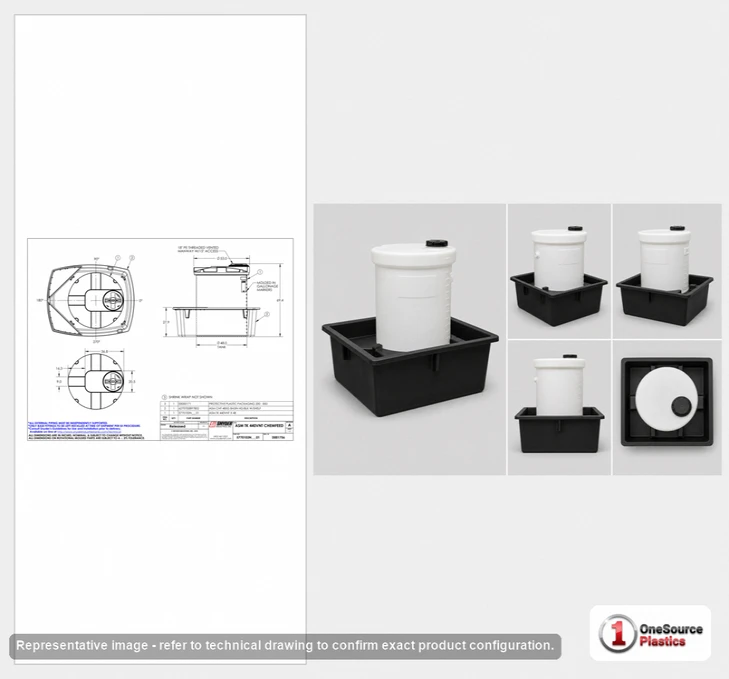
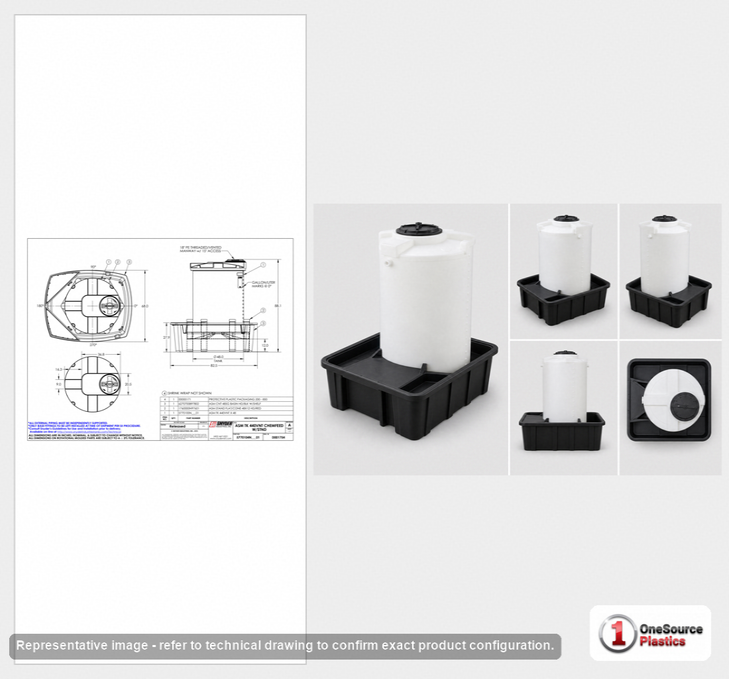
Technical drawing (PDF) for Snyder Industries 373449.
See this tank
Product video. Watch the Snyder Industries 550 Gallon Jet-A Liquitote Aviation JET A Fuel Tank video (65 seconds) with dimensions, fittings and shipping notes.
Ready to order?
Add it to your cart at the top of this page, get LTL freight to your ZIP, request a written quote, or call 866-418-1777. The listed price is before freight.