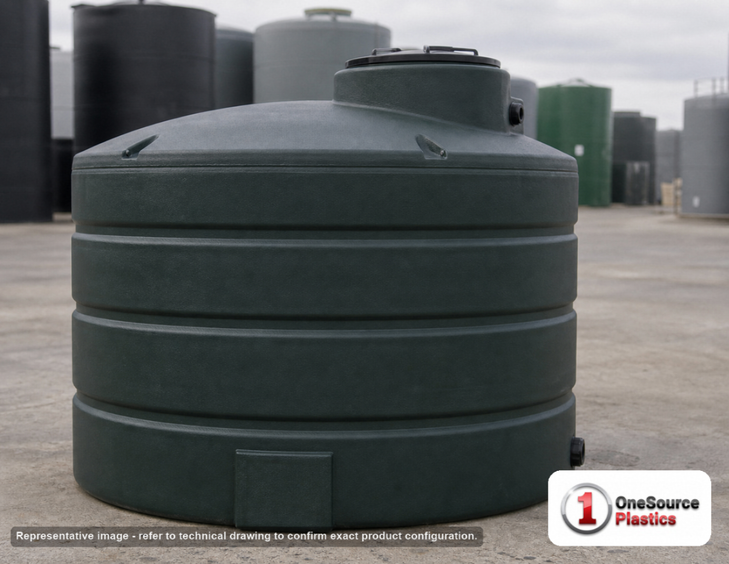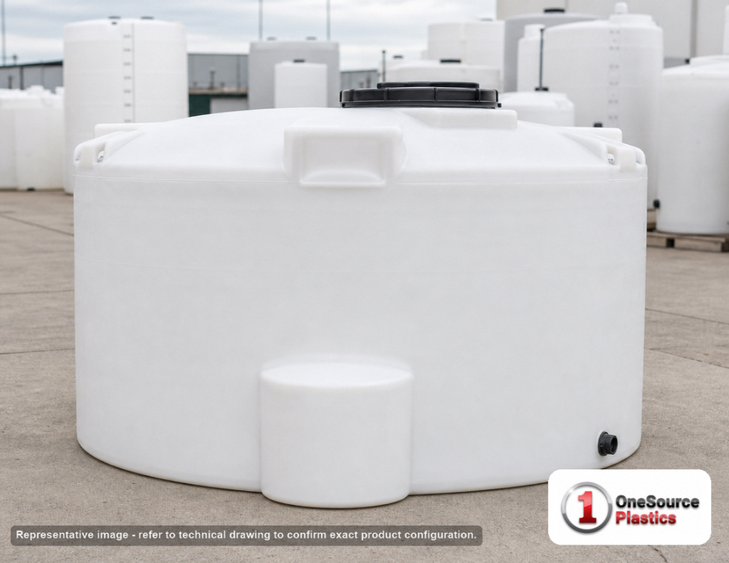
550 gallons under a four foot ceiling
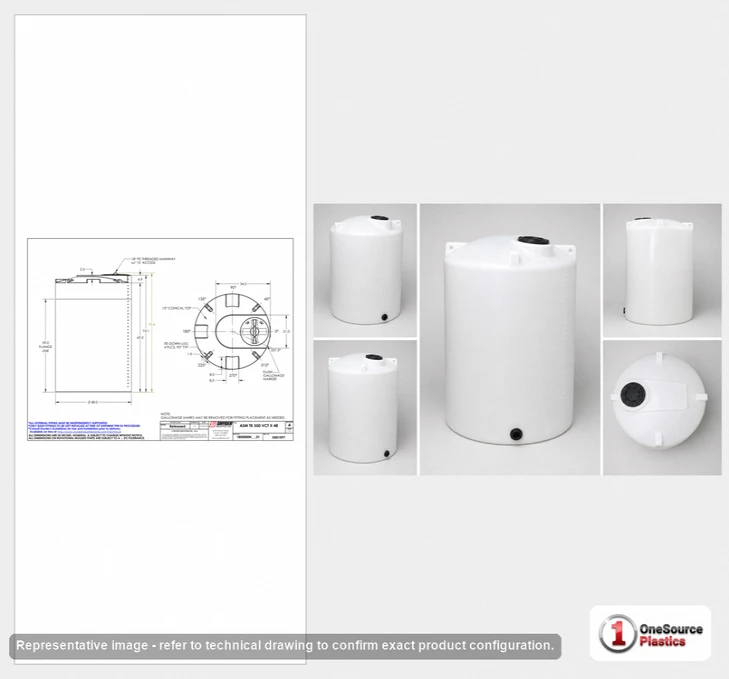
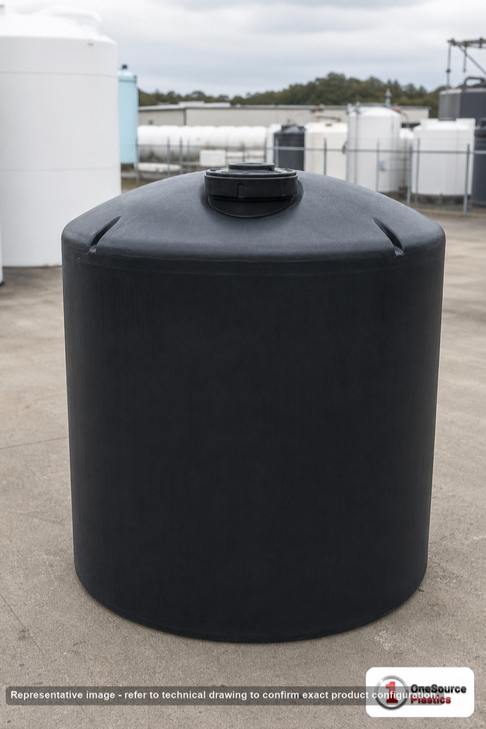
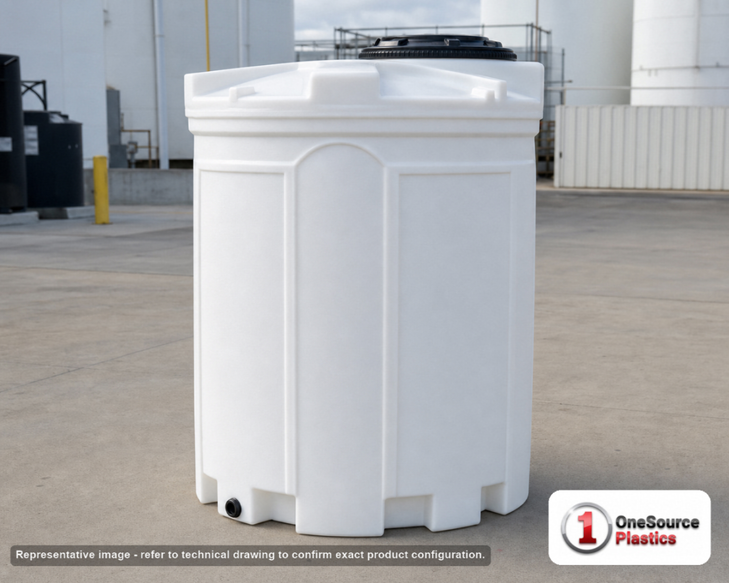
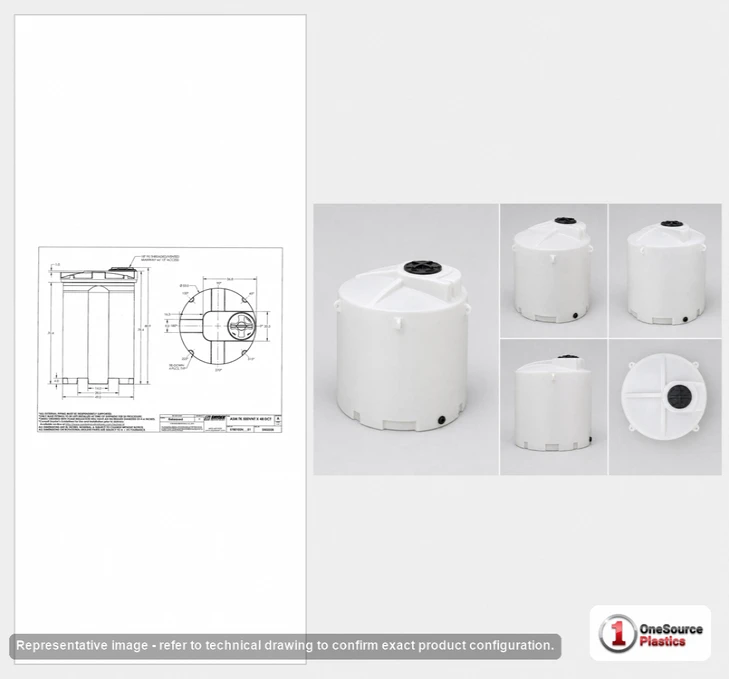
The Snyder 1820000N45 is a low profile chemical tank: 550 gallons of white high density linear polyethylene in a shell 64 inches across and only 47 inches tall, weighing 100 pounds. It carries the 1.9 specific gravity wall, rated for 8,715 pounds of contents against 4,587 for water, and it is the tank for the space where height is the problem: under a bench, under a mezzanine, in a crawl space, on a trailer. An 18 inch manway on a 47 inch tank means everything inside is within arm's reach.
Is this the right 550 gallon tank? Call 866-418-1777 with the liquid, the site and the ceiling height, or get freight to your ZIP and add it to your cart above.
Why the low shape
A tank that is wider than it is tall has three habits worth having in a chemical room. It cannot tip. Its manway is at waist height, so filling, sampling and cleaning happen without a step. And its pump suction stays flooded to the last few inches, because the liquid is spread thin rather than stacked high. The cost is 64 inches of floor in full contact with a level pad. The list below is the resin's rated chemistry; check the liquid at its concentration in the chemical compatibility database, size the volume against feed rate and delivery interval with the tank sizing calculator, and carry the reserve the tank sizing guide recommends.
Low against tall at 550 gallons
| Part | Gallons | Diameter x height | Empty weight |
|---|---|---|---|
| 1820000N45 (this tank) | 550 | 64 x 47 in | 100 lb |
| 1800000N45 (tall) | 550 | 48 x 75 in | 110 lb |
| 1800000C26 (tall) | 550 | 48 x 75 in | 140 lb |
| 5780100N42 | 500 | 53 x 77 in | 141 lb |
| 1700200N42 | 710 | 60 x 68 in | 185 lb |
The 1800000 tanks are the same 550 gallons stood up: 28 inches taller on a base 16 inches narrower, for the room that has height and not floor. The 1700200N42 adds 160 gallons at 68 inches tall on a 60 inch base, and the 5780100N42 is a cross-linked 500 gallon tank for hypochlorite and other oxidizers. Between the low and the tall 550, the only question is the shape of the space.
Comparing across brands too? Call 866-418-1777; we carry Norwesco, Snyder, Chem-Tainer, Enduraplas and Bushman and will say which one fits, or price the freight first.
Openings, instruments and labels
- Outlet: 2 inch, at the bottom of the sidewall; a flexible transition to the pipe, valve supported off the floor.
- Access: 18 inch threaded, vented manway.
- Service limit: 120 F / 48 C.
A 47 inch range is easy for any level sender; the level gauge selection guide matches the sender to the chemical rather than the tank. Label the tank so the fire inspector and the workplace inspector read the same thing, NFPA 704 diamond and GHS pictograms placed as the tank label and signage compliance guide lays out; on a low tank the label goes on the side that faces the door, not the top. For containment, a 64 inch tank fits a standard spill pallet, and the Snyder Captor 110 percent containment comparison covers when a double wall tank is the cleaner answer.
Installing a low, wide tank
The pad is a 64 inch circle in full contact: a slab, a compacted base under a spill pallet, or a mezzanine deck that has been checked for 8,715 pounds on that footprint. Leave room above the manway for the lid to swing and for a tote pump wand to go in, and leave a clear side for the outlet, the valve and the dosing pump, which sits below the outlet so it primes by gravity. Strap the tank at the base if it lives on a trailer; a low tank does not tip, but it can slide. Bring the fill in through the manway with a dip tube that reaches the floor, so a tote pump does not splash caustic or acid against the lid, and route the vent to the outside on anything that fumes.
Turnover and changeover
A 550 gallon chemical tank is filled from totes in most plants, two and a half of them, on a schedule set by the feed rate. Size the schedule so the tank turns over before the chemical degrades; hypochlorite in particular is bought in smaller lots more often, not stored for a season. When the tank changes chemical, the low shape earns its keep: the manway is at waist height, the floor is a hand's reach away, and a wash-down wand cleans the whole interior without anyone leaning over an opening. Drain through the outlet, rinse, drain again, and let it dry before the new chemical goes in, because residue from the last product is the usual cause of a cloudy first batch.
Jobs it is bought for
Under-bench reagent storage in a plant lab, chemical feed at a small water system with a low room, brine for a softener, and the day tank on a trailer or a skid where a tall tank would be top-heavy on the road. It is also the tank people buy for a crawl space cistern, because 47 inches is the height that fits. One chemical per tank, labeled, manway closed against vapor loss. Where two chemicals are fed from one room, two of these side by side take less floor than one tall tank and its ladder, and the labels face the door.
What the carrier needs from you
The 1820000N45 ships palletized as LTL freight (NMFC 156600-02) at a class rate; the freight cost estimator shows it for your ZIP, and the listed price is before freight. A hundred pounds comes off a liftgate on a pallet jack and two people set it in place. Water-fill it to the manway, hold it, and check the outlet fitting before the chemical connection is made.
Freight and documents
Ships from: Chowchilla, CA; Lincoln, NE. LTL freight is quoted to your ZIP with the freight cost estimator or by phone at 866-418-1777. The listed price is before freight.
Technical drawing (PDF) for Snyder Industries 1820000N45.
See this tank
Interactive 3D model with live fill. This tank has an interactive 3D model built to its manufacturer dimensions. Rotate it, and set a fill level to see how much liquid it holds at any height. Open the 3D view on the product photo above. Download the 3D model (GLB).
Product video. Watch the Snyder Industries 550 Gallon HDPE Vertical Chemical Storage Tank in White video (68 seconds) with dimensions, fittings and shipping notes.
Ready to order?
Add it to your cart at the top of this page, get LTL freight to your ZIP, request a written quote, or call 866-418-1777. The listed price is before freight.