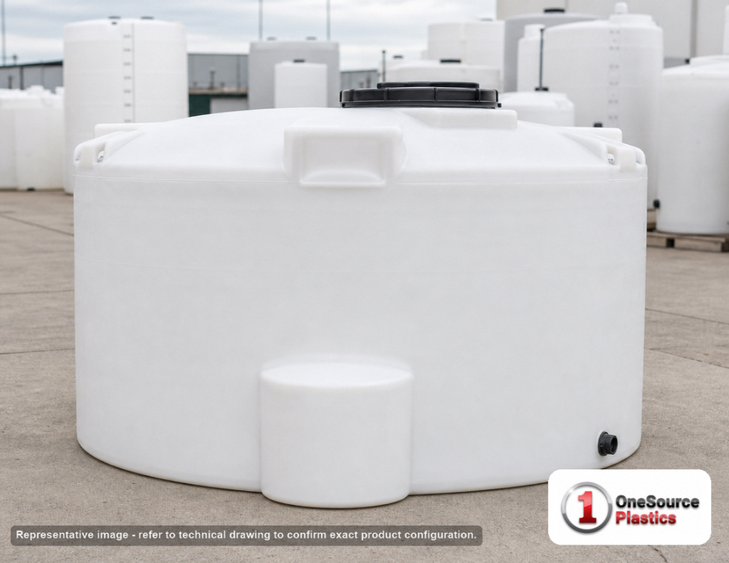
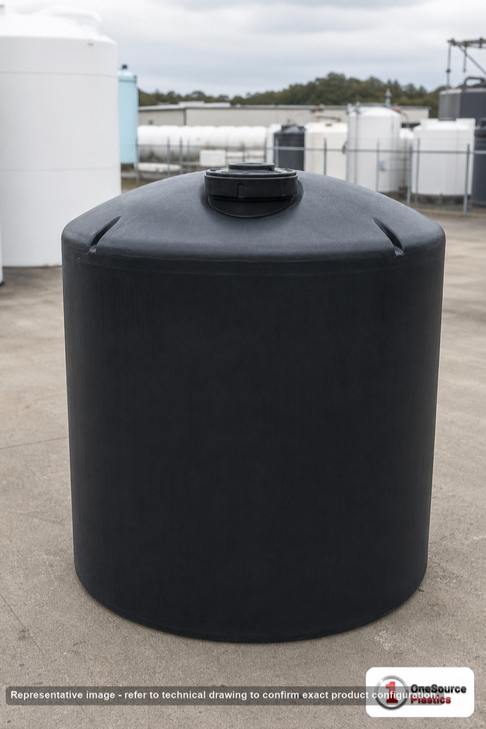
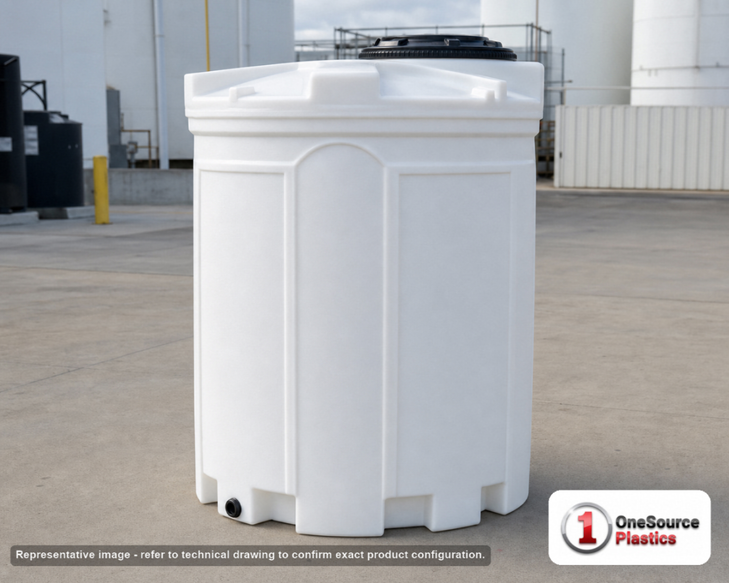
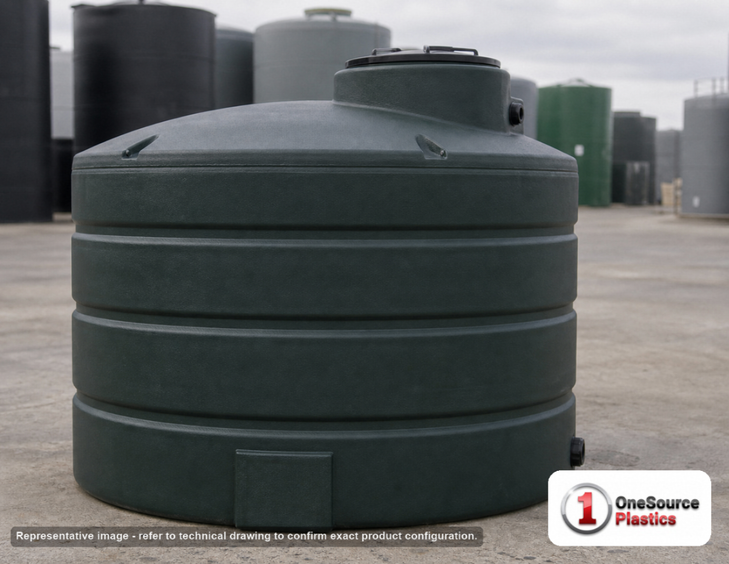
The 550 gallon chemical tank with the heavier wall and the factory outlet
The Snyder 1800000C26 is a white high density linear polyethylene vertical chemical tank, 48 inches in diameter and 75 inches tall, holding 550 gallons at 140 pounds empty. Its 1.9 specific gravity wall is rated for 8,715 pounds of contents against 4,587 for water, and it arrives with a 2 inch polypropylene female NPT bulkhead fitting already installed at the outlet under an 18 inch threaded, vented manway. Against the 110 pound 1800000N45 from the same mold, the C26 carries 30 more pounds of resin, and that is the difference between the two.
Two ways to buy. Add it to your cart above with freight quoted to your ZIP, or request a written quote for a job that needs paperwork.
The bulk tank for a small chemical feed
Five hundred and fifty gallons is two and a half totes: the size at which a small water system or a single process line stops handling totes and starts taking a partial tanker or a scheduled tote delivery into a fixed tank with a dosing pump on it. The list below is the resin's rated chemistry; the chemical compatibility database gives the rating for the liquid at its concentration, which is a different property from the weight rating. The tank sizing calculator sizes the tank to feed rate and delivery interval, and the tank sizing guide covers the reserve.
The 1800000 mold and its neighbors
| Part | Gallons | Diameter x height | Empty weight |
|---|---|---|---|
| 1800000C26 (this tank) | 550 | 48 x 75 in | 140 lb |
| 1800000N45 | 550 | 48 x 75 in | 110 lb |
| 1800000N48 | 550 | 48 x 75 in | 110 lb |
| 1820000N45 (low profile) | 550 | 64 x 47 in | 100 lb |
| 1700200N42 | 710 | 60 x 68 in | 185 lb |
The N45 and N48 are the lighter-wall versions of this shell; the N45 is sold with ASTM certification for jobs that need the paper. The 1820000N45 is the same 550 gallons laid flat, 47 inches tall on a 64 inch base. The 1700200N42 is the next size up in cross-linked resin. A pad or a containment basin built for the 48 inch tanks takes any of the first three.
Not sure which one? Tell us the liquid, the site and the ceiling height at 866-418-1777, or request a written quote with freight to your ZIP.
Fittings, instruments, samples, labels
- Outlet: 2 inch polypropylene female NPT bulkhead fitting, factory installed at the bottom of the sidewall; thread in a PVC or CPVC adapter with a compatible sealant and put a flexible transition before the hard pipe.
- Access: 18 inch threaded, vented manway.
- Service limit: 120 F / 48 C.
Three practices make a small chemical tank a safe one. Choose the level sender for the chemical with the level gauge selection guide. Sample it properly, drawing from the body of the liquid and not the stratified top, per the bulk tank chemical sampling protocol. And label it for both inspectors at once, per the tank label and signage compliance guide. For containment, a 48 inch tank fits a standard spill pallet, and the Snyder Captor 110 percent containment comparison covers the double wall alternative.
Filling and venting
Fill from totes through the manway with a dip tube to the floor, so the chemical does not free-fall and foam, and vent the manway to the outside on caustic, acid and hypochlorite service; the off-gas from an open chemical tank is what corrodes the electrical gear in a feed room. Mount the dosing pump below the outlet so it primes by gravity and never runs dry, and put a calibration column or a sight tube on the pump suction so the operator can check the feed rate without opening the tank. Turn the tank over on a schedule the chemistry tolerates, and when it changes product, drain, rinse, drain and dry before the new fill.
Applications
Hypochlorite, caustic and coagulant storage at small water and wastewater systems, acid and inhibitor feed at cooling towers, brine for softeners, polymer make-down on a skid. One chemical per tank, labeled; keep the manway closed against vapor loss and the tank out of direct sun where the chemical is light-sensitive. A white tank in a shaded room reads its own level in daylight, which is a useful backup to the sender.
Freight for a 550 gallon tank
The 1800000C26 ships palletized as LTL freight (NMFC 156600-02) at a class rate; the freight cost estimator gives it for your ZIP, and the listed price is before freight. Two people take 140 pounds off a liftgate. Thread the outlet adapter, fill the tank with water to the manway, hold it, then drain and dry before the first chemical delivery.
Compatibility list
Liquids the maker rates this resin for, with concentration limits and the wetted fitting and gasket to specify. Confirm your own concentration and temperature on the chemical page or in the chemical compatibility database before ordering.
Freight and documents
Ships from: Lincoln, NE; Marked Tree, AR; Philippi, WV. LTL freight is quoted to your ZIP with the freight cost estimator or by phone at 866-418-1777. The listed price is before freight.
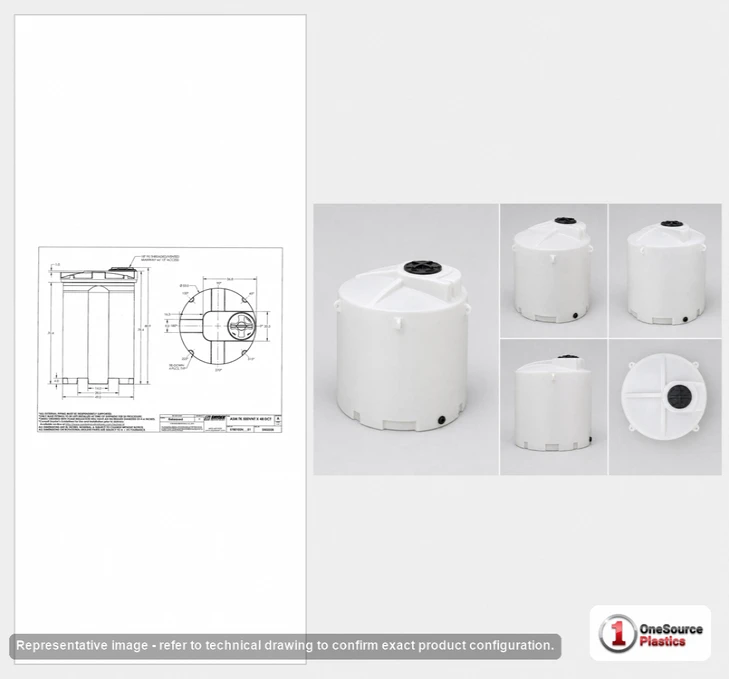
Technical drawing (PDF) for Snyder Industries 1800000C26.
See this tank
Interactive 3D model with live fill. This tank has an interactive 3D model built to its manufacturer dimensions. Rotate it, and set a fill level to see how much liquid it holds at any height. Open the 3D view on the product photo above. Download the 3D model (GLB).
Product video. Watch the Snyder Industries 550 Gallon Plastic Vertical Chemical Storage Tank in White video (68 seconds) with dimensions, fittings and shipping notes.
Ready to order?
Add it to your cart at the top of this page, get LTL freight to your ZIP, request a written quote, or call 866-418-1777. The listed price is before freight.