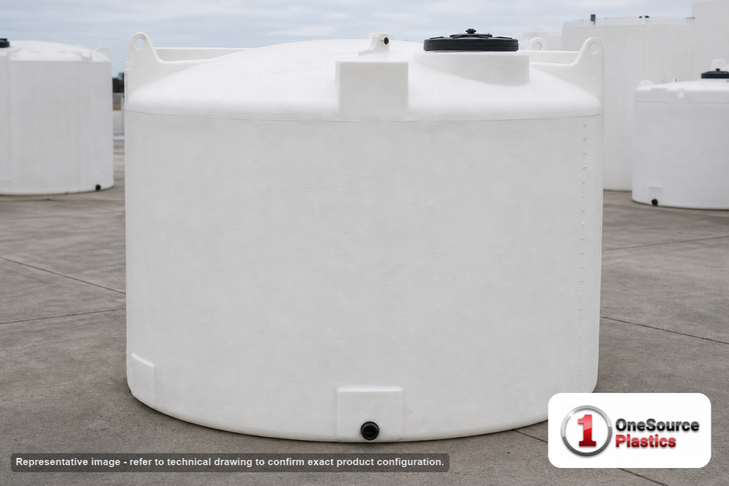
2,000 gallons at 1.35 specific gravity under seven and a half feet
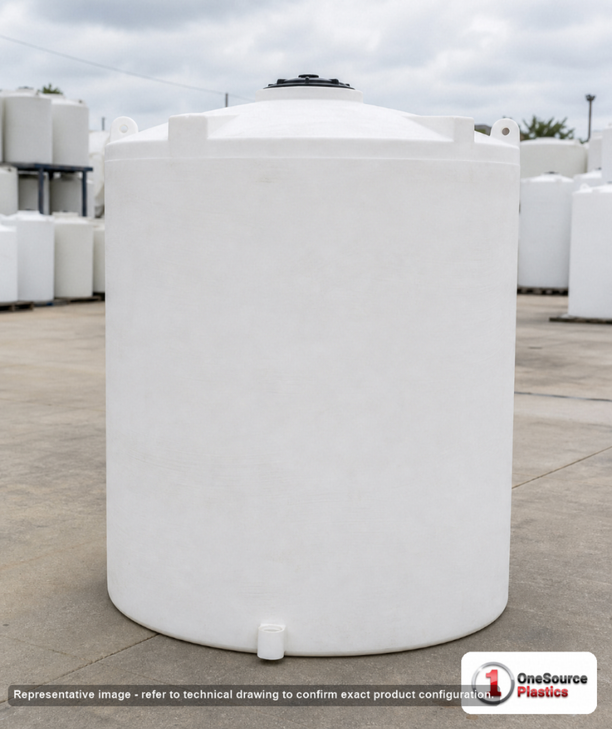
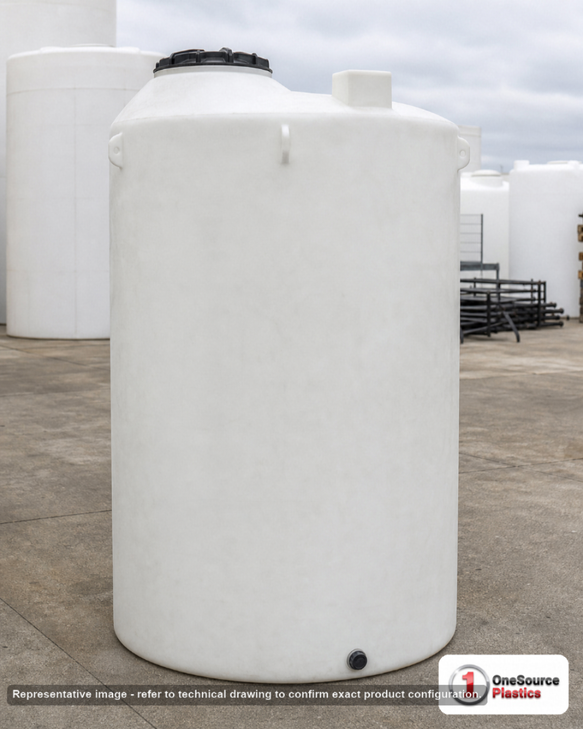
The Snyder 8130000N39 is a white high density linear polyethylene vertical liquid storage tank, 90 inches across and 88 inches tall, holding 2,000 gallons at 350 pounds. Its wall is rated for a specific gravity of 1.35, or 23,352 pounds of contents against 16,680 for water, which covers alum, most fertilizer solutions and the lighter brines as delivered as well as every water application, and the seven and a half foot base puts eight totes' worth under a barn eave with the 18 inch threaded, vented manway reached from a step. A 3 year warranty, and it ships as oversize freight.
Is this the right 2000 gallon tank? Call 866-418-1777 with the liquid, the site and the ceiling height, or get freight to your ZIP and add it to your cart above.
Eight totes under an eave, at the lightest rated wall
A 1.35 specific gravity rating is the step between the water wall and the middle grade: alum and most fertilizer solutions come in lighter than that, so this tank carries them with margin at the least resin of the three rated walls in this shell. Rotationally molded polyethylene tanks are sized to ASTM D1998, and the way a tank meets the density it is rated for is in the wall; the HDPE tank wall thickness guide explains the sizing logic and why the headspace is where a wall ages, and the freeboard sizing guide works out the usable volume once thermal expansion is accounted for. A tank breathes as it fills, empties and warms, and the vent has to keep up; the atmospheric vent capacity guide works the API 2000 numbers for tanks of exactly this size. Full, it puts 23,352 pounds on a 90 inch circle at the rating, which a slab in full contact or a compacted, screeded gravel pad carries, with the empty tank strapped against wind. The tank sizing calculator tells you whether 2,000 gallons covers the draw, and the tank sizing guide covers days of supply.
Grades on the 90 x 88 inch tank, and the sizes beside it
| Part | Gallons | Diameter x height | Empty weight |
|---|---|---|---|
| 8130000N39 (this tank, 1.35 SG) | 2,000 | 90 x 88 in | 350 lb |
| 8130000N43 (1.5 SG) | 2,000 | 90 x 88 in | 400 lb |
| 5050000C26 | 2,000 | 90 x 88 in | 340 lb |
| 5050000C34 | 2,000 | 90 x 88 in | 340 lb |
| 5050000C37-BLACK (black) | 2,000 | 90 x 88 in | 340 lb |
| 1780200N40 (XLPE) | 1,900 | 72 x 119 in | 445 lb |
| 5090000C26 | 2,500 | 90 x 107 in | 450 lb |
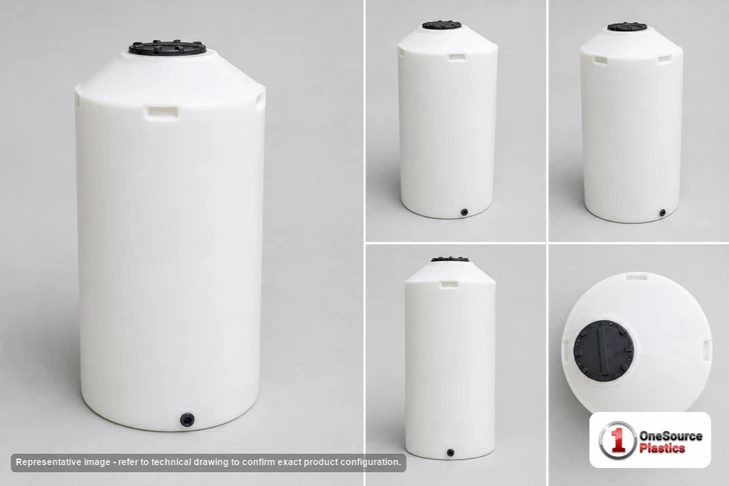
The N43 is the 1.5 wall in this same shell, 50 pounds heavier, for coagulants and brines as delivered; the 5050000 tanks are the general grades at this size, the C37-BLACK in black for sun. The 1780200N40 stands 1,900 gallons of cross-linked resin on a 72 inch base at 119 inches for a smaller pad, and the 5090000C26 is the 2,500 step up on this base, 19 inches taller.
Comparing across brands too? Call 866-418-1777; we carry Norwesco, Snyder, Chem-Tainer, Enduraplas and Bushman and will say which one fits, or price the freight first.
Openings and limits
- Access: 18 inch threaded, vented manway, 88 inches up; filled by hose, tote pump or truck through a dip tube, vented outside on anything that fumes, and size the vent for the delivery pump.
- Outlet: tell us the liquid when ordering and the bulkhead fitting is matched to it; hard pipe joined to the bulkhead through a flexible connector, valve on a bracket of its own.
- Service limit: 120 F / 48 C.
The white wall shows the level in daylight; a low-level switch protects the pump. Mount the pump below the outlet so it primes by gravity, keep the manway closed against vapor loss, and keep the tank out of direct sun where the liquid is light-sensitive. Where it freezes, insulate or drain the outlet valve and the first length of pipe; the body takes ice from the top down without harm.
Delivery without a mess
A delivery truck's pump can push air out faster than a stock vent can pass it, so the vent is sized for the unload rate or the fill goes through a dedicated top bulkhead with its own vent line. A fill pipe to the floor keeps the liquid from free-falling and foaming. Watch the first delivery from the first gallon to the last, checking the slab edge and the outlet fitting as the level rises, and the log takes the date and strength of every load that follows.
The usual assignments
Alum and fertilizer solution at farms and small plants, well storage for a house, a barn and a garden, a rain cistern under a large roof, stock water on a pasture, and a fire reserve of the kind the fire-water reservoir design guide describes, where the low center of gravity counts. One liquid per tank, labeled.
Lane rate, not class rate
At 90 inches across the 8130000N39 ships as oversize freight at a lane rate rather than a class rate; the freight cost estimator quotes the haul to your ZIP; what is listed is the price before freight. A forklift with long forks sets 350 pounds on the pad, or two people stand it. Fill it to the manway once, hold it, and check the outlet fitting before the pump goes on. Write the fill date on the manway with a paint marker; it answers the first question anyone asks about a tank.
Freight and documents
Ships from: Marked Tree, AR. LTL freight is quoted to your ZIP with the freight cost estimator or by phone at 866-418-1777. The listed price is before freight.
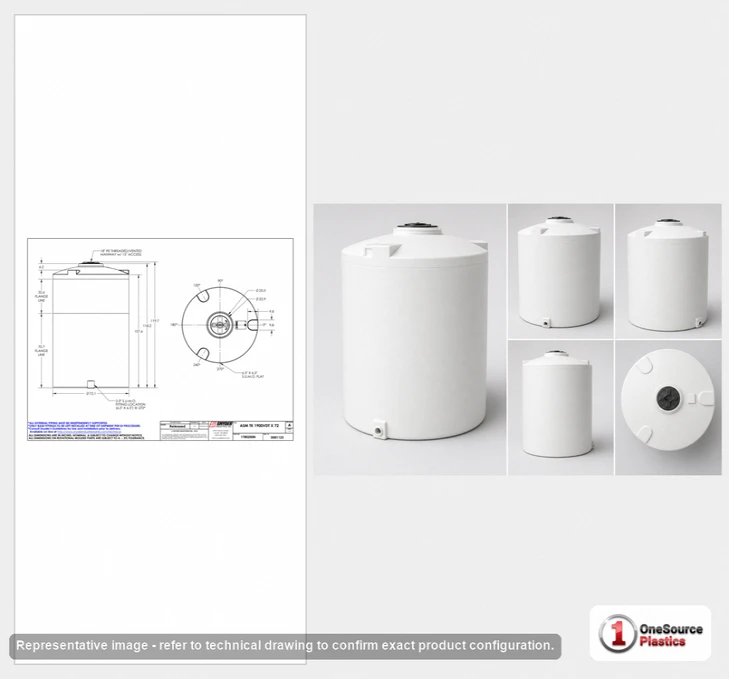
Technical drawing (PDF) for Snyder Industries 8130000N39.
See this tank
Interactive 3D model with live fill. This tank has an interactive 3D model built to its manufacturer dimensions. Rotate it, and set a fill level to see how much liquid it holds at any height. Open the 3D view on the product photo above. Download the 3D model (GLB).
Product video. Watch the Snyder Industries 2000 Gallon HDPE Vertical Liquid Storage Tank with ASTM Certification video (71 seconds) with dimensions, fittings and shipping notes.
Ready to order?
Add it to your cart at the top of this page, get LTL freight to your ZIP, request a written quote, or call 866-418-1777. The listed price is before freight.