A 38 inch wide 300, the same shell under a second part number
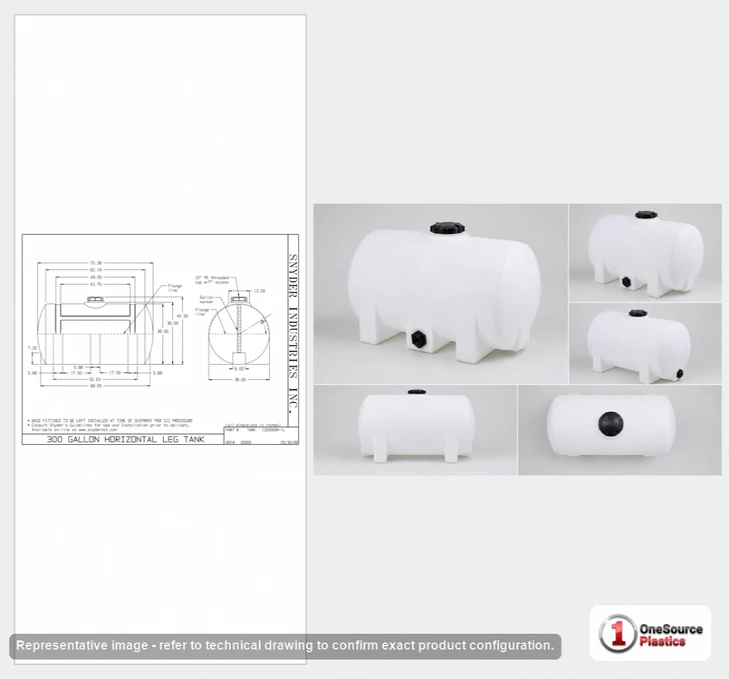
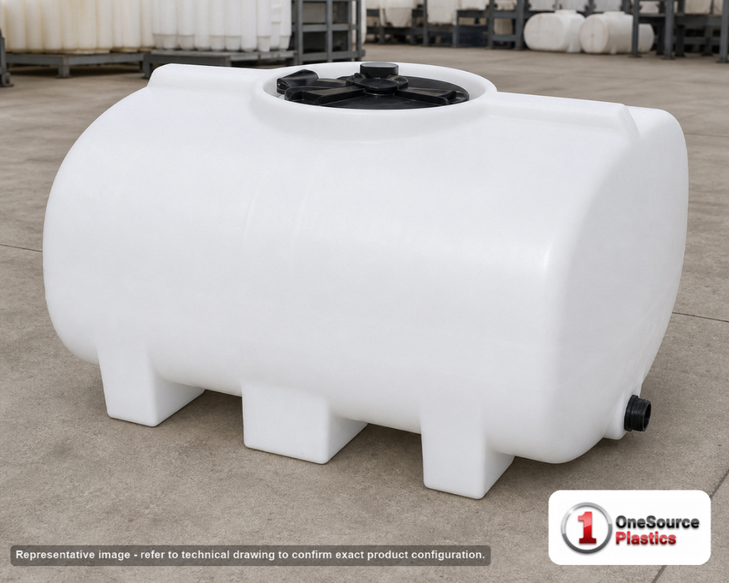
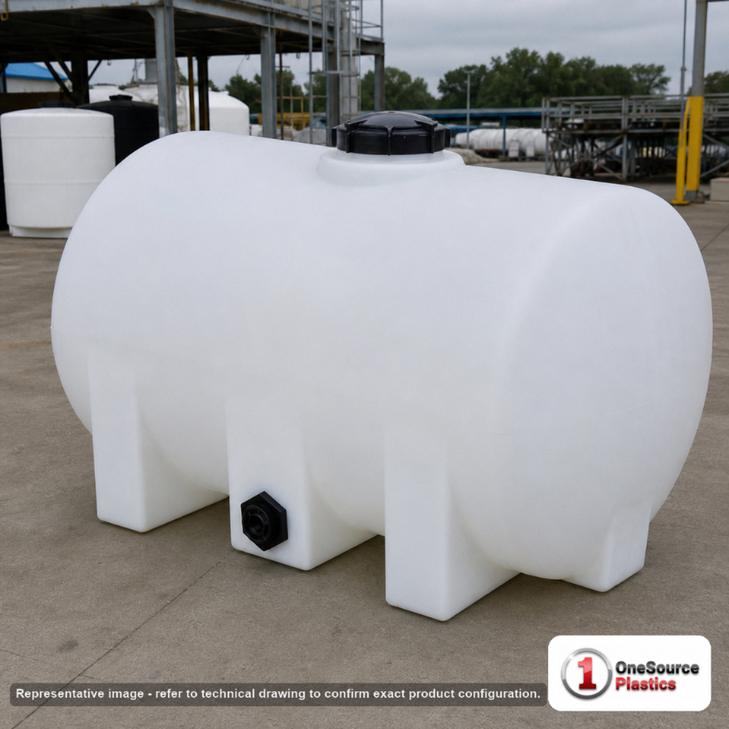
Width is the number to start with on the Snyder SII-1321000N45. It is a 300 gallon horizontal leg tank in white polyethylene, 38 inches wide, 68 inches long and 44 inches tall, and it weighs 67 pounds empty. Thirty-eight inches fits between the rails of a utility trailer and inside a pickup bed, and it is the same width Snyder carries across the 230 and the 300 gallon leg tanks, so a rack built for one takes the others. The sheet rates the wall at a specific gravity of 1.9 and gives 2,502 pounds for 300 gallons of water at 8.34 pounds per gallon, with 4,754 pounds of max contents. The outlet is listed at 1.25 inches, the lid at 10 inches, and the service limit at 120 F / 48 C. No warranty term, no leg rating and no road rating appear on this sheet, so none is claimed here.
Engineer on the job? Request a written quote with the spec attached, or get freight to your ZIP and add to cart above; 866-418-1777 answers the technical questions.
The applicator who needs 300 gallons between the trailer rails
Start with the vehicle and the job follows. The buyer for this tank is the operator who already owns the deck: a co-op applicator with a 38 inch space between the trailer rails, a spray contractor who wants a nurse supply behind the rig instead of a return trip, a vineyard or orchard crew on a narrow trailer between rows, a county crew with a flush tank on a one ton, a feedlot or dairy moving 300 gallons of wash water to where the hose will not reach. All of them are fitting a tank into a width that is fixed, and 38 inches is the number that makes it fit. The 44 inch height is the second reason: it puts the lid at chest height for filling from a hose and keeps the loaded centre of mass low enough that the trailer still tracks. What the shape asks in return is a flat, continuous bearing surface under the full length of the legs. Deck boards or a plywood-topped skid, no gap under the middle, no leg hanging over an edge, nothing bolted through a leg. Strap over the body at both ends and snug it against a headboard so 2,502 pounds of water is not relying on friction. Confirm the volume is the right one before the order rather than after: 300 gallons against the acres, the rate and the refill trip in the tank sizing calculator, with the reserve and the thermal freeboard from the tank sizing guide. If the load is a blend that has to leave the tank the way it went in, the fertilizer-blend tank stratification article explains how a shallow horizontal body layers and what to check before the spreader moves.
Where this 300 sits against the 230 and the 335
| Part | Gallons | Length x width x height | Empty weight |
|---|---|---|---|
| SII-1321000N45 (this tank) | 300 | 68 x 38 x 44 in | 67 lb |
| SII-1321000C26 (same shell, first part number) | 300 | 68 x 38 x 44 in | 67 lb |
| SII-1320000N45 (longer body, heavier) | 300 | 72 x 38 x 43 in | 91 lb |
| SII-1320000N42 (cross-linked wall) | 300 | 72 x 38 x 43 in | 91 lb |
| SII-1280000N45 (smaller, same width) | 230 | 52 x 38 x 43 in | 68 lb |
| SII-1004100N45 (larger, wider) | 335 | 56 x 44 x 49 in | 116 lb |
Three of these tanks share the 38 inch width and that is the group to shop inside if the rack is already built. This one holds 300 gallons in 68 inches of length; SII-1280000N45 holds 230 in 52 inches and is listed at 68 pounds, a pound more than this tank for seventy fewer gallons, which is a straight trade of volume for sixteen inches of deck; and the two 72 inch moldings hold the same 300 gallons as this one on four more inches of length at 91 pounds. Step outside the width and the 335 gallon SII-1004100N45 is the only larger one on this sheet, and it buys its extra gallons with width and height rather than length: 44 inches across and 49 tall, which is a different rack and a higher load. Against SII-1321000C26 there is no difference to report. The sheet lists both at 68 by 38 by 44 inches and 67 pounds with the same fittings, and it explains nothing further, so we print what it says and tell you to match whichever part number your fleet or your co-op already stocks.
Height or floor the limit? The table has both shapes; freight to your ZIP is quoted on each row, or call 866-418-1777 with the site.
Draining low and filling through a 10 inch lid
- The drain and pump path: one 1.25 inch outlet is what the sheet gives, and it is both the drain and the suction port. Put a full-flow shutoff at the fitting, then the flexible connector, then the pump below the outlet so the column of liquid keeps it flooded. Nothing about a horizontal tank rewards a pump mounted high; the whole standing height here is 44 inches and every inch of lift is taken out of the prime.
- Priming a shallow body: use a self priming pump or a foot valve, because the surface in a 68 inch tank drops fast at the end of a load and a suction hose that sucks air once will do it again. A strainer that can be cleaned without breaking the line pays for itself the first time the load carries grit.
- Filling: a 10 inch lid on top, reached without a ladder at this height. Fill through it with the hose end below the rim rather than falling in from above, keep the vent path clear, and put the lid back on before the vehicle moves.
- Complete draining: a horizontal leg tank drains to the low end rather than to a centre sump, so park the deck with a slight fall toward the outlet when you want the last of a load out, and flush and drain in the same position before you change liquids.
- Service limit: 120 F / 48 C, and that is the only limit published on this sheet.
The failure to avoid is a hard pipe run bolted to the deck and threaded into the outlet, because a tank that moves is a tank whose fitting takes the movement. Flexible connector first, valve on its own bracket, no weight hanging on the tank. Tell us the liquid when you order and the fitting, gasket and bolting are matched to it rather than guessed at. Where a regulated product is stored or carried and containment is part of the conversation, the Snyder Captor SPCC 40 CFR 112 walkthrough works through what a second wall actually buys.
Nurse loads, flush water and shop transfer
Three hundred gallons on a narrow deck does nurse and applicator duty on farms, spray and rinse supply for contractors, hydrant and main flushing for small utilities, dust control and compaction water on job sites, and transfer or decant service in a shop. Before a loaded tank goes on the road behind a farm vehicle, know what the exemption does and does not cover: the 49 CFR 173.5 agricultural exemption article lays out the scope without overselling it. Where you are still choosing between a leg tank, a loaf and an upright for the same job, the applicator and leg tank guide compares the shapes and the duties they suit.
What this tank is listed to hold
Each line is a liquid the resin is rated for, at the concentration shown, with the fitting and gasket to order. Follow the link for the full rating, or search the chemical compatibility database before ordering.
- DEF at 32.5% on 316 stainless fittings with EPDM gaskets and
- urea solution at 50% on PP/PVC fittings with EPDM gaskets, the same nitrogen-based fluids that move through fertilizer applicator rigs.
- aluminum sulfate at 50%
- calcium chloride at 40%
- ethylene glycol at 100%
- ferric chloride at 50%
- ferric sulfate at 60%
- ferrous sulfate at 20%, and
- magnesium chloride at 30% - all on PVC fittings with EPDM gaskets unless noted. Salts and bases such as
- potassium carbonate at 50%
- potassium hydroxide (saturated)
- sodium carbonate at 30%, and
- sodium thiosulfate at 40% run on PVC with EPDM. A handful of compatible chemicals are not concentration-rated in our data -
- polyaluminum chloride
- sodium bisulfate
- sodium bisulfite
- zinc orthophosphate (PP/316SS fittings, EPDM), and
- propylene glycol (PP/316SS fittings, EPDM) - so confirm your exact strength with us before ordering for those.
- hydrochloric acid at 37% (PVC fittings, Viton gaskets)
- hydrofluoric acid at 48% (PP/PVC fittings, Viton)
- hydrofluosilicic acid at 26% (PP/PVC fittings, Viton)
- hydrogen peroxide at 50% (PVC fittings, Viton)
- phosphoric acid at 85% (PVC fittings, Viton)
- sodium hypochlorite below 16.5% (PVC fittings, Viton)
- peracetic acid at 30% (316SS fittings, Aflas gaskets), and
- sulfuric acid at 98% (CPVC fittings, Viton). Ozonated water up to 10 PPM runs on PVC fittings with EPDM gaskets (call to confirm - no dedicated page yet)
LTL out of California, and the mounting that rides with it
This part is molded at Chowchilla, California and the sheet gives the freight class as LTL under NMFC 156600-02, shipping at 68 by 38 by 44 inches. Price the lane to your ZIP with the freight cost estimator; the listed price is before freight. Sixty-seven pounds is a two-person lift or a forklift under the legs, and it is light enough that the tank will move on a deck before it is strapped, so have the straps, the saddle or the rack ready on the day it lands rather than a week later. Fill it with clean water on level ground first, look along the legs for contact and at the outlet and lid for weeping, then drain it and put the working liquid in. Take a photograph of the tank sitting on its finished mounting with the straps on; that photograph is what settles the argument after the first hard stop. The vent screen is the cheapest part on the tank and the one that saves it; look at it every time the manway opens.
Freight and documents
Ships from: Chowchilla, CA. LTL freight is quoted to your ZIP with the freight cost estimator or by phone at 866-418-1777. The listed price is before freight.
Technical drawing (PDF) for Snyder Industries 1321000N45.
See this tank
Interactive 3D model with live fill. This tank has an interactive 3D model built to its manufacturer dimensions. Rotate it, and set a fill level to see how much liquid it holds at any height. Open the 3D view on the product photo above. Download the 3D model (GLB).
Product video. Watch the Snyder Industries 300 Gallon Plastic Horizontal Leg Tank video (75 seconds) with dimensions, fittings and shipping notes.
Ready to order?
Add it to your cart at the top of this page, get LTL freight to your ZIP, request a written quote, or call 866-418-1777. The listed price is before freight.