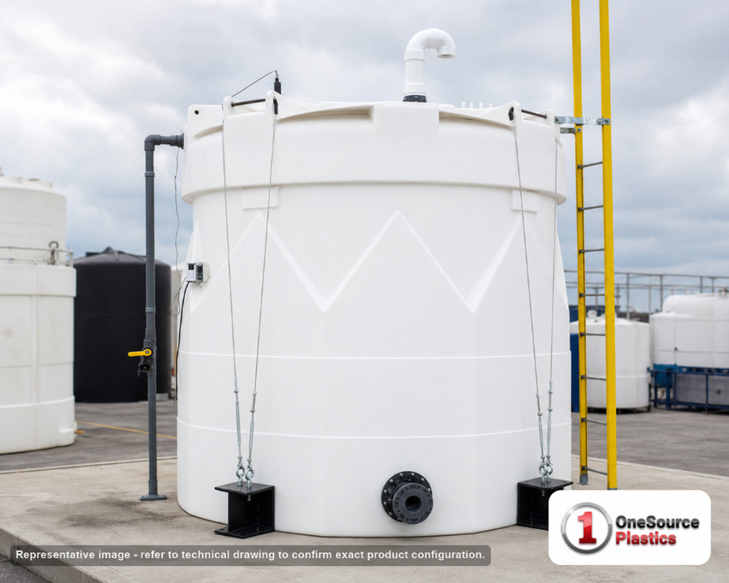
4,100 gallons of cross-linked polyethylene at 1.5 specific gravity
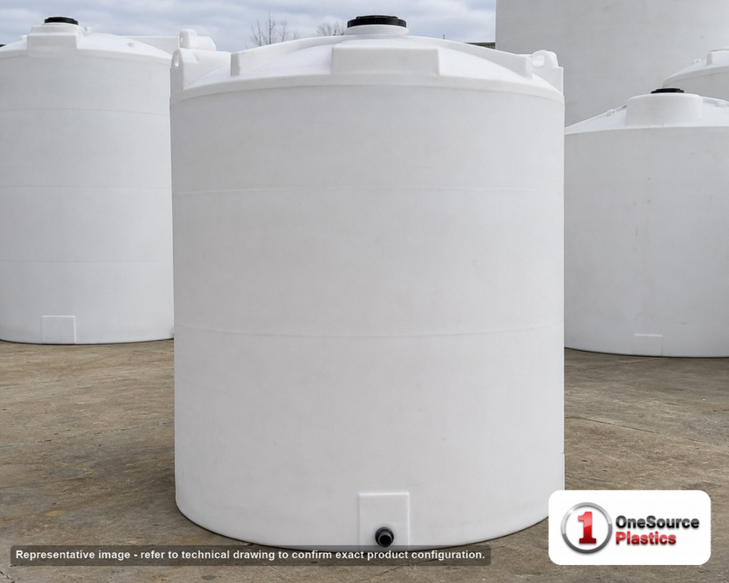
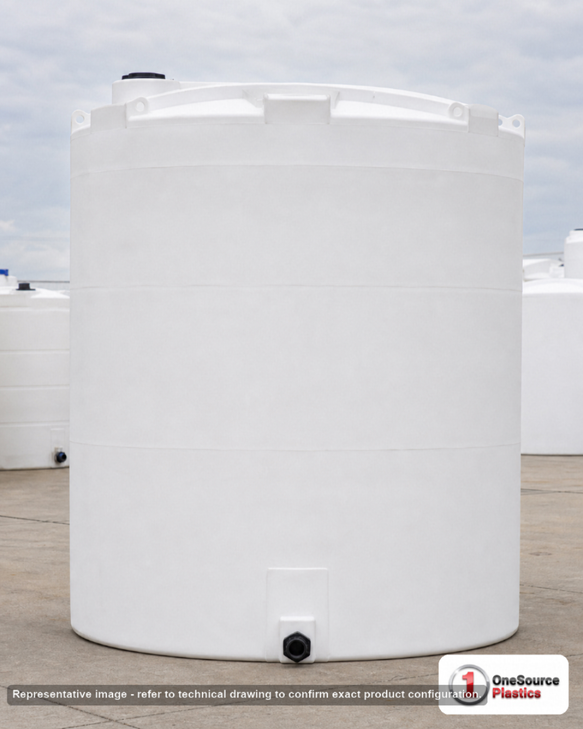
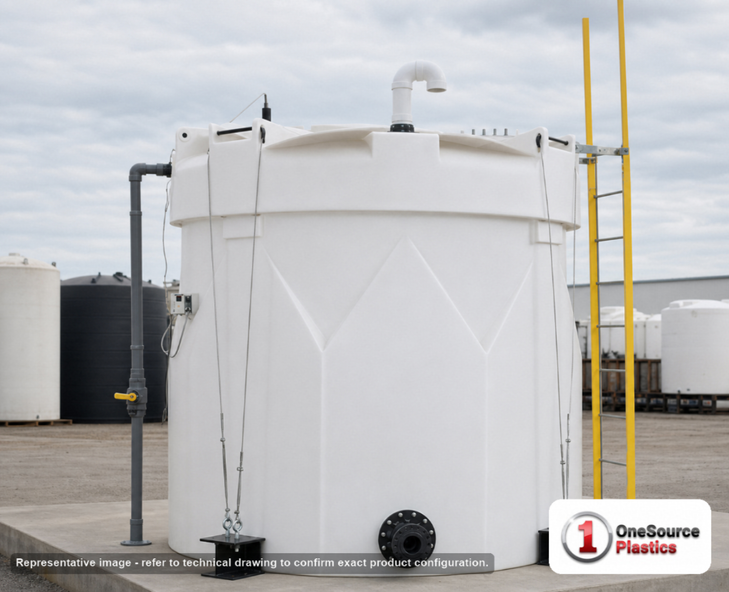
The Snyder 7360000N40 is the cross-linked polyethylene version of Snyder's 102 inch by 130 inch, 4,100 gallon vertical chemical tank: 1,100 pounds, rated for a specific gravity of 1.5, or 51,291 pounds of contents against 34,194 for water, with a 3 inch outlet and a service limit of 140 F / 60 C against 120 F for the linear tanks in the same shell. Cross-linked resin is the wall for hypochlorite and the other oxidizers and for liquids stored warm, and this is the tanker-scale hypochlorite tank for a water plant. It carries an 18 inch threaded, vented manway and a 3 year warranty, and it travels as oversize freight.
Is this the right 4100 gallon tank? Call 866-418-1777 with the liquid, the site and the ceiling height, or get freight to your ZIP and add it to your cart above.
What cross-linking buys at 4,100 gallons
Linear polyethylene softens with heat and creeps under sustained load; cross-linked polyethylene is molded with a catalyst that ties the polymer chains into one network, so it holds its shape under a dense liquid, resists the stress cracking oxidizers cause, and tolerates heat, which is where the higher service limit comes from. The trade is that it cannot be plastic-welded, so any added port is a bulkhead through a drilled hole, decided before the tank is filled, and 1,100 pounds of resin is 250 more than the linear tanks in this shell. What follows is the chemistry the resin is rated to hold; check the liquid at its concentration in the chemical compatibility database, since a wall rated for the weight is not the same as a wall rated for the chemistry. A single wall tank of regulated chemical needs a berm sized to its volume; the Snyder Captor 110 percent containment comparison covers when a double wall tank is the cleaner answer than a basin. The tank sizing calculator works the volume out from feed rate and delivery interval, and the tank sizing guide covers the reserve; hypochlorite is sized for short turnover, because it loses strength with every warm week in the tank.
Resins on the 102 x 130 inch tank, and the sizes beside it
| Part | Gallons | Diameter x height | Empty weight |
|---|---|---|---|
| 7360000N40 (this tank, XLPE, 1.5 SG) | 4,100 | 102 x 130 in | 1,100 lb |
| 7360000N42 (XLPE, 1.9 SG) | 4,100 | 102 x 130 in | 1,100 lb |
| 7360000C34 (HDLPE) | 4,100 | 102 x 130 in | 850 lb |
| 7360000C37-BLACK (HDLPE) | 4,100 | 102 x 130 in | 850 lb |
| 7360000N46 (HDLPE) | 4,100 | 102 x 130 in | 850 lb |
| 7421100N40 (low profile, XLPE) | 4,000 | 120 x 104 in | 810 lb |
| 7421100C34 (low profile) | 4,300 | 120 x 104 in | 850 lb |
The N42 is the cross-linked 1.9 wall at this tank's weight for the densest oxidizers. The C34, C37-BLACK and N46 are the linear tanks in this shell, 250 pounds lighter, for chemicals that do not attack a linear wall. The 7421100N40 lays 4,000 gallons of cross-linked resin down to 104 inches on a 120 inch base for a low roof, and the 7421100C34 is the general 4,300 in that shape.
Comparing across brands too? Call 866-418-1777; we carry Norwesco, Snyder, Chem-Tainer, Enduraplas and Bushman and will say which one fits, or price the freight first.
Openings, sampling and labels
- Access: 18 inch threaded, vented manway, 130 inches up; vent outside on hypochlorite and acid service, dip tube on the fill, vent sized to the tanker's unload rate.
- Outlet: 3 inch; a flanged transition, an expansion joint, and a valve supported off the slab; decide any added port before the tank is filled, because XLPE cannot be welded.
- Service limit: 140 F / 60 C.
Three practices make a bulk hypochlorite tank a safe one. Choose the level sender for the chemical with the level gauge selection guide; hypochlorite is hard on wetted parts, and a sender read at ground level keeps everyone off the platform. Draw samples that represent the tank and not its stratified top, per the bulk tank chemical sampling protocol. And label it so the fire inspector and the workplace inspector read the same thing, NFPA 704 diamond and GHS pictograms reconciled as the tank label and signage compliance guide describes. Full, the tank loads a 102 inch circle to 51,291 pounds at the rating: an engineered slab in full contact under the whole floor, inside a berm, with the empty tank strapped against wind and the tank shaded where the site allows.
The tanker unload
A tanker's pump moves liquid faster than a manway vent can pass air, so either the vent is sized to the unload rate or the fill comes in through its own top bulkhead with a separate vent line. A fill pipe to the floor keeps the liquid from free-falling and foaming. The first delivery into a new tank is watched from start to finish, with the slab edge and the outlet fitting checked as the level climbs; after that, a dated log of each delivery and its strength is what turns a guess about turnover into a schedule.
Day-to-day duty
Hypochlorite bulk storage at water plants with a berm, oxidizer and warm process liquid storage at industrial sites, and any 4,100 gallon vessel where the chemical would finish a linear wall in a few seasons. Label it for the fire inspector and the workplace inspector at once, keep one chemical in it, and keep the manway closed.
Chemicals this resin is rated for, with the fitting and gasket to order
These are the chemicals listed for this tank at the concentrations shown. Each links to the full compatibility page; confirm your exact concentration and temperature there or in the chemical compatibility database before ordering.
- details )
- Aluminum Sulfate at 50% (PVC, EPDM)
- Calcium Chloride at 40% (PVC, EPDM)
- DEF at 32.5% (316SS fittings, EPDM)
- Ferrous Sulfate at 20% (PVC, EPDM)
- Magnesium Chloride at 30% (PVC, EPDM)
- Sodium Carbonate at 30% (PVC, EPDM)
- Urea Solution at 50% (PP/PVC, EPDM), and Ozonated Water up to 10 PPM (PVC, EPDM).One callout for the DEF crowd: diesel exhaust fluid (32.5% urea) is the
- Ethylene Glycol
- Ferric Chloride
- Ferric Sulfate
- Hydrofluosilicic Acid
- Polyaluminum Chloride
- Potassium Carbonate
- Potassium Hydroxide
- Propylene Glycol and
- Sodium Thiosulfate.Hydrofluosilicic acid is the exception within the exception: it needs both the 1.5 S.G.tank AND Viton gaskets rather than EPDM - two upg
From the plant to your site
At 102 inches across and 130 inches long on the deck the 7360000N40 is oversize freight on a flatbed at a lane rate; the freight cost estimator quotes the haul to your ZIP; what is listed is the price before freight. A forklift with long forks or a small crane sets 1,100 pounds on the slab. Water-fill it once to the manway, hold it, and confirm the outlet and manway are dry before the first chemical goes in. Write the fill date on the manway with a paint marker; it answers the first question anyone asks about a tank.
Freight and documents
Ships from: Philippi, WV. LTL freight is quoted to your ZIP with the freight cost estimator or by phone at 866-418-1777. The listed price is before freight.
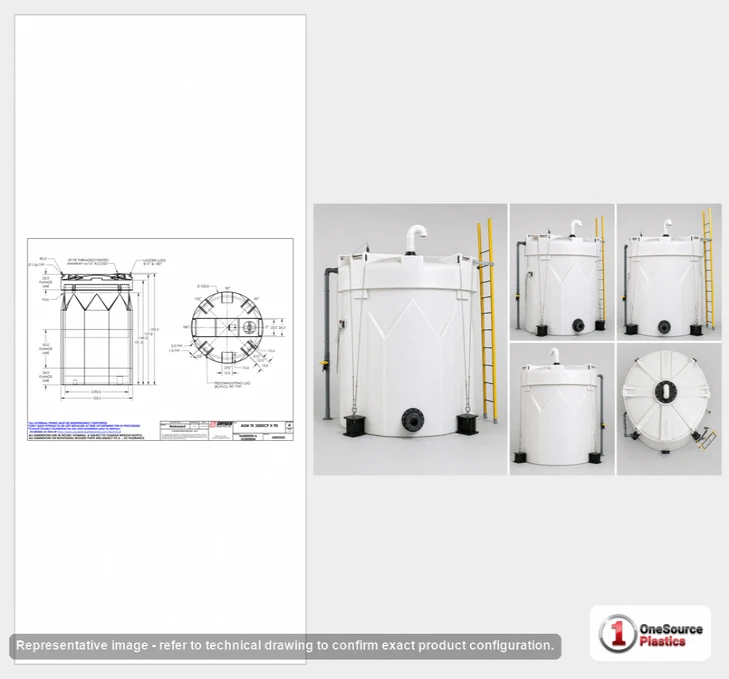
Technical drawing (PDF) for Snyder Industries 7360000N40.
See this tank
Interactive 3D model with live fill. This tank has an interactive 3D model built to its manufacturer dimensions. Rotate it, and set a fill level to see how much liquid it holds at any height. Open the 3D view on the product photo above. Download the 3D model (GLB).
Product video. Watch the Snyder Industries 4100 Gallon XLPE Vertical Chemical Storage Tank in White, 1.5 S.G. video (76 seconds) with dimensions, fittings and shipping notes.
Ready to order?
Add it to your cart at the top of this page, get LTL freight to your ZIP, request a written quote, or call 866-418-1777. The listed price is before freight.